Oct. 29, 2026
News
5000L Beer Brewing Supplies: Capacity, Output, and Equipment Guide
Looking for 5000L beer brewing supplies for a commercial brewery? A 5,000L brewing system is designed around a substantial production batch, but its actual output depends on the brewhouse configuration, fermentation capacity, brewing schedule, and packaging process. Understanding these factors helps you choose equipment that matches your production targets.
However, not every 5,000L label describes the same capacity. It is important to distinguish between brewhouse batch capacity, fermentation tank capacity, and packaged beer output.
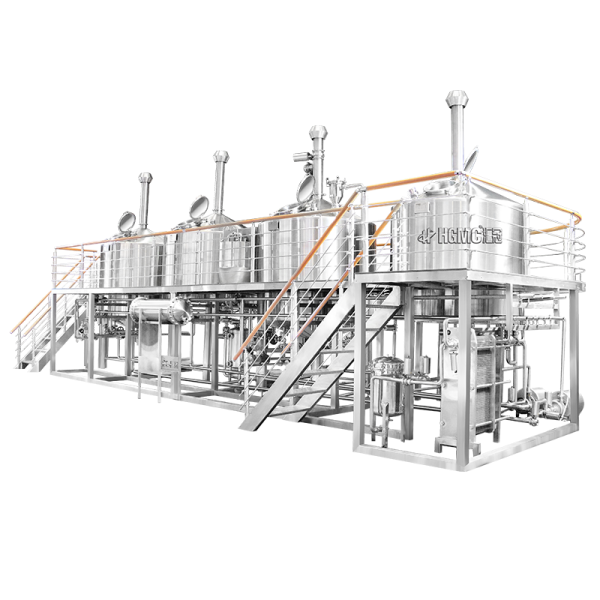
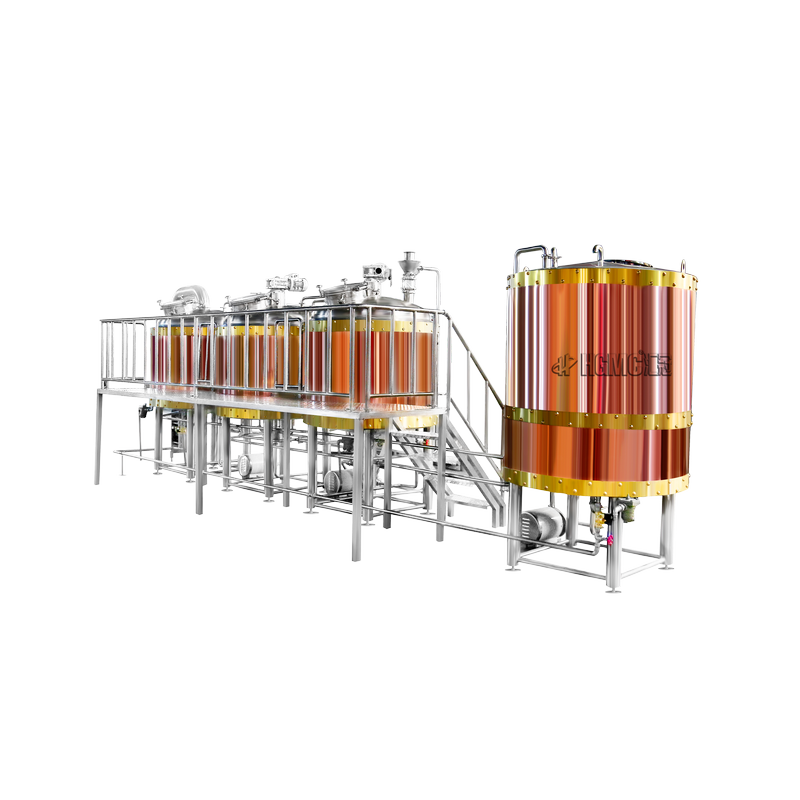
HGMC offers a 5000L beer brewing equipment system specified at 5,000L per batch. Its brewhouse configuration includes a mash tun, lauter tun, and kettle/whirlpool tank. The listed system dimensions are approximately 2,260mm in diameter and 4,400mm in height, with a stated floor area of 100m².
These figures provide a useful starting point for equipment planning. The final layout should also allow space for fermentation tanks, cooling equipment, piping, maintenance access, and packaging operations.
For planning purposes, assume an illustrative overall packaged yield of 90%–95%. This is a calculation example, not a guaranteed equipment performance figure.
Actual output depends on the brewing recipe, wort collection volume, fermentation management, transfer procedures, and packaging efficiency.
If the 5,000L figure instead refers to finished beer before packaging, the calculation will be different. Confirm the capacity definition before using these estimates to forecast sales.
For example, if a brewery completes one 5,000L batch per scheduled brewing day, its nominal weekly brewing volume depends on the number of brewing days. Actual packaged output also depends on fermentation tank availability, cleaning time, and packaging capacity.
Annual production should therefore be calculated from the planned number of batches and the actual packaged yield, rather than from the brewhouse capacity alone.
A 5,000L system may be unnecessarily large for a project with limited sales or insufficient fermentation capacity. Conversely, a brewery expecting frequent batches may need additional fermentation tanks even when its brewhouse capacity is sufficient.
The HGMC 5,000L system uses SUS304 stainless steel and supports steam or direct-fire heating according to its listed specifications. Electrical, utility, and site requirements should be confirmed against the final configuration.
The required tank quantity depends on fermentation duration, maturation time, batch frequency, and whether several beer styles are produced at the same time.
CIP equipment, pumps, sanitary piping, valves, and controls also need to be included in the project scope. Their configuration affects cleaning procedures, product transfers, and day-to-day operating efficiency.
This does not necessarily mean 14 individual tanks. The brewery could use larger vessels, smaller vessels, or a combination, provided their useful capacities and operating schedules match the required production volume.
If the brewery produces only two batches per week, the tank requirement will be different. Longer maturation periods or multiple beer styles may also increase the capacity needed.
This distinction matters when matching fermentation tanks to the brewhouse. A tank's useful capacity must accommodate the actual liquid volume, while suitable headspace and operating requirements must also be considered.
Before finalizing a layout, assess:
Key cost factors include:
Before requesting a proposal, prepare your target batch volume, expected production schedule, beer styles, fermentation duration, packaging format, and available facility space.
At HGMC, we provide commercial brewing equipment and can coordinate the brewhouse, fermentation tanks, cooling, and supporting systems around your production requirements. Contact our team through the HGMC contact page to discuss your project and request a tailored equipment proposal.
What Does a 5000L Beer Brewing System Actually Mean?
A 5,000L brewing system refers to a system designed to produce a nominal 5,000 liters per brewing batch when specified as a 5,000L/batch brewhouse. This equals 5 cubic meters, or approximately 1,321 US gallons.However, not every 5,000L label describes the same capacity. It is important to distinguish between brewhouse batch capacity, fermentation tank capacity, and packaged beer output.
HGMC offers a 5000L beer brewing equipment system specified at 5,000L per batch. Its brewhouse configuration includes a mash tun, lauter tun, and kettle/whirlpool tank. The listed system dimensions are approximately 2,260mm in diameter and 4,400mm in height, with a stated floor area of 100m².
These figures provide a useful starting point for equipment planning. The final layout should also allow space for fermentation tanks, cooling equipment, piping, maintenance access, and packaging operations.
How Much Beer Can a 5000L Brewing System Produce?
The amount of beer available for sale depends on where the 5,000L capacity is measured and how much product is lost during processing.Estimate Packaged Beer Output
If 5,000L represents the wort volume entering fermentation, the final packaged volume will generally be lower because of yeast and trub separation, transfers, filtration where applicable, and packaging losses.For planning purposes, assume an illustrative overall packaged yield of 90%–95%. This is a calculation example, not a guaranteed equipment performance figure.
| Measurement | Estimated volume |
| Nominal batch volume | 5,000L |
| Packaged beer at 90% yield | 4,500L |
| Packaged beer at 95% yield | 4,750L |
| 330mL bottles at this output | Approximately 13,636–14,394 |
| 500mL cans at this output | Approximately 9,000–9,500 |
Actual output depends on the brewing recipe, wort collection volume, fermentation management, transfer procedures, and packaging efficiency.
If the 5,000L figure instead refers to finished beer before packaging, the calculation will be different. Confirm the capacity definition before using these estimates to forecast sales.
Estimate Daily and Annual Production
A 5,000L batch does not automatically mean 5,000L of packaged beer every day. The brewhouse may complete a batch in a day, while fermentation and maturation continue for several days or weeks.For example, if a brewery completes one 5,000L batch per scheduled brewing day, its nominal weekly brewing volume depends on the number of brewing days. Actual packaged output also depends on fermentation tank availability, cleaning time, and packaging capacity.
Annual production should therefore be calculated from the planned number of batches and the actual packaged yield, rather than from the brewhouse capacity alone.
Is a 5000L Brewing System Right for Your Brewery?
A 5,000L brewing system can suit commercial operations that need substantial batch volumes and a structured production schedule.- New commercial breweries: Suitable for projects with a defined market, expected sales volume, and investment plan.
- Expanding breweries: Useful when smaller brewing systems can no longer support demand efficiently.
- Multi-style production: Appropriate when tank scheduling and cleaning arrangements can accommodate different beer styles.
- Regular wholesale supply: Worth considering for breweries supplying distributors, restaurants, retailers, or other commercial customers.
A 5,000L system may be unnecessarily large for a project with limited sales or insufficient fermentation capacity. Conversely, a brewery expecting frequent batches may need additional fermentation tanks even when its brewhouse capacity is sufficient.
What Equipment Is Needed for a 5000L Beer Brewing System?
A commercial 5,000L installation needs more than the brewhouse itself. Each stage must be sized to work with the intended batch volume and production schedule.Brewhouse Equipment
The brewhouse handles mashing, lautering, wort boiling, and whirlpool separation. A 5,000L/batch configuration must be matched to the recipe, heating method, vessel arrangement, and expected brewing frequency.The HGMC 5,000L system uses SUS304 stainless steel and supports steam or direct-fire heating according to its listed specifications. Electrical, utility, and site requirements should be confirmed against the final configuration.
Fermentation and Bright Beer Tanks
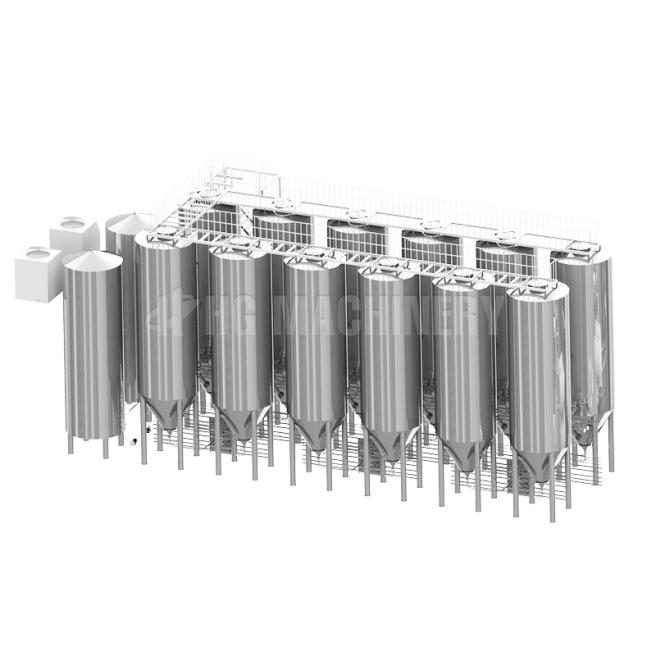
Fermentation tanks determine how much wort can be processed simultaneously. Bright beer tanks provide space for maturation, conditioning, carbonation, or storage where required by the production process.The required tank quantity depends on fermentation duration, maturation time, batch frequency, and whether several beer styles are produced at the same time.
Cooling and Cleaning Systems
Cooling equipment must remove fermentation heat and maintain the required process temperatures. A glycol system may supply cooling to multiple tanks, so its capacity should be calculated for the expected peak demand.CIP equipment, pumps, sanitary piping, valves, and controls also need to be included in the project scope. Their configuration affects cleaning procedures, product transfers, and day-to-day operating efficiency.
How Many Fermentation Tanks Does a 5000L Brewery Need?
There is no single correct tank count for every 5,000L brewhouse. The answer depends primarily on the brewing frequency and how long each batch occupies a fermentation tank.Use Fermentation Time to Estimate Tank Requirements
As a simplified planning example, assume a brewery produces one 5,000L batch per day and each batch occupies a fermentation tank for 14 days. Ignoring scheduling buffers and cleaning downtime, approximately 14 batch-equivalents of fermentation capacity would be needed to support that continuous brewing schedule.This does not necessarily mean 14 individual tanks. The brewery could use larger vessels, smaller vessels, or a combination, provided their useful capacities and operating schedules match the required production volume.
If the brewery produces only two batches per week, the tank requirement will be different. Longer maturation periods or multiple beer styles may also increase the capacity needed.
Check Useful Capacity, Not Just Nominal Size
A tank's working volume and gross volume are not interchangeable. For example, HGMC's 5000L fermentation tank has a useful capacity of 5,000L and a gross capacity of 6,250L. Its listed material is SUS304 stainless steel, with jacket-section cooling and a heat-exchange area of 7.2m².This distinction matters when matching fermentation tanks to the brewhouse. A tank's useful capacity must accommodate the actual liquid volume, while suitable headspace and operating requirements must also be considered.
What Space and Utilities Does a 5000L Brewing System Require?
A 5,000L system needs sufficient space for vessel installation, safe operation, cleaning, and maintenance. The brewhouse footprint alone does not represent the total area required for a functioning brewery.Before finalizing a layout, assess:
- Floor space and height: Allow for vessels, platforms, piping, access routes, and equipment maintenance.
- Water supply and drainage: Confirm the water quality, available flow, wastewater handling, and cleaning requirements.
- Heating and electrical supply: Match the utility infrastructure to the selected heating method and control equipment.
- Cooling capacity: Size the chiller and glycol circulation system for the tanks that may require cooling simultaneously.
- Packaging and storage: Provide space for filling equipment, finished beer, packaging materials, and product movement.
What Affects the Cost of 5000L Beer Brewing Supplies?
The cost of a 5,000L brewery depends on the equipment included in the order. A brewhouse-only purchase differs substantially from a complete system covering fermentation, cooling, cleaning, storage, and packaging.Key cost factors include:
- Vessel configuration: The number and function of brewhouse vessels affect equipment scope.
- Fermentation capacity: Tank size, tank quantity, and maturation requirements influence the total investment.
- Automation: Manual, semi-automatic, and fully automatic configurations have different control requirements.
- Heating and cooling: The selected heating method and cooling capacity affect utility and equipment planning.
- Installation and delivery scope: Piping, electrical work, commissioning, and other project services should be clearly defined.
Plan Your 5000L Brewing Equipment Configuration with HGMC
Choosing the right 5000L beer brewing supplies starts with defining what the 5,000L figure represents, how much finished beer you need, and how frequently you intend to brew.Before requesting a proposal, prepare your target batch volume, expected production schedule, beer styles, fermentation duration, packaging format, and available facility space.
At HGMC, we provide commercial brewing equipment and can coordinate the brewhouse, fermentation tanks, cooling, and supporting systems around your production requirements. Contact our team through the HGMC contact page to discuss your project and request a tailored equipment proposal.