Oct. 26, 2026
News
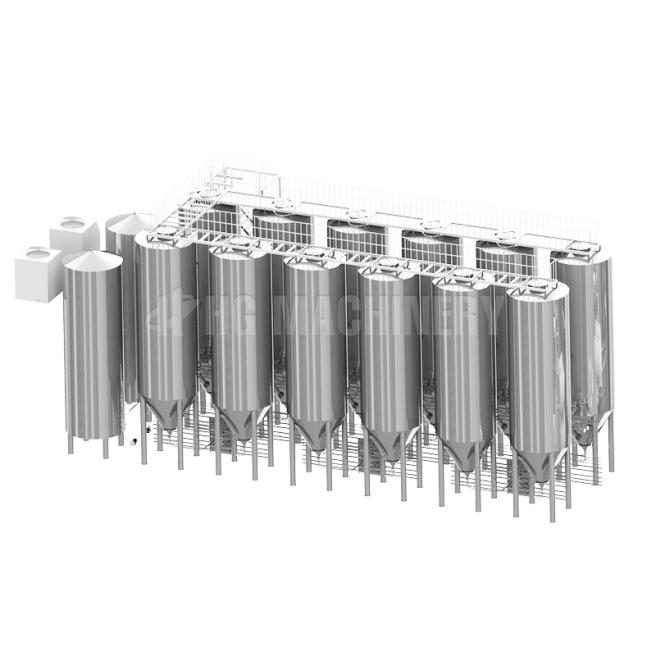
High Capacity Fermentation Tanks Turnkey Solutions for Breweries
High capacity fermentation tanks turnkey solutions help commercial breweries coordinate large fermenters, cooling systems, cleaning equipment, and supporting connections. But does your brewery need large tanks, or would smaller vessels offer more flexibility? The right choice depends on production volume, beer variety, fermentation time, available space, and future growth plans.
For example, a brewery producing several specialty beers in limited quantities may benefit from multiple smaller tanks rather than a few large vessels. Smaller tanks can also help a growing business add capacity gradually.
The key is to compare tank utilization, not just nominal volume. An oversized fermenter may remain underused, while insufficient capacity can restrict production even when the brewhouse can produce more wort.
Consider these factors:
Our related guide, How to Choose Large Scale Fermentation Tanks for Commercial Breweries, explains how tank capacity, cooling performance, cleaning requirements, and cellar space influence commercial brewery planning.
For example, HGMC’s 5000L fermentation tank has the following specifications:
One US beer barrel is approximately 117.35 liters, so 17 BBL is roughly 1,995 liters. This means the above-17-BBL and above-2000L categories have broadly overlapping capacity thresholds; they are alternative ways to classify tank size, not fundamentally different tank technologies.
When comparing models, check useful capacity rather than relying on the category label alone. Also confirm gross volume, dimensions, cooling area, working pressure, material, and included accessories. Specifications may vary between models and customized configurations.
The actual supply scope varies by project, but may include the following components.
Cooling capacity should be calculated according to the number and size of tanks, fermentation schedules, temperature requirements, and expected simultaneous demand. Selecting large tanks without checking cooling capacity can create an operational bottleneck.
For projects involving more than individual tanks, large-scale brewery solutions can help coordinate fermentation equipment with brewing and other production systems. Installation supervision, commissioning, training, and other services should be confirmed in the project scope rather than assumed to be automatically included.
Before delivery, confirm:
Important factors include tank quantity, capacity, material specifications, cooling requirements, automation, accessories, piping, transport, site preparation, and commissioning responsibilities.
A project supplying several standard tanks may have different requirements from one involving customized vessels and a complete integrated fermentation system. To obtain a meaningful quotation, prepare your target production volume, required tank sizes, factory layout, utility conditions, and preferred scope of supply.
Lead time also depends on equipment customization, manufacturing arrangements, transport, and site readiness. These details should be confirmed for each project rather than estimated from tank capacity alone.
Before choosing a configuration, consider your target output, batch volume, fermentation cycle, tank utilization, and factory conditions. The right combination of fermentation tanks and supporting systems can help improve production planning and support future expansion.
If you are planning a new brewery or upgrading your existing fermentation capacity, contact HGMC to discuss your production requirements, preferred tank specifications, and turnkey project scope. Our team can help you evaluate suitable equipment configurations and develop a solution tailored to your commercial brewing needs.
When Should a Brewery Choose Large or Small Fermentation Tanks?
Tank capacity should match the brewery’s production schedule rather than simply its target output. Both large and small fermenters have advantages, depending on how the brewery operates.When Large Capacity Fermentation Tanks Make Sense
Large fermentation tanks are often suitable for commercial breweries with stable demand, regular production schedules, and relatively large brewing batches. They can be particularly useful when:- Production volume is high enough to keep the tanks consistently occupied.
- The brewery produces popular beer styles in repeated batches.
- Existing fermentation capacity limits production or delays packaging schedules.
- The facility has sufficient floor space, cooling capacity, and utility connections.
- The brewery plans to expand production and needs a coordinated fermentation system.
When Smaller Fermentation Tanks Are a Better Choice
Smaller tanks can suit breweries with lower production volumes, seasonal demand, or a wide variety of beer styles. They allow different batches to ferment independently and make it easier to adjust production when demand changes.For example, a brewery producing several specialty beers in limited quantities may benefit from multiple smaller tanks rather than a few large vessels. Smaller tanks can also help a growing business add capacity gradually.
The key is to compare tank utilization, not just nominal volume. An oversized fermenter may remain underused, while insufficient capacity can restrict production even when the brewhouse can produce more wort.
How to Choose the Right High Capacity Fermentation Tank
Before selecting a model, calculate the required working volume and the number of tanks needed to maintain your production schedule.Consider these factors:
- Batch volume: Match the tank’s useful capacity to the volume transferred from the brewhouse, allowing for appropriate operating headspace.
- Fermentation cycle: Account for fermentation, conditioning, and tank turnaround time.
- Product variety: Different beer styles may require separate tanks or different production schedules.
- Cooling demand: Ensure the cooling system can handle the combined load of tanks operating at the same time.
- Available space: Check tank height, diameter, access routes, floor loading, and maintenance clearance.
- Future expansion: Consider whether additional tanks or larger vessels will be needed as production grows.
Our related guide, How to Choose Large Scale Fermentation Tanks for Commercial Breweries, explains how tank capacity, cooling performance, cleaning requirements, and cellar space influence commercial brewery planning.
High Capacity Fermentation Tanks: Product Specifications
HGMC offers fermentation tanks in different capacity ranges to support commercial beer production. Two useful ways to compare the available options are metric capacity in liters and capacity in US beer barrels (BBL).Fermentation Tanks More Than 2000L
The fermentation tanks above 2000L category is relevant to breweries that need larger working volumes for regular commercial production.For example, HGMC’s 5000L fermentation tank has the following specifications:
- Useful capacity: 5,000L
- Gross capacity: 6,250L
- Material: SUS304 stainless steel
- Dimensions: approximately 2,100mm diameter × 4,000mm high
- Cooling method: Jacket section cooling
- Heat exchange area: 7.2m²
- Inner shell thickness: 3.0mm
- Outer jacket thickness: 2.0mm
- Listed working pressure: 0.09MPa
Fermentation Tanks More Than 17 BBL
For buyers who use barrel-based specifications, HGMC also provides fermentation tanks above 17 BBL.One US beer barrel is approximately 117.35 liters, so 17 BBL is roughly 1,995 liters. This means the above-17-BBL and above-2000L categories have broadly overlapping capacity thresholds; they are alternative ways to classify tank size, not fundamentally different tank technologies.
When comparing models, check useful capacity rather than relying on the category label alone. Also confirm gross volume, dimensions, cooling area, working pressure, material, and included accessories. Specifications may vary between models and customized configurations.
What Does a Turnkey Fermentation Tank Solution Include?
A turnkey project brings the required equipment and project responsibilities together within an agreed scope. It can help a brewery coordinate the fermentation system with the rest of its production process.The actual supply scope varies by project, but may include the following components.
Fermentation Tanks and Accessories
The main equipment includes fermentation vessels and selected accessories such as sample valves, pressure gauges, temperature sensors, manholes, discharge fittings, and cleaning devices. The final configuration depends on the brewing process and operating requirements.Cooling and Temperature Control
Fermentation requires suitable temperature management. Depending on the system, the project may include tank cooling jackets, glycol circulation, cooling equipment, sensors, and control components.Cooling capacity should be calculated according to the number and size of tanks, fermentation schedules, temperature requirements, and expected simultaneous demand. Selecting large tanks without checking cooling capacity can create an operational bottleneck.
Cleaning, Piping, and System Connections
Cleaning-in-place (CIP) arrangements, pumps, valves, and product transfer piping should be considered when planning the fermentation cellar. Connection locations must support cleaning, drainage, operation, and maintenance.For projects involving more than individual tanks, large-scale brewery solutions can help coordinate fermentation equipment with brewing and other production systems. Installation supervision, commissioning, training, and other services should be confirmed in the project scope rather than assumed to be automatically included.
What Should You Check Before Installing Large Fermentation Tanks?
Large tanks require more than sufficient floor space. The factory must be prepared to receive, install, connect, and operate the equipment safely.Before delivery, confirm:
- Building access: Door openings, ceiling height, transport routes, and lifting arrangements must accommodate the tank dimensions.
- Floor and foundations: Verify load-bearing capacity and foundation requirements against the approved equipment drawings.
- Utilities: Confirm electrical supply, cooling connections, water, drainage, and other required services.
- Piping layout: Plan product transfer, cooling, and cleaning connections without blocking access to valves or maintenance areas.
- Installation sequence: Coordinate tank positioning with other equipment and building work.
What Affects Turnkey Fermentation Tank Project Cost?
The cost of a turnkey fermentation tank project depends on the complete supply and installation scope, not just the tank volume.Important factors include tank quantity, capacity, material specifications, cooling requirements, automation, accessories, piping, transport, site preparation, and commissioning responsibilities.
A project supplying several standard tanks may have different requirements from one involving customized vessels and a complete integrated fermentation system. To obtain a meaningful quotation, prepare your target production volume, required tank sizes, factory layout, utility conditions, and preferred scope of supply.
Lead time also depends on equipment customization, manufacturing arrangements, transport, and site readiness. These details should be confirmed for each project rather than estimated from tank capacity alone.
Conclusion
High capacity fermentation tanks turnkey solutions are suitable for commercial breweries that need to coordinate larger fermentation volumes with production schedules, cooling, cleaning, and supporting equipment. Smaller tanks remain valuable when production requires greater flexibility or demand is still developing.Before choosing a configuration, consider your target output, batch volume, fermentation cycle, tank utilization, and factory conditions. The right combination of fermentation tanks and supporting systems can help improve production planning and support future expansion.
If you are planning a new brewery or upgrading your existing fermentation capacity, contact HGMC to discuss your production requirements, preferred tank specifications, and turnkey project scope. Our team can help you evaluate suitable equipment configurations and develop a solution tailored to your commercial brewing needs.