Nov. 27, 2026
News
Brewery System Complete Line for Every Brewery Size
Does every brewery need a fully equipped production line from the beginning? Not necessarily. When planning a brewery system complete line, the right equipment configuration depends on production capacity, business model, available investment, and future growth plans. A small brewery may only need the essential equipment to start commercial production, while a medium or large brewery may require more storage capacity, automated controls, and integrated packaging systems.
At HGMC, we provide brewing equipment and customized brewery solutions for different production requirements. In this guide, we explain which equipment should be prioritized at each brewery scale, which systems can be postponed, and how to plan a complete line that can grow with your business.
A small brewpub selling draft beer directly to customers has different requirements from a commercial brewery distributing bottled or canned beer to multiple markets. Similarly, a large manufacturer needs to consider production continuity, labor efficiency, and packaging capacity.
Before selecting equipment, consider four factors:
The goal is not to purchase the most equipment possible. It is to build a complete production setup without investing too early in systems that do not yet provide enough value.
Some small breweries may initially purchase prepared milled malt instead of installing their own malt mill. However, they still need a suitable method of handling and transferring the raw materials.
Likewise, a small brewery does not necessarily need a fully automated control system. Basic temperature monitoring and reliable control of critical operations are more important than automation for its own sake.
Fully automatic packaging line
A brewpub that serves beer directly from kegs may not need an automatic bottle or can filling line. A suitable keg cleaning and filling arrangement may be sufficient for its initial business model.
Dedicated bright beer tanks
Some small breweries can use suitable fermentation and maturation arrangements to manage finished beer, depending on the tank design, brewing process, and packaging schedule. However, they must still provide appropriate finished-beer storage and conditioning capacity.
CO2 recovery system
CO2 recovery can help reuse fermentation-generated carbon dioxide, but it requires additional equipment and investment. For a small brewery, purchasing a recovery system may not be justified by the available production volume.
Advanced centralized automation
A compact brewery can often operate with basic or semi-automatic controls. More advanced PLC systems can be considered when production complexity, labor requirements, or the number of tanks increases.
One important distinction: postponing an equipment purchase does not mean ignoring the function it performs. Cleaning, temperature control, safe CO2 handling, and hygienic beer storage remain necessary from the beginning.
A medium-sized brewery may benefit from the following upgrades.
Bright beer tanks can also become more valuable at this stage. They provide dedicated space for finished-beer conditioning, carbonation, and storage before packaging.
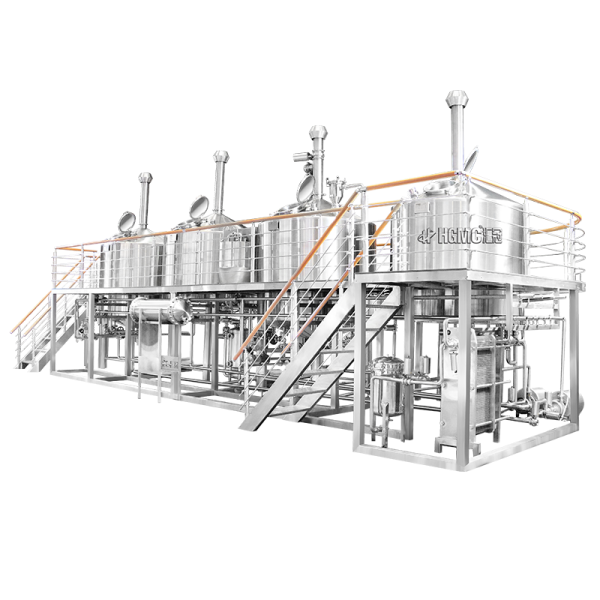
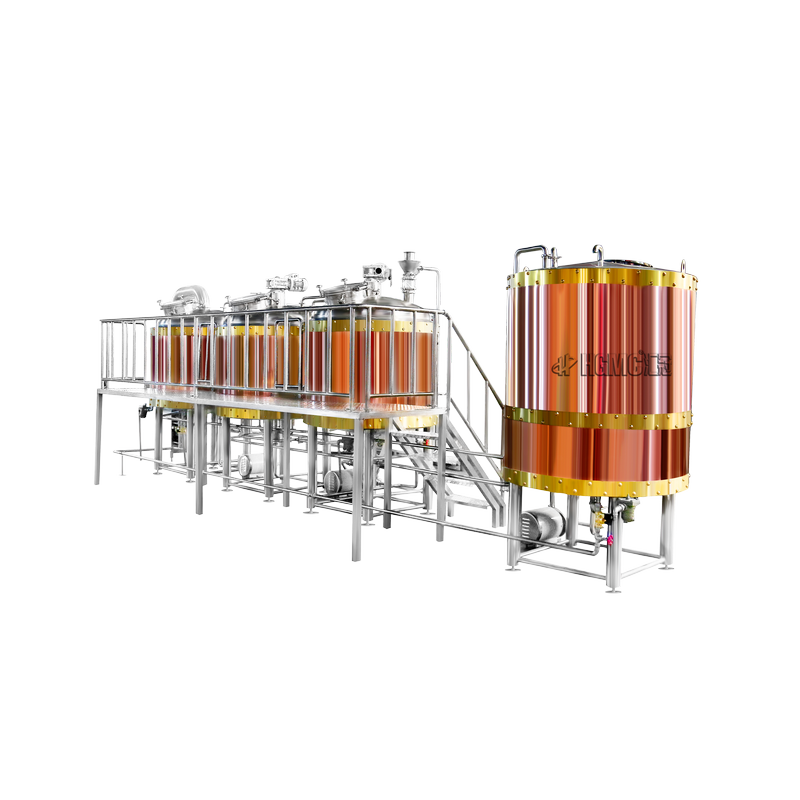
For example, a three-vessel or four-vessel system may offer greater flexibility for coordinating brewing operations. The decision should depend on the number of batches required, available working hours, and the production team's operating capacity.
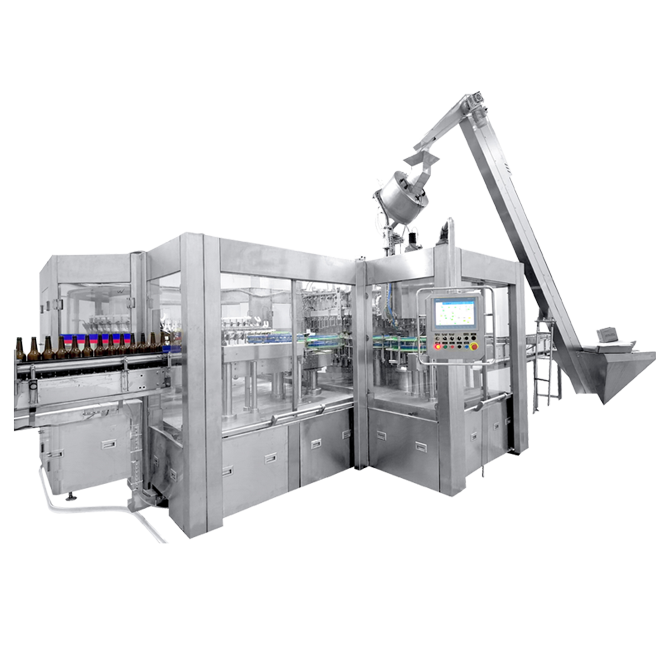
The appropriate choice depends on the sales model. A brewery focused on draft beer does not necessarily need a high-speed canning line, while a brand entering retail distribution may need more comprehensive packaging equipment.
The brewery can also upgrade temperature monitoring, pump control, and automated operating sequences to improve consistency.
A large-scale brewery system may include:
Centralized controls can help operators monitor temperatures, equipment status, and process sequences. Automated CIP can also reduce the workload associated with cleaning multiple vessels.
Packaging capacity is another important consideration. If the filling line cannot handle the available finished beer, the brewery may experience delays even when its brewing and fermentation sections have sufficient capacity.
Advanced options such as CO2 recovery, filtration, centrifugation, and energy-saving systems can also be considered. Their value should be evaluated according to production volume, operating costs, product requirements, and investment returns.
This generally includes the brewhouse, fermentation tanks, cooling, basic cleaning arrangements, necessary transfer equipment, and suitable controls.
Packaging equipment should match the initial sales model. For example, a draft-focused brewery can prioritize keg handling rather than investing in a complete retail packaging line.
If fermentation tanks are constantly occupied, adding more tanks may be more useful than purchasing a larger brewhouse. If finished beer is waiting for packaging, improving filling capacity may provide a better return.
Other possible upgrades include:
Depending on the business, this could include CO2 recovery, filtration or centrifugation, centralized automation, and more comprehensive utility systems.
The timing should be based on actual production needs and operating costs rather than simply following a standard equipment list.
At HGMC, we consider several factors when discussing a customized brewery system.
This approach helps avoid two common problems: purchasing unnecessary equipment at the beginning and discovering later that the original system cannot support the planned expansion.
Our equipment range includes brewhouse systems, fermentation tanks, bright beer tanks, cooling systems, cleaning equipment, and filling and packaging solutions. The configuration can be discussed according to the customer's production target, product requirements, and facility conditions.
Rather than applying one standard equipment package to every project, we consider which systems are essential for the initial operation and which options may be introduced as the brewery develops.
For customers planning a larger production setup, our commercial and industrial beer brewing equipment provides equipment options for different production requirements.
We also offer brewery solutions that bring equipment selection and production planning together. Whether you are starting a small brewery or expanding an existing facility, our team can help you discuss a suitable system configuration.
At HGMC, we help customers evaluate these requirements and develop customized brewing equipment solutions. Tell us your target production capacity, beer styles, packaging requirements, and available facility space.
Contact HGMC to discuss your brewery project and find a suitable complete brewery system line.
At HGMC, we provide brewing equipment and customized brewery solutions for different production requirements. In this guide, we explain which equipment should be prioritized at each brewery scale, which systems can be postponed, and how to plan a complete line that can grow with your business.
Does Every Brewery Need the Same Complete Brewery System?
A complete brewery system does not have to include every available machine or advanced production option. Its purpose is to provide all the equipment and supporting functions required for the brewery's intended operation.A small brewpub selling draft beer directly to customers has different requirements from a commercial brewery distributing bottled or canned beer to multiple markets. Similarly, a large manufacturer needs to consider production continuity, labor efficiency, and packaging capacity.
Before selecting equipment, consider four factors:
- Production target: How much beer do you plan to produce per batch, day, or year?
- Sales model: Will you serve draft beer on-site, supply kegs to other businesses, or distribute packaged beer?
- Operating resources: How many employees will operate and maintain the equipment?
- Expansion plans: Will you increase production capacity or introduce more beer varieties later?
The goal is not to purchase the most equipment possible. It is to build a complete production setup without investing too early in systems that do not yet provide enough value.
Essential Equipment for a Small Brewery System
For a small commercial brewery, the priority is to establish a reliable production foundation. Equipment should support brewing, fermentation, temperature control, cleaning, and the intended method of beer distribution.Equipment a Small Brewery Should Prioritize
| Equipment | Why It Is Needed |
| Malt mill or prepared malt supply | Provides the milled malt required for brewing |
| Brewhouse system | Handles mashing, lautering, boiling, and wort production |
| Fermentation tanks | Provides space for fermentation and beer maturation |
| Cooling system | Maintains the required temperatures during wort cooling and fermentation |
| Pumps, pipes, and valves | Transfer liquids between production stages |
| Cleaning equipment | Supports sanitary cleaning of vessels and product-contact lines |
| Basic control system | Monitors and controls important operating parameters |
Some small breweries may initially purchase prepared milled malt instead of installing their own malt mill. However, they still need a suitable method of handling and transferring the raw materials.
Likewise, a small brewery does not necessarily need a fully automated control system. Basic temperature monitoring and reliable control of critical operations are more important than automation for its own sake.
Equipment That Can Be Postponed
A limited initial budget does not mean every optional system must be purchased immediately.Fully automatic packaging line
A brewpub that serves beer directly from kegs may not need an automatic bottle or can filling line. A suitable keg cleaning and filling arrangement may be sufficient for its initial business model.
Dedicated bright beer tanks
Some small breweries can use suitable fermentation and maturation arrangements to manage finished beer, depending on the tank design, brewing process, and packaging schedule. However, they must still provide appropriate finished-beer storage and conditioning capacity.
CO2 recovery system
CO2 recovery can help reuse fermentation-generated carbon dioxide, but it requires additional equipment and investment. For a small brewery, purchasing a recovery system may not be justified by the available production volume.
Advanced centralized automation
A compact brewery can often operate with basic or semi-automatic controls. More advanced PLC systems can be considered when production complexity, labor requirements, or the number of tanks increases.
One important distinction: postponing an equipment purchase does not mean ignoring the function it performs. Cleaning, temperature control, safe CO2 handling, and hygienic beer storage remain necessary from the beginning.
Equipment Configuration for a Medium-Sized Brewery
When a brewery moves from small-scale production toward regular commercial distribution, its equipment requirements begin to change. The focus shifts from simply establishing production to improving efficiency, increasing output, and managing more products.A medium-sized brewery may benefit from the following upgrades.
More Fermentation and Bright Beer Tank Capacity
Fermentation tanks are often one of the first areas requiring expansion. More tanks allow the brewery to manage additional batches, different beer styles, and overlapping fermentation schedules.Bright beer tanks can also become more valuable at this stage. They provide dedicated space for finished-beer conditioning, carbonation, and storage before packaging.
Improved Brewing Efficiency
Depending on the production schedule, a brewery may consider a larger brewhouse or a configuration with more separate vessels.For example, a three-vessel or four-vessel system may offer greater flexibility for coordinating brewing operations. The decision should depend on the number of batches required, available working hours, and the production team's operating capacity.
More Suitable Packaging Equipment
As distribution expands, manual packaging may become a bottleneck. A medium-sized brewery may need semi-automatic or automatic keg, bottle, or can filling equipment.The appropriate choice depends on the sales model. A brewery focused on draft beer does not necessarily need a high-speed canning line, while a brand entering retail distribution may need more comprehensive packaging equipment.
Higher Cleaning and Control Capacity
More tanks and frequent production cycles increase cleaning requirements. A more organized CIP arrangement can help standardize cleaning operations and reduce manual work.The brewery can also upgrade temperature monitoring, pump control, and automated operating sequences to improve consistency.
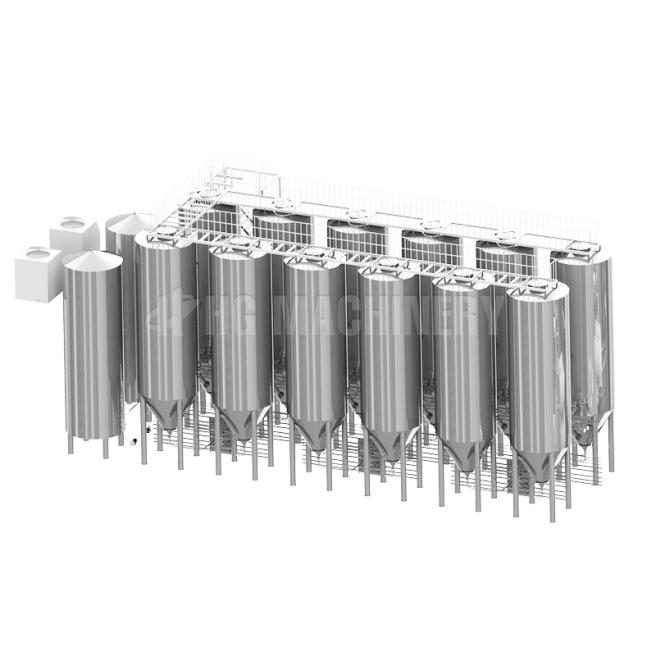
Complete Brewery Equipment for Large-Scale Production
Large breweries have different priorities. At this scale, equipment selection is less about minimizing the initial investment and more about maintaining stable production, coordinating multiple systems, and reducing operational bottlenecks.A large-scale brewery system may include:
| System | Typical Configuration | Main Purpose |
| Brewhouse | Higher-capacity, multi-vessel system | Supports larger and more frequent brewing batches |
| Fermentation cellar | Multiple fermentation tanks | Accommodates overlapping production cycles |
| Beer storage | Dedicated bright beer tanks | Separates finished-beer storage from fermentation scheduling |
| Cooling | Centralized glycol cooling | Supports temperature control across multiple tanks |
| Cleaning | Centralized or automated CIP | Manages cleaning across multiple vessels and circuits |
| Packaging | Automated filling and packaging lines | Handles higher packaged-beer output |
| Automation | Integrated PLC control | Coordinates equipment and monitors production |
| Utilities | Project-specific water, heating, air, and energy systems | Supports continuous plant operation |
Why Large Breweries Need More Integrated Systems
A large brewery may operate many tanks and production batches simultaneously. Manual coordination becomes more complicated as the number of production units increases.Centralized controls can help operators monitor temperatures, equipment status, and process sequences. Automated CIP can also reduce the workload associated with cleaning multiple vessels.
Packaging capacity is another important consideration. If the filling line cannot handle the available finished beer, the brewery may experience delays even when its brewing and fermentation sections have sufficient capacity.
Advanced options such as CO2 recovery, filtration, centrifugation, and energy-saving systems can also be considered. Their value should be evaluated according to production volume, operating costs, product requirements, and investment returns.
Which Brewery Equipment Can Be Added as Your Business Grows?
Not every brewery needs to purchase all its equipment in one investment. A phased approach can help business owners control initial costs while keeping future expansion possible.Phase 1: Establish the Essential Production System
Start with the equipment required to produce beer safely and consistently.This generally includes the brewhouse, fermentation tanks, cooling, basic cleaning arrangements, necessary transfer equipment, and suitable controls.
Packaging equipment should match the initial sales model. For example, a draft-focused brewery can prioritize keg handling rather than investing in a complete retail packaging line.
Phase 2: Increase Capacity and Improve Efficiency
Once production demand becomes more stable, identify the actual limitations of the existing system.If fermentation tanks are constantly occupied, adding more tanks may be more useful than purchasing a larger brewhouse. If finished beer is waiting for packaging, improving filling capacity may provide a better return.
Other possible upgrades include:
- Additional bright beer tanks
- More fermentation tanks
- Improved CIP equipment
- Semi-automatic or automatic packaging
- More advanced process controls
- Expanded cooling capacity
Phase 3: Introduce Advanced Production Systems
When the brewery reaches a higher operating scale, advanced equipment may become economically practical.Depending on the business, this could include CO2 recovery, filtration or centrifugation, centralized automation, and more comprehensive utility systems.
The timing should be based on actual production needs and operating costs rather than simply following a standard equipment list.
How to Customize a Complete Brewery System Line
A brewery system complete line should be designed around the brewery's actual operating requirements. Even two breweries with similar production targets may need different configurations because their products, sales channels, facilities, and budgets are not the same.At HGMC, we consider several factors when discussing a customized brewery system.
- Production capacity and brewing schedule
- Beer styles and product range
- Packaging requirements
- Factory layout and available utilities
- Budget and future expansion
This approach helps avoid two common problems: purchasing unnecessary equipment at the beginning and discovering later that the original system cannot support the planned expansion.
HGMC Provides Customized Brewery System Complete Line Solutions
At HGMC, we provide brewing equipment and customized solutions for different brewery sizes, from compact commercial operations to large-scale production facilities.Our equipment range includes brewhouse systems, fermentation tanks, bright beer tanks, cooling systems, cleaning equipment, and filling and packaging solutions. The configuration can be discussed according to the customer's production target, product requirements, and facility conditions.
Rather than applying one standard equipment package to every project, we consider which systems are essential for the initial operation and which options may be introduced as the brewery develops.
For customers planning a larger production setup, our commercial and industrial beer brewing equipment provides equipment options for different production requirements.
We also offer brewery solutions that bring equipment selection and production planning together. Whether you are starting a small brewery or expanding an existing facility, our team can help you discuss a suitable system configuration.
Get the Right Complete Brewery System for Your Business
A complete brewery system should match your current production needs without limiting future development. Small breweries should prioritize essential production equipment, medium-sized breweries should focus on capacity and efficiency upgrades, and large breweries should consider more integrated and automated systems.At HGMC, we help customers evaluate these requirements and develop customized brewing equipment solutions. Tell us your target production capacity, beer styles, packaging requirements, and available facility space.
Contact HGMC to discuss your brewery project and find a suitable complete brewery system line.