Nov. 18, 2026
News
Industrial Beer Brewing Process Explained From Start to Finish
How does a brewery turn large quantities of malt, water, hops, and yeast into consistent commercial beer? The industrial beer brewing process involves more than traditional brewing steps. It requires coordinated equipment, controlled production conditions, and efficient connections between each stage.
From raw material preparation to fermentation, maturation, and packaging, every stage affects beer quality and production efficiency. Understanding the complete process helps brewery owners plan suitable equipment and build a production line that meets their output requirements.
In this guide, we explain how industrial beer production works and what equipment supports each major stage.
What Is the Industrial Beer Brewing Process?
The industrial beer brewing process is a standardized production sequence that converts brewing ingredients into finished beer on a commercial scale.Unlike small-batch brewing, industrial production places greater emphasis on repeatability, production capacity, process control, sanitation, and equipment coordination.
A typical industrial beer production process includes:
- Raw material preparation and malt milling
- Mashing and lautering
- Wort boiling and whirlpool separation
- Wort cooling and transfer
- Fermentation and maturation
- Filtration and carbonation when required
- Bright beer storage and packaging
How Are Raw Materials Prepared for Industrial Beer Production?
Before brewing starts, the brewery needs to prepare its raw materials and ensure they meet production requirements.Malt handling and milling: Malt is cleaned and crushed to expose the starch inside the grain. The milling process should produce a consistent particle size while retaining enough husk material to support efficient lautering.
Brewing water preparation: Water makes up most of the finished beer. Its quality and mineral composition influence brewing conditions and the final beer profile. Water treatment may be used to achieve suitable and consistent brewing water.
Hop and yeast preparation: Hops are prepared according to the recipe and planned addition stages. Yeast is selected and prepared for fermentation, with the strain and pitching requirements depending on the beer style.
Proper preparation helps reduce variations in the following production stages.
How Does the Industrial Brewing Process Work?
The brewhouse handles the main hot-side brewing operations. These stages convert milled malt into wort, which will later become beer through fermentation.Mashing
Mashing combines crushed malt with hot water in the mash tun. Enzymes naturally present in malt break down starch into fermentable sugars and other soluble compounds.Temperature, time, and water-to-grain ratio influence the composition of the wort. Industrial breweries use controlled heating and mixing to maintain consistent mashing conditions across batches.
Lautering
After mashing, the liquid wort must be separated from the spent grain.The mash is transferred to a lauter tun, where the grain bed acts as a natural filter. Wort passes through the bed, while sparging water rinses additional sugars from the grain.
Efficient lautering helps improve extract recovery and provides cleaner wort for the next stage.
Wort Boiling
The collected wort is transferred to the brew kettle for boiling.This stage serves several purposes:
- Sanitizes the wort before fermentation.
- Extracts bitterness and aroma compounds from hops.
- Removes unwanted volatile compounds.
- Helps coagulate proteins and concentrate the wort.
Whirlpool Separation
After boiling, the wort enters a whirlpool vessel. The liquid is circulated to create a spinning motion that gathers hop particles and coagulated proteins near the center of the vessel.This separation helps remove solids before the wort moves to cooling and fermentation.
Wort Cooling
Hot wort must be cooled to a suitable temperature before yeast is added.A plate heat exchanger is commonly used to transfer heat from the wort to a cooling medium. The cooled wort is then transferred to fermentation tanks under controlled conditions.
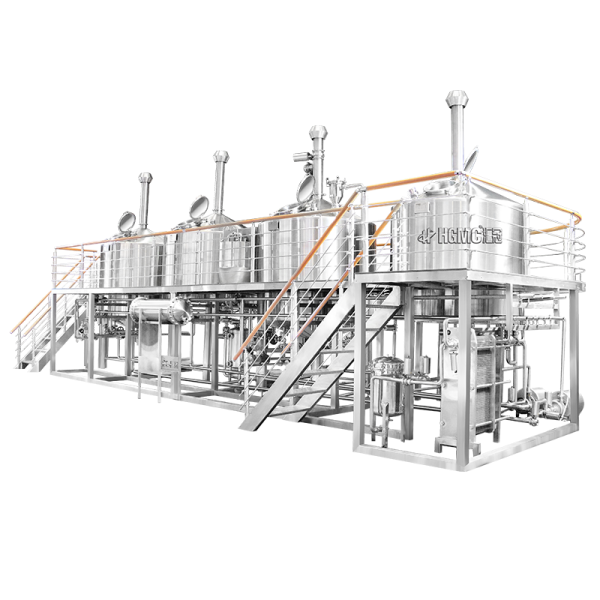
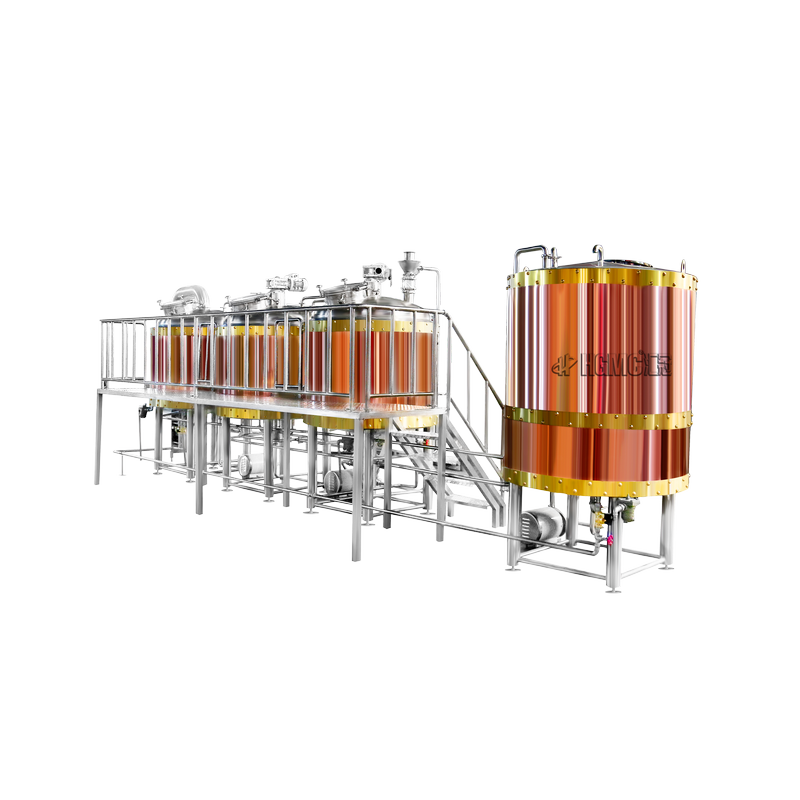
A properly configured commercial brewhouse equipment system brings these hot-side stages together and supports efficient wort production.
How Does Industrial Beer Fermentation and Maturation Work?
After wort cooling, the production process moves to the fermentation cellar. This stage transforms sweet wort into alcoholic beer.Yeast Pitching and Primary Fermentation
Cooled wort is transferred into a fermentation tank, where the selected yeast strain is added.Yeast consumes fermentable sugars and produces alcohol, carbon dioxide, and flavor compounds. The fermentation temperature and duration depend on the beer style and yeast characteristics.
Temperature control is particularly important in industrial production. Cooling jackets and monitoring systems help maintain suitable conditions and reduce unwanted variations between batches.
Beer Maturation and Conditioning
After primary fermentation, beer may remain in the tank for further maturation and conditioning.During this stage, yeast settles and flavor compounds develop. The beer gradually reaches the required characteristics for downstream processing.
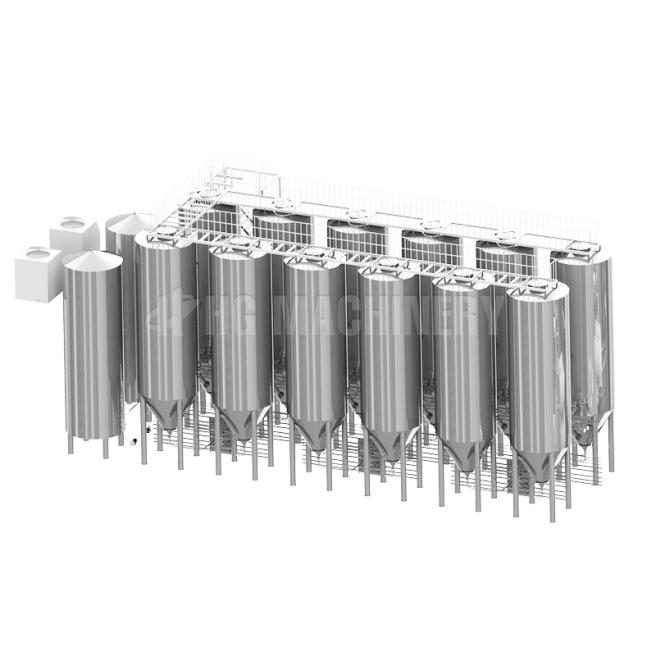
Industrial breweries need to plan fermentation tank capacity according to batch size, brewing frequency, fermentation time, and the number of beer styles produced.
HGMC provides industrial beer fermentation tanks in different capacities to support various brewery production requirements.
How Is Beer Prepared Before Packaging?
Once fermentation and maturation are complete, beer is prepared for storage and packaging. The exact process depends on the beer style and desired product characteristics.Filtration and Clarification
Some breweries filter or clarify beer to remove suspended yeast and other particles. The required treatment depends on the desired clarity and product specifications.Not every beer requires the same filtration process. Certain beer styles are intentionally packaged with more yeast or haze.
Carbonation and Bright Beer Storage
Beer may undergo carbonation adjustment before packaging to achieve the required CO₂ level.Bright beer tanks provide a controlled environment for finished beer storage, carbonation, and packaging preparation. They also help separate fermentation schedules from packaging schedules.
This arrangement can improve production flexibility, especially when the filling line operates at a different pace from the fermentation cellar.
How Does Industrial Beer Packaging Work?
Packaging is the final production stage. Finished beer is transferred into suitable containers while maintaining sanitary conditions and controlling oxygen exposure.The main packaging options include:
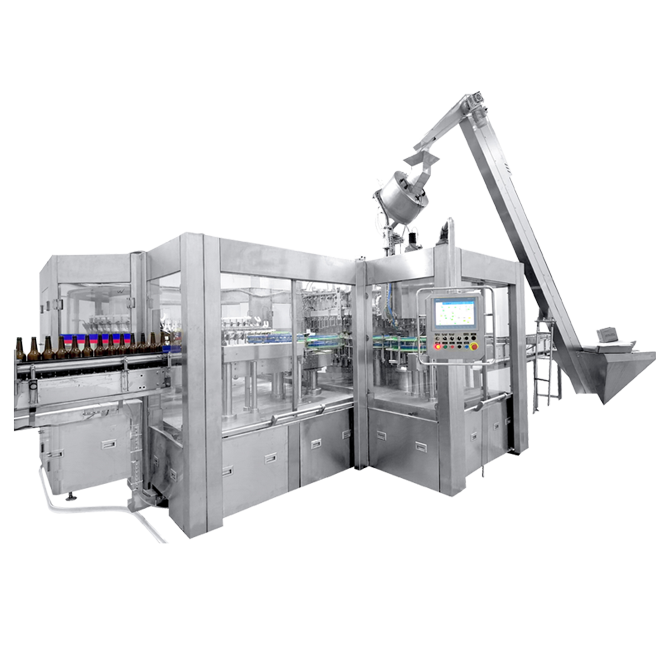
- Bottle filling: Suitable for breweries supplying bottled beer to retail and distribution markets.
- Can filling: Commonly used for packaged beer because cans are lightweight and protect beer from light.
- Keg filling: Suitable for draft beer supplied to bars, restaurants, hotels, and other commercial customers.
Packaging capacity should match the output of the brewing and fermentation systems. Otherwise, a slow filling line can become a bottleneck even when the upstream production equipment has sufficient capacity.
What Makes an Industrial Beer Brewing Process Efficient and Consistent?
Industrial production requires more than large-capacity equipment. The entire process must be planned to reduce unnecessary delays, maintain hygiene, and achieve consistent beer quality.Automated Process Control
Temperature, liquid transfer, heating, and other key operations need to be controlled throughout production.Automation can help coordinate equipment operations and reduce dependence on manual adjustments. The appropriate level of automation depends on production scale, process complexity, and operating requirements.
Integrated CIP Cleaning
Cleaning is essential for preventing contamination and maintaining product quality.A Clean-in-Place (CIP) system circulates cleaning solutions through tanks, pipelines, and other process equipment. A suitable CIP configuration helps standardize cleaning operations and reduce manual cleaning work.
Production Capacity Matching
The brewhouse, fermentation cellar, bright beer storage, and packaging line should be planned as one production system.For example, insufficient fermentation capacity can limit the number of batches a brewery processes, while inadequate packaging capacity can delay finished beer delivery.
Matching equipment capacity helps maintain a more balanced production schedule.
Process Hygiene and Oxygen Control
Sanitary connections, effective cleaning, and proper equipment maintenance help reduce contamination risks.Oxygen exposure should also be controlled during beer transfer and packaging, as excessive oxygen can negatively affect beer flavor and shelf life.
What Equipment Is Needed for an Industrial Beer Brewing Process?
An industrial brewery typically requires several interconnected equipment groups.| Equipment Group | Main Equipment | Production Function |
| Raw material handling | Malt mill and conveying equipment | Prepare and transfer brewing materials |
| Brewhouse | Mash tun, lauter tun, kettle, whirlpool | Produce wort |
| Fermentation | Fermentation tanks | Ferment and mature beer |
| Cooling | Chiller and heat exchanger | Control process temperatures |
| Beer storage | Bright beer tanks | Store and prepare finished beer |
| Cleaning | CIP system | Clean tanks and pipelines |
| Packaging | Bottle, can, and keg filling machines | Package finished beer |
The exact configuration depends on production capacity, beer styles, packaging requirements, available space, and future expansion plans.
At HGMC, we provide brewery equipment ranging from individual machines to integrated production systems. Our solutions can cover brewhouse equipment, fermentation tanks, bright beer tanks, cooling, cleaning, and filling and packaging equipment.
Build an Industrial Beer Production Line with HGMC
Building an industrial brewery requires more than selecting individual machines. Equipment capacity, production schedules, process connections, and future development plans must be considered together.With more than 20 years of experience in the fermentation equipment industry, HGMC provides customized brewery equipment and integrated solutions for different commercial production requirements.
When planning your brewery project, we recommend starting with three key considerations:
- Define production targets: Determine batch size, expected output, and brewing frequency.
- Select suitable equipment: Match brewhouse, fermentation, storage, and packaging capacity to your production plan.
- Plan system integration: Consider cooling, CIP, pipelines, utilities, and automation from the beginning.
Looking for equipment for your industrial beer production project? Contact HGMC to discuss your production requirements and get a customized brewery equipment proposal.