Nov. 11, 2026
News
How Does a Brewery CO2 Recovery System Work?
A brewery CO2 recovery system collects carbon dioxide released during beer fermentation, removes impurities, and prepares the recovered gas for reuse. Instead of allowing fermentation CO2 to escape, commercial breweries can capture and process it to reduce dependence on externally purchased carbon dioxide.
However, fermentation gas cannot be reused directly. It may contain moisture, oxygen, and other impurities that affect gas quality. A recovery system needs suitable collection, washing, filtration, purification, and storage processes to produce CO2 that meets the brewery's intended application requirements.
Understanding how the system works helps brewery owners evaluate equipment configuration, recovery potential, and integration with existing fermentation operations.
Commercial breweries also use CO2 in several production operations, such as purging tanks and pipelines, transferring beer, and carbonating finished beer. These applications create a demand for a reliable CO2 supply.
A recovery system connects these two parts of production: collecting CO2 from fermentation and processing it for suitable reuse.
Recovering fermentation gas creates an opportunity to reuse part of this resource. The amount that can be recovered depends on fermentation activity, gas collection efficiency, system capacity, and actual CO2 demand.
For breweries with sufficient production volume and consistent CO2 demand, a recovery system may become a useful part of the overall production setup.
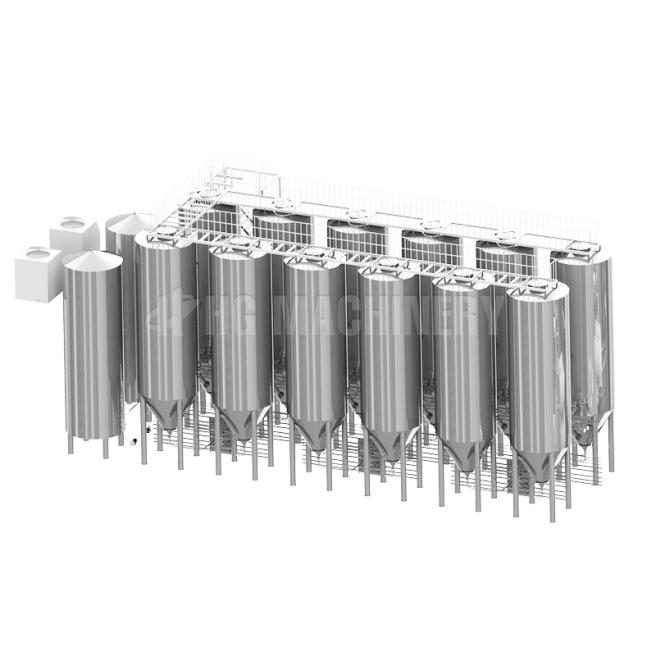
To recover this gas, fermentation tanks need suitable collection connections and a properly designed gas pipeline system.
For breweries operating several fermentation tanks, the collection arrangement should account for the number of tanks, fermentation schedules, and variations in gas production. Not every tank releases the same amount of CO2 at the same time.
Tank connections and gas pipelines should also be designed to support hygienic operation and reliable gas transfer.
For this reason, CO2 recovery requirements are worth considering when configuring brewery fermentation tanks. The tank fittings, gas outlets, and pipeline arrangement can then be coordinated with the wider recovery system.
Initial treatment helps remove unwanted substances before the gas enters subsequent purification stages. The exact treatment arrangement depends on the incoming gas condition and the recovery equipment design.
Stable gas collection and effective pretreatment are important because contaminants entering downstream equipment can affect operation and final CO2 quality.
Its main purpose is to collect fermentation CO2 and deliver it to the treatment section under appropriate operating conditions.
For breweries with multiple fermenters, the pipeline arrangement needs to account for gas flow from different tanks and changing fermentation schedules.
A scrubber can use a washing process to reduce unwanted contaminants before further treatment. Filtration provides another treatment step to help protect downstream equipment and improve gas quality.
The design of the washing section also affects water consumption. HGMC uses structured packing technology in its scrubber column to improve gas-liquid contact and reduce water use. The product specifications indicate water consumption of approximately 0.25 kg per kg of finished CO2.
Compression prepares the gas for downstream treatment and handling. Additional purification is used to reduce residual impurities and non-condensable gases.
One of the technologies used in HGMC's CO2 recovery equipment is PUR-D final purification. It uses a distillation-column rectification process to separate and remove non-condensable gases, helping achieve a low residual oxygen content in the final CO2 output.
Liquid CO2 storage helps create a reserve between periods of gas production and brewery demand. This is useful because fermentation gas generation does not always match the timing of CO2 consumption.
Storage capacity should therefore be considered alongside the brewery's recovery rate and expected usage.
The required purification level depends on the intended application and applicable quality requirements.
Washing, separation, and filtration help reduce these unwanted substances. Additional drying or purification stages may be included depending on the process design and required output specifications.
HGMC's product specifications describe a PUR-D purification option that can achieve a CO2 volume fraction of at least 99.998%, with residual oxygen below 5 ppm by volume.
The product range also identifies regular and low-oxygen output grades. These specifications should be matched to the brewery's actual gas requirements rather than assumed to apply to every recovery system.
Before selecting a system, define where the recovered gas will be used and what quality requirements apply. The purification configuration and testing plan should then be determined accordingly.
A brewery should evaluate these factors together before deciding whether a recovery system is suitable for its operation.
Consider the number and volume of fermentation tanks, the types of beer produced, and how fermentation batches are scheduled. A larger brewery may generate more recoverable gas, but actual output still varies with production conditions.
You should also define the required purity and oxygen level. These requirements influence the purification process and equipment configuration.
A system should not be selected based only on the maximum amount of gas it can process. Its output quality and ability to match actual demand are equally important.
Before finalizing the equipment arrangement, check:
HGMC's CO2 recovery unit uses an electronic control system with a color touchscreen interface. Operators can monitor equipment status, sensor readings, and alarms through the control panel. The unit is also designed for automatic sequential startup and operating-mode control.
When comparing systems, consider the accessibility of maintenance points, availability of replacement parts, and the support required for routine operation.
At HGMC, we provide CO2 recovery equipment designed to collect and utilize carbon dioxide generated during brewing fermentation. Our equipment incorporates gas washing and filtration, while the PUR-D final purification process is available for applications requiring particularly low residual oxygen levels.
The system also uses electronic control technology to support automatic operation and process monitoring. Equipment configuration should be determined according to brewery capacity, incoming gas conditions, required CO2 quality, and installation requirements.
As part of a broader commercial brewery equipment solution, CO2 recovery can be coordinated with fermentation equipment and other production systems. This helps ensure that gas collection connections and supporting processes are considered during project planning.
If you are planning a new brewery or upgrading an existing fermentation cellar, share your production capacity, fermentation tank configuration, expected CO2 demand, and required gas quality with us. Contact HGMC to discuss a suitable CO2 recovery system for your commercial brewing operation.
However, fermentation gas cannot be reused directly. It may contain moisture, oxygen, and other impurities that affect gas quality. A recovery system needs suitable collection, washing, filtration, purification, and storage processes to produce CO2 that meets the brewery's intended application requirements.
Understanding how the system works helps brewery owners evaluate equipment configuration, recovery potential, and integration with existing fermentation operations.
Why Do Breweries Need a CO2 Recovery System?
Carbon dioxide is a natural by-product of alcoholic fermentation. During this process, yeast converts fermentable sugars into alcohol and CO2. The gas is released from fermentation tanks as fermentation progresses.Commercial breweries also use CO2 in several production operations, such as purging tanks and pipelines, transferring beer, and carbonating finished beer. These applications create a demand for a reliable CO2 supply.
A recovery system connects these two parts of production: collecting CO2 from fermentation and processing it for suitable reuse.
Reduce Dependence on Purchased CO2
Without a recovery system, fermentation CO2 is generally released into the surrounding environment through the brewery's gas-handling arrangements. Meanwhile, the brewery may need to purchase CO2 for other production processes.Recovering fermentation gas creates an opportunity to reuse part of this resource. The amount that can be recovered depends on fermentation activity, gas collection efficiency, system capacity, and actual CO2 demand.
Improve Resource Utilization
CO2 recovery makes better use of a gas that would otherwise be discharged. It can also support more controlled CO2 supply planning within a brewery.For breweries with sufficient production volume and consistent CO2 demand, a recovery system may become a useful part of the overall production setup.
How Does CO2 Recovery Work During Beer Fermentation?
The recovery process begins in the fermentation cellar. As yeast converts sugars into alcohol, CO2 is generated and released through the tank's gas outlet.To recover this gas, fermentation tanks need suitable collection connections and a properly designed gas pipeline system.
CO2 Collection from Fermentation Tanks
CO2 is collected through dedicated connections on fermentation tanks and directed into the recovery system.For breweries operating several fermentation tanks, the collection arrangement should account for the number of tanks, fermentation schedules, and variations in gas production. Not every tank releases the same amount of CO2 at the same time.
Tank connections and gas pipelines should also be designed to support hygienic operation and reliable gas transfer.
For this reason, CO2 recovery requirements are worth considering when configuring brewery fermentation tanks. The tank fittings, gas outlets, and pipeline arrangement can then be coordinated with the wider recovery system.
Initial Gas Treatment
Fresh fermentation gas is not ready for direct reuse. It may carry water vapor, foam droplets, yeast particles, and other impurities from the fermentation process.Initial treatment helps remove unwanted substances before the gas enters subsequent purification stages. The exact treatment arrangement depends on the incoming gas condition and the recovery equipment design.
Stable gas collection and effective pretreatment are important because contaminants entering downstream equipment can affect operation and final CO2 quality.
What Are the Main Components of a Brewery CO2 Recovery System?
A brewery CO2 recovery system consists of several connected treatment stages. The exact equipment configuration varies according to the required output, gas quality, and recovery process.CO2 Collection and Gas Handling
The collection system connects fermentation tanks to the recovery unit. It includes suitable gas outlets, pipelines, valves, and related control components.Its main purpose is to collect fermentation CO2 and deliver it to the treatment section under appropriate operating conditions.
For breweries with multiple fermenters, the pipeline arrangement needs to account for gas flow from different tanks and changing fermentation schedules.
Gas Washing and Filtration
Washing and filtration help remove impurities carried by fermentation gas.A scrubber can use a washing process to reduce unwanted contaminants before further treatment. Filtration provides another treatment step to help protect downstream equipment and improve gas quality.
The design of the washing section also affects water consumption. HGMC uses structured packing technology in its scrubber column to improve gas-liquid contact and reduce water use. The product specifications indicate water consumption of approximately 0.25 kg per kg of finished CO2.
CO2 Compression and Further Purification
After initial treatment, the gas needs to undergo further processing according to the system configuration.Compression prepares the gas for downstream treatment and handling. Additional purification is used to reduce residual impurities and non-condensable gases.
One of the technologies used in HGMC's CO2 recovery equipment is PUR-D final purification. It uses a distillation-column rectification process to separate and remove non-condensable gases, helping achieve a low residual oxygen content in the final CO2 output.
CO2 Liquefaction and Storage
Depending on the recovery system configuration, purified CO2 can be liquefied and stored for later use.Liquid CO2 storage helps create a reserve between periods of gas production and brewery demand. This is useful because fermentation gas generation does not always match the timing of CO2 consumption.
Storage capacity should therefore be considered alongside the brewery's recovery rate and expected usage.
How Is Recovered CO2 Purified for Brewery Use?
Purification is one of the most important parts of a brewery CO2 recovery system. The gas generated during fermentation contains more than carbon dioxide, so treatment is necessary before it can be considered for reuse.The required purification level depends on the intended application and applicable quality requirements.
Remove Moisture and Other Contaminants
Moisture and entrained impurities can affect downstream equipment and final gas quality.Washing, separation, and filtration help reduce these unwanted substances. Additional drying or purification stages may be included depending on the process design and required output specifications.
Control Oxygen Content
Oxygen is an important quality indicator for recovered CO2. Excess oxygen can affect applications where low-oxygen gas is required, particularly in processes designed to protect beer from oxidation.HGMC's product specifications describe a PUR-D purification option that can achieve a CO2 volume fraction of at least 99.998%, with residual oxygen below 5 ppm by volume.
The product range also identifies regular and low-oxygen output grades. These specifications should be matched to the brewery's actual gas requirements rather than assumed to apply to every recovery system.
Verify the Final CO2 Quality
CO2 purity alone does not automatically establish suitability for every brewery application. Moisture, oxygen, other impurities, and relevant quality standards also need to be considered.Before selecting a system, define where the recovered gas will be used and what quality requirements apply. The purification configuration and testing plan should then be determined accordingly.
What Are the Benefits of Recovering CO2 in a Brewery?
A CO2 recovery system can provide operational and resource-management benefits, especially for breweries with sufficient fermentation output and regular CO2 consumption.- Reduced external CO2 purchases: Recovered gas can replace part of the CO2 that would otherwise need to be purchased, depending on recovery volume and demand.
- Better resource utilization: Fermentation CO2 becomes a potential production resource rather than being entirely discharged.
- More controlled gas supply: A suitable storage arrangement helps balance differences between CO2 generation and consumption.
- Support for resource efficiency: Reusing fermentation gas can contribute to a brewery's efforts to improve material and energy utilization.
A brewery should evaluate these factors together before deciding whether a recovery system is suitable for its operation.
What Should You Consider Before Installing a Brewery CO2 Recovery System?
Choosing a recovery system requires more than checking its nominal processing capacity. The equipment should match the brewery's fermentation conditions, gas demand, and operating environment.Brewery Production and Fermentation Capacity
Start with your expected beer output and fermentation schedule. These factors help estimate how much CO2 may be available for collection.Consider the number and volume of fermentation tanks, the types of beer produced, and how fermentation batches are scheduled. A larger brewery may generate more recoverable gas, but actual output still varies with production conditions.
CO2 Demand and Required Output Quality
Estimate how much CO2 the brewery uses and identify its main applications.You should also define the required purity and oxygen level. These requirements influence the purification process and equipment configuration.
A system should not be selected based only on the maximum amount of gas it can process. Its output quality and ability to match actual demand are equally important.
Installation Space and Utility Conditions
The recovery unit needs suitable installation space and supporting utilities.Before finalizing the equipment arrangement, check:
- Available floor area and equipment access.
- Electrical supply and control requirements.
- Cooling and other utility conditions specified for the system.
- Gas pipeline routes and connection points.
- Liquid CO2 storage arrangements, where included.
- Ventilation and safe gas-handling provisions.
Automation and Maintenance
Automation can help operators monitor the recovery process and manage equipment operation.HGMC's CO2 recovery unit uses an electronic control system with a color touchscreen interface. Operators can monitor equipment status, sensor readings, and alarms through the control panel. The unit is also designed for automatic sequential startup and operating-mode control.
When comparing systems, consider the accessibility of maintenance points, availability of replacement parts, and the support required for routine operation.
Brewery CO2 Recovery Solutions for Commercial Production
A brewery CO2 recovery system should be designed around the relationship between fermentation gas generation, purification requirements, storage, and actual production demand.At HGMC, we provide CO2 recovery equipment designed to collect and utilize carbon dioxide generated during brewing fermentation. Our equipment incorporates gas washing and filtration, while the PUR-D final purification process is available for applications requiring particularly low residual oxygen levels.
The system also uses electronic control technology to support automatic operation and process monitoring. Equipment configuration should be determined according to brewery capacity, incoming gas conditions, required CO2 quality, and installation requirements.
As part of a broader commercial brewery equipment solution, CO2 recovery can be coordinated with fermentation equipment and other production systems. This helps ensure that gas collection connections and supporting processes are considered during project planning.
If you are planning a new brewery or upgrading an existing fermentation cellar, share your production capacity, fermentation tank configuration, expected CO2 demand, and required gas quality with us. Contact HGMC to discuss a suitable CO2 recovery system for your commercial brewing operation.