Aug. 25, 2026
News
How Automatic Brewery Equipment Solution Improves Brewing Consistency?
For a commercial brewery, brewing consistency means more than producing beer that is “close enough” to the previous batch. It means delivering the intended original gravity, flavor profile, alcohol level, carbonation, clarity, and packaging quality every time the recipe is produced.
An automatic brewery equipment solution helps make this possible by turning key production parameters into repeatable, controlled workflows. Instead of relying on manual timing, valve operation, temperature checks, and handwritten records, breweries can use integrated sensors, pumps, valves, PLC controls, and process data to manage each stage with greater precision.
At HG Beer Equipment, we design brewery solutions for commercial craft breweries and larger production facilities that need to improve repeatability while building a practical foundation for capacity growth. From brewhouse automation to fermentation control and filling integration, the goal is not to replace the brewer’s expertise—it is to make the proven process easier to execute consistently.
Why Does Batch Consistency Matter for Commercial Breweries?
When a flagship beer changes noticeably from one batch to the next, customers notice. A pale ale may finish drier than expected, an IPA may show different bitterness, or a lager may lose the clean profile that defines the brand. These variations can affect customer confidence, quality-control workload, production scheduling, and product costs.In many breweries, batch variation develops in small increments across the process:
- Water volume or liquor-to-grist ratio changes during mash-in.
- Mash temperatures or rest times vary between operators.
- Lautering speed changes, affecting wort quality and extract performance.
- Wort is cooled to a different temperature before fermentation.
- Fermentation tanks do not follow the same temperature and pressure profile.
- Cleaning procedures are performed differently between shifts.
- Filling and packaging operations are not synchronized with upstream production.
How Does Automation Improve Brewhouse Repeatability?
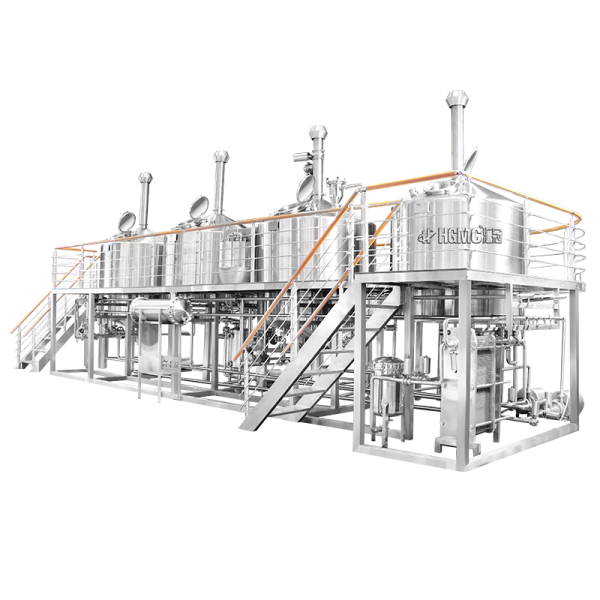
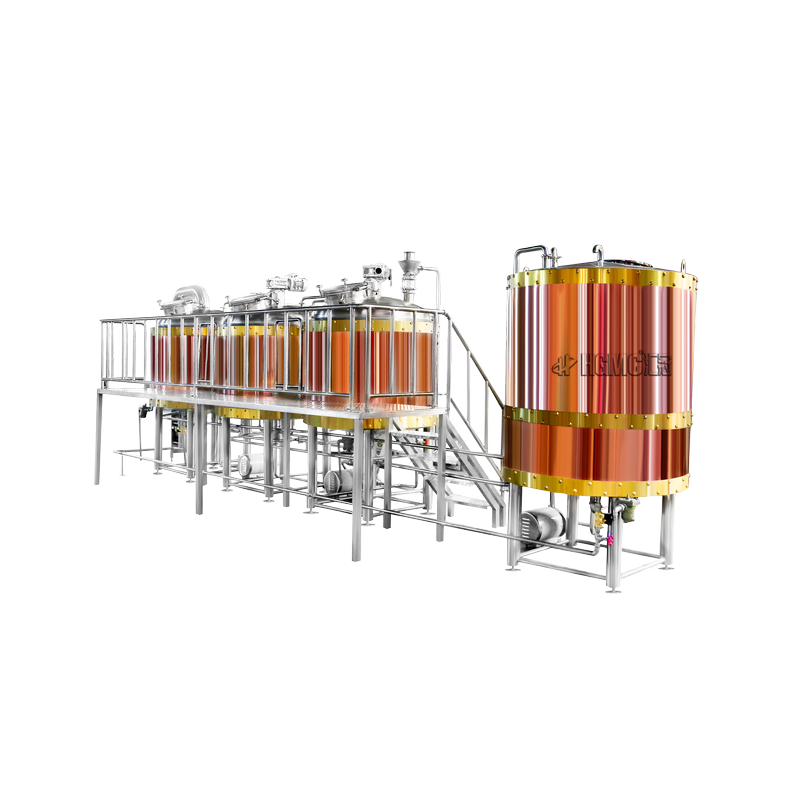
The brewhouse is where the recipe begins to become a measurable production result. If the same mash schedule, water volume, transfer sequence, and boiling profile are not repeated, downstream fermentation control alone cannot fully restore consistency.A well-designed automated brewhouse can combine the core vessels, pumps, valves, instrumentation, and control logic required to standardize daily production. HG Beer Equipment offers brewhouse configurations for commercial breweries, including 2-vessel, 3-vessel, and 4-vessel systems that can be matched with semi-automatic or PLC-based controls.
Controlled Water Dosing Supports Accurate Mash-In
Water volume and temperature directly affect mash conditions. Automated water dosing can help deliver the programmed amount of brewing liquor at the intended temperature, reducing reliance on manual measurement and operator judgment.For breweries that produce multiple beer styles, repeatable mash-in conditions make it easier to maintain recipe targets from batch to batch. This is especially valuable when production is shared across different teams or shifts.
Programmable Mash Profiles Reduce Temperature Variation
Mash temperature and rest time influence wort fermentability, body, and final beer character. With programmable mash profiles, the control system can manage heating stages and hold periods according to the brewer’s approved process.Instead of manually adjusting heat and checking time intervals throughout the brew day, the operator can supervise a structured recipe sequence. This supports more consistent enzyme activity and helps reduce avoidable differences in extract performance.
Automated Pump and Valve Sequences Improve Transfers
Mashing, lautering, wort transfer, and cleaning all depend on correctly sequenced pumps and valves. Manual operation can work well with an experienced crew, but it introduces opportunities for missed steps, incorrect flow paths, or inconsistent transfer timing.Automated sequencing coordinates those actions in the correct order. It can help stabilize lautering and wort movement, reduce unnecessary operator intervention, and make standard operating procedures easier to follow as the brewery team grows.
Boiling and Cooling Become Easier to Repeat
Boiling time, heating intensity, hop-addition timing, and wort cooling all influence the finished beer. Automation can manage programmed boil duration and help coordinate repeatable steps before fermentation.After the boil, stable wort cooling is equally important. Reaching the correct transfer temperature helps create more predictable fermentation conditions, which is essential when a brewery wants to maintain consistent alcohol content, attenuation, aroma, and mouthfeel.
Why Is Fermentation Control Essential for Beer Quality?
A consistent brewhouse process creates a reliable wort foundation, but fermentation determines much of the beer’s final identity. Temperature, tank pressure, cooling response, and maturation time all affect flavor development and carbonation control.That is why an automatic brewery equipment solution should extend beyond the brewhouse. It should connect brewing operations with fermentation control, glycol cooling, tank monitoring, and cleaning procedures.
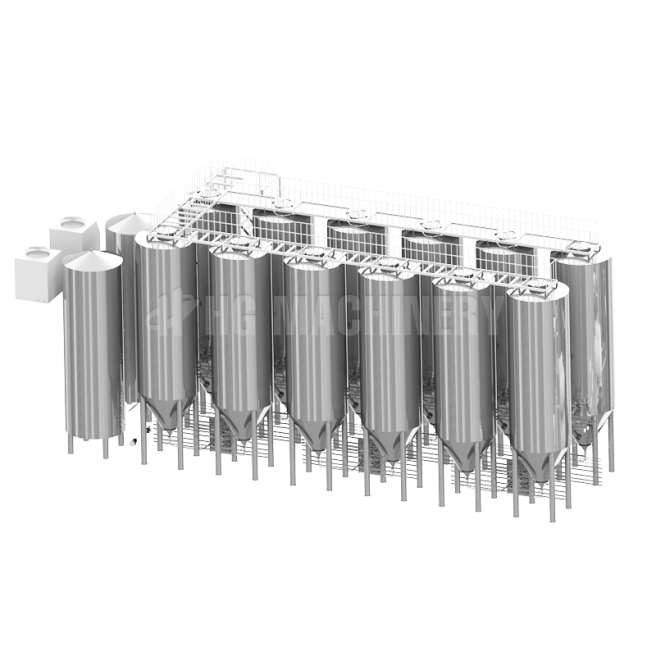
HG Beer Equipment provides fermentation tanks designed for commercial brewery applications, with options that support controlled fermentation and carbonation. Stainless steel fermentation tanks can be integrated into a broader cellar layout with individual temperature management, pressure control, and centralized monitoring.
Individual Tank Temperature Management
Different beer styles require different fermentation programs. A brewery may run ale, lager, seasonal, or specialty products at the same time, each with its own temperature profile and production timeline.Automatic tank temperature control allows each fermenter to operate according to its assigned setpoint. When temperature moves outside the defined range, the system can activate cooling based on the programmed logic. This reduces the risk that manual checks are delayed or that a tank receives inconsistent cooling attention.
Pressure Control Supports Stable Carbonation
Fermentation pressure affects carbonation and can influence the final character of the beer. When tank pressure is monitored and managed consistently, brewers have better control over the conditions needed to achieve their intended product specification.For a growing brewery with several active tanks, centralized tank monitoring also improves visibility. Operators can view key operating conditions from one control interface rather than relying on separate manual checks for every vessel.
Consistent Yeast Handling Supports Predictable Results
Yeast performance is one of the most important factors in repeatable beer production. HGMC’s yeast propagation system uses PLC automatic control and is designed to provide a consistent, reliable, and safe supply of fresh propagated yeast. This helps breweries establish more standardized conditions before fermentation begins.Automation does not replace yeast management or laboratory checks. However, it helps create a more repeatable framework for temperature control, tank handling, and process timing, allowing the brewing team to make better-informed quality decisions.
How Does Automated CIP Protect Brewing Consistency?
Cleaning is a quality-control process, not simply a maintenance task. If CIP procedures vary in time, temperature, chemical circulation, or sequence, the risk of contamination and flavor carryover can increase.An integrated CIP program helps standardize cleaning cycles across brewhouse vessels, fermentation tanks, transfer lines, and related equipment. Automated sequencing can guide the correct cleaning steps and reduce repeated manual handling of chemicals and valves.
For commercial breweries, this creates several practical benefits:
- Cleaning routines can follow the same verified process every time.
- Operators can spend less time managing repetitive valve and pump actions.
- The brewery can create clearer sanitation procedures for new staff.
- Consistent cleaning supports more stable sensory quality and lower contamination risk.
- Production teams can coordinate turnaround time more effectively between batches.
What Data Should an Automated Brewery Record?
Automation becomes more valuable when it provides useful production data. A brewery should not only control a process—it should be able to review whether that process actually followed the intended recipe and operating standard.For each batch, useful data may include:
- Recipe version and production date.
- Water dosing and mash temperature history.
- Mash rest times and heating stages.
- Wort transfer and cooling conditions.
- Fermentation temperature trends.
- Tank pressure and maturation timing.
- CIP cycle information.
- Operator notes and quality checks.
- Packaging losses or production interruptions.
As discussed in our Equipment’s guide to automated brewery equipment for consistent brewing, data logging and standardized control logic can improve traceability, simplify training, and help growing breweries manage quality across more production volume.
What Automation Level Is Right for Your Brewery?
The best solution is not always the most complex one. The right automation level depends on current production scale, product range, staffing, quality requirements, budget, and future expansion plans.A new commercial brewery may begin with automated temperature control, programmed mash steps, and essential pump operations. A growing regional brewery may benefit from PLC recipe control, multi-tank monitoring, alarm functions, and automated CIP sequencing. Larger projects may require coordinated control across milling, brewhouse operations, fermentation, utilities, filling, and packaging.
HGMC develops customized brewery solutions from individual equipment to complete turnkey projects. The company’s product portfolio covers brewing equipment, fermentation systems, filling equipment, and supporting utility equipment; its self-developed automatic control system supports multiple languages and has been applied in more than 2,000 breweries.
Build Consistency Into Your Next Brewery Project
Brewing consistency is not created by one tank, one sensor, or one control panel. It comes from designing the full production process around repeatable parameters—from mash-in and wort production to fermentation, CIP, and final packaging.The most effective automatic brewery equipment solution begins by identifying where variability occurs today. For some breweries, the priority is programmable mash control. For others, it is fermentation temperature management, centralized tank monitoring, automated CIP, or a scalable control structure that can support expansion.
HG Beer Equipment can help commercial breweries specify an automation package that matches their production goals, available space, beer styles, and planned capacity. With a coordinated approach to brewhouse equipment, fermentation systems, control logic, and downstream operations, your brewery can make every batch easier to repeat—and every quality standard easier to protect.