Aug. 25, 2026
News
Can an Automatic Beer Factory Solution Reduce Labor and Operating Costs?
Yes—when it is designed around your actual production bottlenecks, an automatic beer factory solution can reduce repetitive labor, improve process consistency, control losses, and support a more efficient production schedule. The value is not simply “fewer people on the floor.” It comes from helping your brewing team spend less time on manual valve operation, temperature checks, transfer coordination, cleaning routines, and repetitive packaging work.
At HGMC, we design commercial brewery equipment solutions around the full beer production flow—from brewhouse operations and fermentation to cleaning, filling, and packaging. The right automation level should match your brew length, annual output, staffing plan, packaging format, facility utilities, and future expansion goals.
What Does an Automatic Beer Factory Solution Include?
An automatic beer factory solution is not one machine. It is an integrated production system that connects the key stages of commercial beer production through controls, sensors, pumps, valves, tanks, utilities, and packaging equipment.Depending on the project scope, the system may include:
- Malt milling and grain handling
- Automated water dosing and mash-in
- Brewhouse temperature, pump, and valve control
- Wort transfer, boiling, whirlpool, and cooling control
- Fermentation temperature and pressure management
- Yeast propagation and cellar process control
- CIP cleaning automation
- Glycol cooling, hot water, and utility coordination
- Bottle, can, or keg filling and packaging
- PLC control, touchscreen operation, recipe management, alarms, and process data logging
How Does Automation Reduce Labor Costs?
Automation reduces labor costs primarily by reducing repetitive manual work and improving how skilled employees are deployed. A commercial brewery still needs trained operators, brewers, maintenance staff, and quality personnel. However, those employees should not need to manually monitor every temperature, pump, valve, transfer, and cleaning cycle throughout the day.Automating Repetitive Brewhouse Tasks
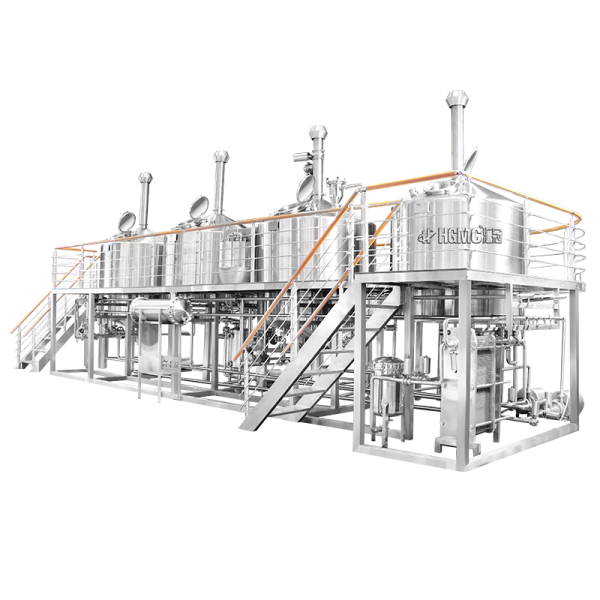
A PLC-controlled commercial brewhouse system can automate key actions such as mash temperature steps, water dosing, pump operation, valve sequencing, wort transfer, boil timing, and process alarms. This helps make brewing days more predictable and reduces the need for continuous manual intervention.Instead of assigning an operator to remain beside the brewhouse for every process change, the team can supervise programmed brewing steps through a centralized control interface. This reduces avoidable operating variation and allows experienced brewers to focus on recipe management, sensory evaluation, quality assurance, and production planning.
HGMC offers automation configurations from semi-automatic panels to PLC-based touchscreen control. This lets breweries select a practical level of automation rather than paying for unnecessary functions at the beginning of a project.
Improving Cellar Staffing Efficiency
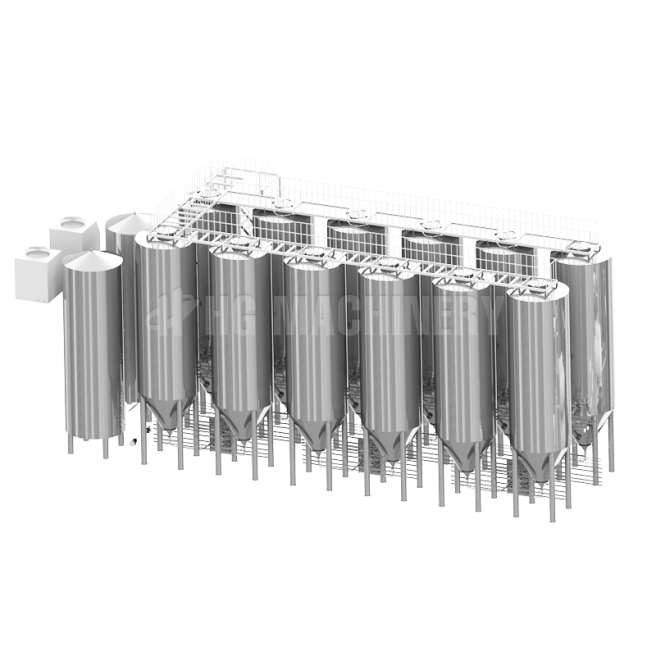
Fermentation requires stable and repeatable conditions. Manual temperature checks and cooling adjustments across multiple tanks can consume significant operator time, especially as cellar capacity grows.With automated fermentation tanks, each vessel can be managed through individual temperature setpoints and automatic cooling control. Operators can review multiple tank conditions through centralized monitoring rather than physically checking each fermenter throughout every shift.
Automated cellar control can also support pressure management, carbonation control, process alarms, and CIP sequencing. This does not replace brewing expertise; it gives the production team a more reliable way to manage more tanks without increasing labor at the same rate as production capacity.
Reducing Manual Cleaning Work
CIP is one of the most important areas for automation because cleaning directly affects product quality, labor use, chemical handling, water consumption, and production turnaround time.A programmed CIP sequence can control circulation time, temperature, pump operation, and cleaning steps. It helps standardize cleaning procedures between batches and reduces dependence on manual timing and repeated valve adjustments. A more consistent cleaning process can also make staff training easier because essential operating procedures are built into the control logic.
Which Operating Costs Can Automation Lower?
Labor is only one part of brewery operating cost. The largest financial opportunity often comes from improving consistency across the full production cycle.Reducing Beer and Raw Material Loss
Manual process variation can affect water-to-grist ratios, mash performance, wort transfer, boil timing, fermentation conditions, and filling accuracy. Over time, small deviations can lead to lower yield, more product loss, and avoidable quality variation.An automatic beer factory solution can improve control over dosing, temperatures, pump sequencing, and transfer routines. This helps breweries maintain repeatable production parameters across batches.
The practical goal is not to claim that automation eliminates loss. The goal is to measure and reduce avoidable loss by tracking indicators such as:
- Malt use per batch
- Wort yield
- Beer loss during transfer
- Finished beer loss during filling
- Rework or rejected batches
- Packaging waste
- Production output per labor hour
Controlling Water, Energy, and Utility Use
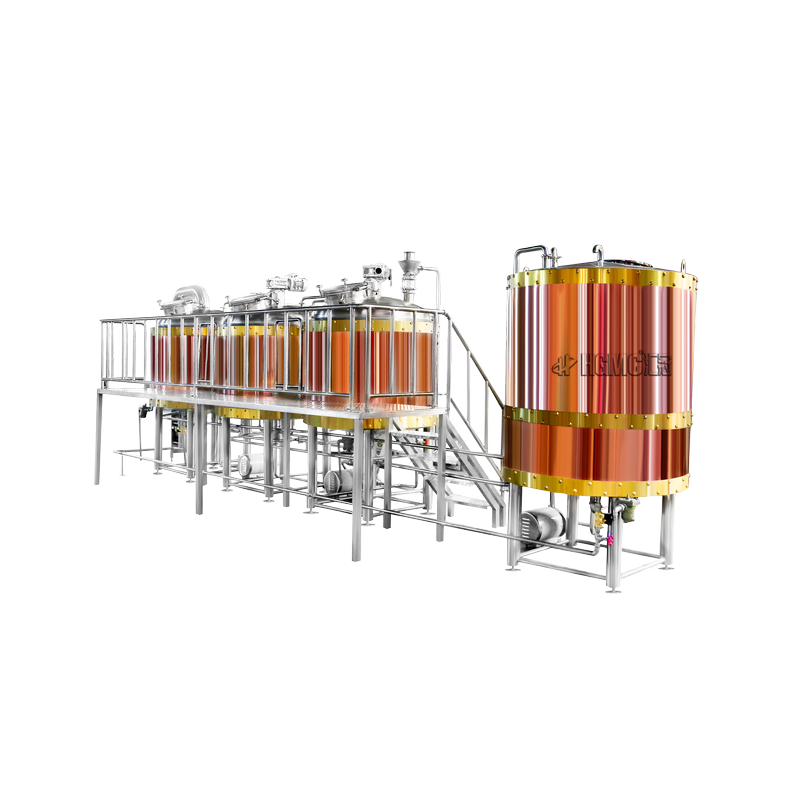
Brewing requires coordinated use of heating, cooling, water, pumping, and cleaning utilities. If these activities are managed inconsistently, utility costs can rise without delivering additional production value.Automation can support more controlled operation of mash heating, hot water use, glycol cooling, pump operation, CIP cycles, and production timing. HGMC’s large-scale brewery solutions are designed with modular configurations, consistent beer production, scalable capacity, and lower energy consumption in mind. HGMC brewery solutions can be tailored around the required brewhouse, fermentation, utility, and packaging configuration.
For a realistic operating-cost analysis, breweries should compare their current and projected:
- Water use per hectoliter of beer
- Electricity use per hectoliter
- Steam or heating consumption
- Glycol and refrigeration load
- CIP water and chemical use
- Hours of equipment idling between batches
Lowering CO₂ and Cellar-Related Costs
Fermentation produces CO₂ that can be collected, purified, and reused within suitable brewery applications. A CO₂ recovery configuration can help reduce dependence on purchased gas while supporting a more sustainable production model.HGMC’s CO₂ recovery equipment is designed to collect CO₂ released during fermentation, purify it, and make it available for brewery reuse. Whether this investment is appropriate depends on production scale, CO₂ demand, utility conditions, and the brewery’s quality requirements. It should be evaluated as part of the full factory design rather than as an isolated equipment decision.
Reducing Packaging Waste and Product Giveaway
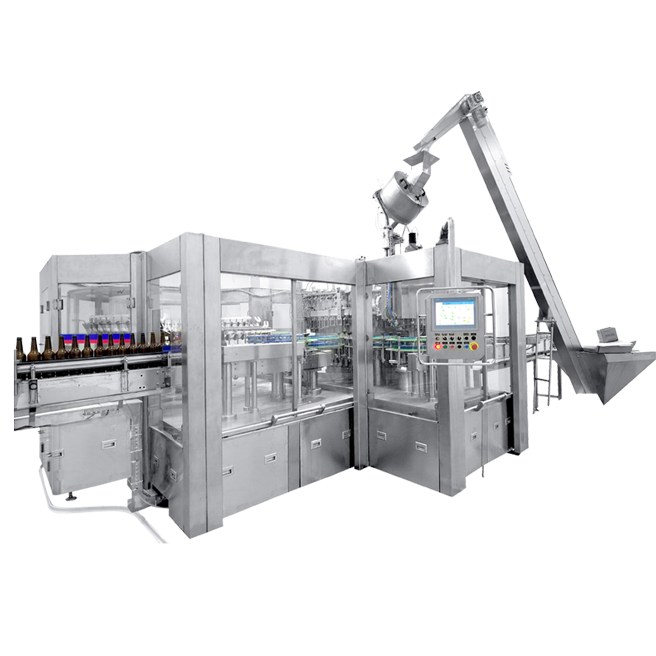
Packaging is often one of the most labor-intensive and loss-sensitive areas in a beer factory. Inconsistent filling levels, unplanned stoppages, manual handling, and poorly matched equipment speeds can increase product giveaway and reduce line efficiency.An automated bottling or canning line can integrate depalletizing, rinsing, filling, capping or seaming, pasteurization, drying, labeling, coding, case packing, and palletizing according to project needs. HGMC can provide fully automatic filling lines with capacities from 7,000 to 36,000 bottles or cans per hour, helping brewery projects improve output consistency and reduce manual packaging work.
What Automation Level Is Right for Your Brewery?
The most cost-effective brewery is not always the one with the highest possible automation level. It is the one that automates the steps causing the most labor pressure, variation, waste, or production delays.Entry-Level Automation for Commercial Breweries
A practical starting configuration may include:- Brewhouse temperature control
- Basic pump and valve control
- Fermentation temperature management
- Glycol system integration
- CIP control
- Touchscreen process monitoring
- Basic alarms and operating records
Advanced Automation for Growing Production
As production volume increases, breweries may need expanded functionality, including recipe storage, automated mash-in, transfer sequencing, multi-tank cellar monitoring, detailed data logging, remote access, automated cleaning, and integrated filling equipment.HGMC’s independently developed brewery control system supports multiple languages and has been applied in more than 2,000 breweries, according to company materials. It is designed to support centralized control across brewing operations while reducing repetitive mechanical work.
Full Factory Automation for Scalable Projects
A fully automatic beer factory is usually most appropriate when a brewery has:- Multiple production shifts
- Higher annual output targets
- A larger fermentation cellar
- Multiple beer brands or recipes
- Significant bottle, can, or keg demand
- Strict batch traceability requirements
- Labor constraints during peak production
- A clear plan for capacity expansion
How Can You Calculate Automation ROI?
Before selecting equipment, establish a baseline for your existing or planned operation. The payback period depends on your specific labor cost, energy price, batch frequency, beer loss, packaging format, and annual output.A basic calculation can use:
Annual Net Benefit = Labor Savings + Loss Reduction + Utility Savings + Additional Gross Profit − Annual Automation Costs
Simple Payback Period = Total Automation Investment ÷ Annual Net Benefit
Annual automation costs should include maintenance, spare parts, calibration, operator training, software support, and any added utility demand. Additional gross profit may come from increased throughput, better packaging efficiency, improved yield, or the ability to produce more consistently during high-demand periods.
To obtain a meaningful calculation, collect actual data for labor hours, batch cycle time, water use, energy use, beer loss, cleaning consumption, downtime, and packaging efficiency. Avoid relying on a generic savings percentage, since the return on investment will vary by project.
What Should You Ask Before Buying Automated Brewery Equipment?
Before investing in an automatic beer factory solution, ask your supplier:- Which brewing and packaging steps will be automated?
- Which tasks will remain operator-controlled?
- How will the system support recipe execution and batch consistency?
- Can the brewhouse, fermentation cellar, CIP, utilities, and packaging line be integrated?
- What capacity can the system support now, and how can it expand later?
- What are the requirements for steam, cooling, electricity, compressed air, water, and drainage?
- How will the equipment fit the available floor layout?
- What data, alarms, and records can operators access?
- What installation, commissioning, training, and technical support are included?
Is an Automatic Beer Factory Solution Worth It?
An automatic beer factory solution can reduce labor and operating costs when it addresses measurable issues in your brewery: repetitive manual work, inconsistent batches, high utility use, product loss, long cleaning cycles, or packaging inefficiency.The best solution is not necessarily fully automatic from the first day. It is a scalable system that fits your production target today while giving you a clear upgrade path for tomorrow. HGMC can help you develop a tailored brewery solution based on your batch size, annual capacity, beer styles, cellar plan, packaging requirements, utilities, and desired level of automation.