Sep. 24, 2026
News
Essential Equipment for a Beer Manufacturing Plant: A Complete Guide
A modern beer manufacturing plant is more than a brewhouse and a few fermentation tanks. To produce beer consistently at commercial scale, a brewery needs a coordinated system covering wort production, fermentation, cooling, cleaning, storage, and packaging.
Whether you are planning a microbrewery, brewpub, craft brewery, or larger beer production facility, the equipment configuration should be based on your target output, beer styles, available space, utilities, packaging requirements, and future expansion plans.

What Is a Beer Manufacturing Plant?
A beer manufacturing plant is a production facility where ingredients such as malt, hops, water, and yeast are processed through a series of brewing and fermentation stages to produce finished beer.
A typical commercial beer production process includes:
- Malt handling and milling
- Mashing
- Lautering
- Wort boiling
- Whirlpool separation
- Wort cooling
- Fermentation
- Maturation and conditioning
- Filtration or clarification when required
- Carbonation
- Packaging
Modern breweries may use manual, semi-automatic, or PLC-based control systems depending on production scale and operating requirements. The goal is not simply to automate every process, but to make important production parameters more repeatable and easier to manage.
A complete brewery system therefore needs to be planned as one connected production workflow rather than as a collection of individual machines.
Beer Production Process in a Manufacturing Plant
Understanding the brewing process is the first step toward selecting the right beer manufacturing equipment.Malting and Milling
Malting prepares barley by allowing it to germinate under controlled conditions before drying. The resulting malt contains enzymes that help convert starch into fermentable sugars during mashing.
Before brewing, malt is milled into grist. Proper milling exposes the starch inside the grain while maintaining an appropriate husk structure for efficient lautering.
For many commercial breweries, a grain mill and malt handling system are included before the brewhouse.
Mashing
During mashing, milled grain is mixed with hot brewing water in the mash tun.
The temperature is controlled to support enzymatic activity and convert starches into fermentable sugars. The resulting mixture, known as mash, is then prepared for lautering.
The mash tun is therefore one of the key vessels in a brewhouse system.
Lautering
Lautering separates the liquid wort from the spent grain.
The grain bed acts as a filtration medium while wort is collected and transferred to the next stage. Depending on the brewery configuration, lautering may be integrated into a combined vessel or handled in a dedicated lauter tun.
For commercial brewing, the design should consider the brewhouse batch size, grain bill, lautering speed, and desired brewing frequency.
Boiling and Whirlpool
The wort is transferred to the brew kettle for boiling. Hops can be added at different points during the boil to influence bitterness, flavor, and aroma.
After boiling, the wort may enter a whirlpool vessel. The whirlpool creates a rotational flow that helps separate hop material and trub from the wort before cooling.
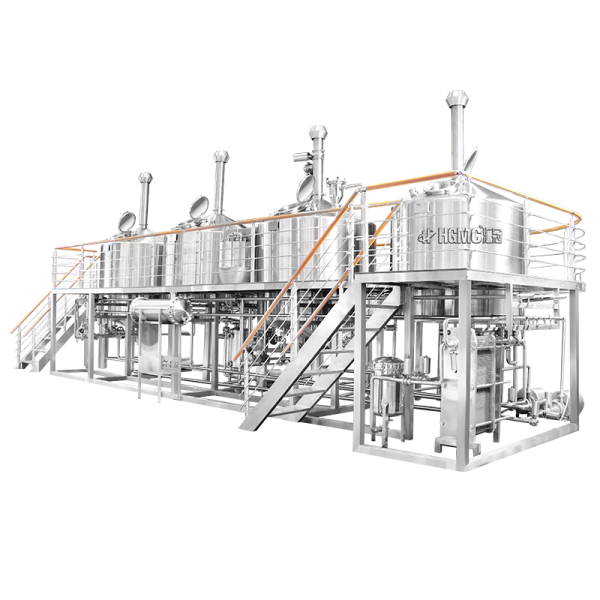
For larger or higher-throughput breweries, the brewhouse configuration can include separate vessels for mashing, lautering, boiling, and whirlpool operations.
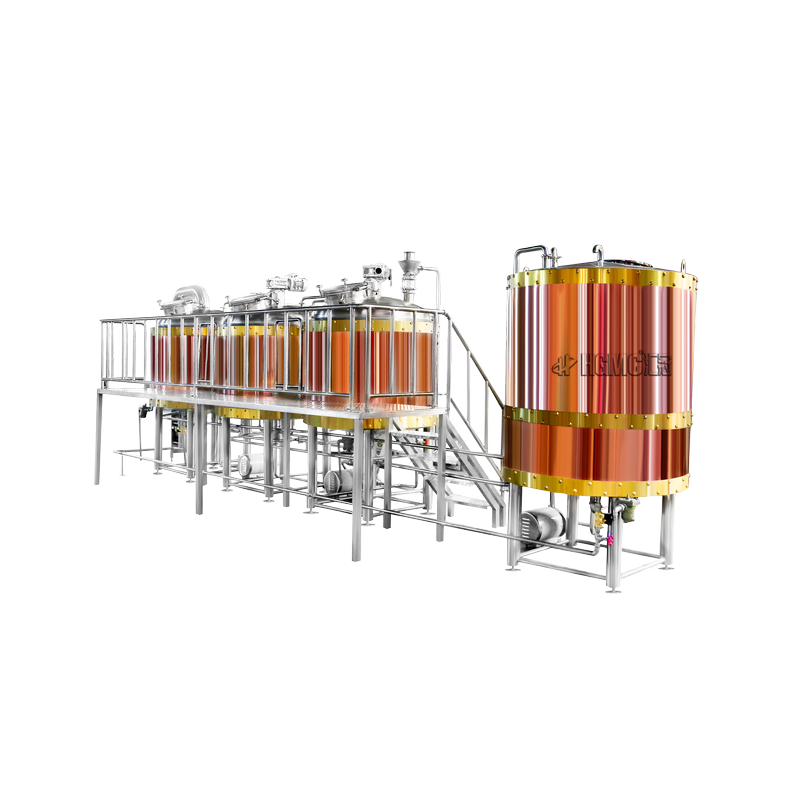
HGMC currently offers 2-vessel, 3-vessel, and 4-vessel brewery configurations, allowing the brewhouse to be matched with production requirements and available space.
Wort Cooling
Before fermentation, hot wort needs to be cooled to an appropriate pitching temperature.
A plate heat exchanger is commonly used for rapid wort cooling. The cooling system may also include a glycol chiller, glycol water tank, pumps, and insulated pipelines.
Cooling capacity should not be calculated from the brewhouse alone. The brewery should also consider the number of fermentation tanks operating simultaneously, fermentation heat load, ambient conditions, and future production requirements.
Fermentation and Maturation
Cooled wort is transferred into fermentation tanks, where yeast converts fermentable sugars into alcohol and carbon dioxide.
Fermentation tanks need to provide:
- Controlled temperature
- Appropriate working volume and headspace
- Pressure management
- Sanitary process connections
- Efficient cleaning
- Practical yeast collection and discharge
Tank quantity is just as important as tank size. A brewery producing multiple beer styles may need additional fermentation capacity because different products can occupy tanks for different periods.
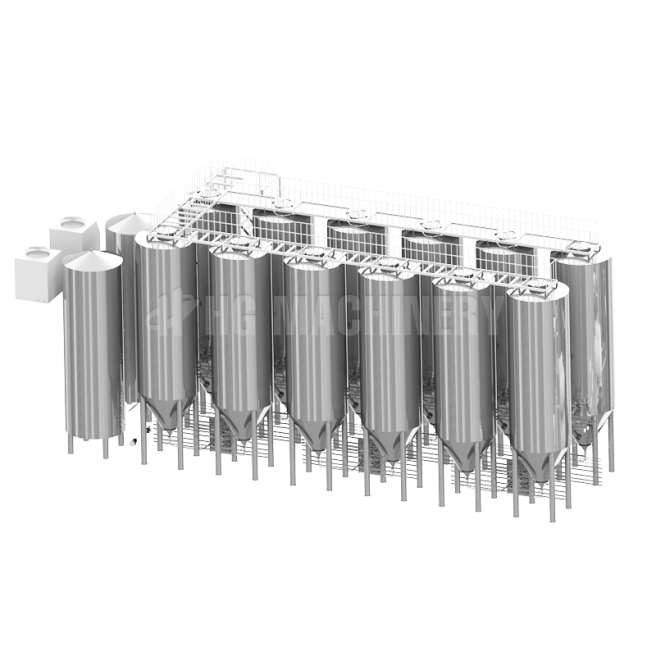
HGMC provides commercial fermentation tanks in capacities ranging from approximately 300L to 100,000L, allowing cellar capacity to be configured around production schedules rather than relying on a single standard tank size.
Bright Beer Storage and Conditioning
After fermentation and maturation, beer may be transferred to bright beer tanks for clarification, carbonation, finished-beer storage, and packaging preparation.
Bright beer tanks can be particularly useful when a brewery needs to separate fermentation capacity from packaging schedules.
For example, if fermentation tanks are occupied by new batches, finished beer can remain in bright tanks while waiting for bottling, canning, kegging, or draft service.
Packaging
The final stage is packaging.
Depending on the brewery's sales model, beer may be packaged into:
- Bottles
- Cans
- Kegs
- Other suitable containers
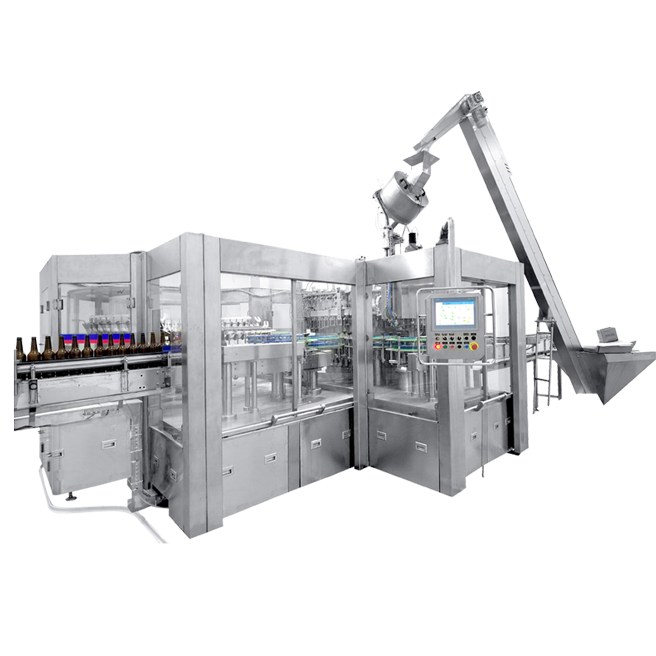
A complete commercial brewery project may integrate filling, capping or seaming, labeling, coding, pasteurization, case packing, and palletizing.
The packaging system should be matched to production output. A brewery with sufficient brewing capacity can still create a production bottleneck if its filling line cannot keep up with finished beer output.
Key Equipment Needed in a Beer Manufacturing Plant
A commercial beer manufacturing plant normally requires more than the basic brewhouse.1.Brewhouse System
The brewhouse is the core of wort production.
Depending on the brewery's requirements, it may include:
- Mash tun
- Lauter tun
- Brew kettle
- Whirlpool
- Hot liquor tank
- Cold liquor tank
- Wort pumps
- Wort heat exchanger
- Process piping and valves
2.Fermentation Tanks
Fermentation tanks are essential for converting wort into beer and controlling fermentation conditions.
Commercial breweries should consider:
- Tank working volume
- Total volume
- Number of tanks
- Fermentation time
- Beer styles
- Cooling requirements
- Pressure rating
- Tank layout
- Future expansion
3.Bright Beer Tanks
Bright beer tanks provide additional capacity for conditioning, clarification, carbonation, and finished-beer storage.
They can also help separate the fermentation schedule from the packaging schedule, which is important for breweries producing multiple beer styles or operating a packaged-beer line.
4.Coling and Glycol System
Temperature control is critical throughout commercial brewing.
A brewery cooling system may include:
- Glycol chiller
- Glycol water tank
- Cooling pumps
- Fermentation tank cooling jackets
- Heat exchanger
- Insulated pipelines
- Temperature sensors and control valves
5.CIP Cleaning System
Cleaning should be designed as part of the brewery system rather than treated as an afterthought.
A CIP system may serve:
- Brewhouse vessels
- Fermentation tanks
- Bright beer tanks
- Process pipelines
- Transfer equipment
- Packaging-related product-contact equipment
6.Filling and Packaging Equipment
For breweries selling packaged beer, filling equipment is an important part of the overall plant configuration.
Depending on the product format, the packaging system may include:
- Bottle filling equipment
- Can filling equipment
- Kegging equipment
- Capping or seaming
- Pasteurization
- Labeling
- Coding
- Case packing
- Palletizing
How to Choose Equipment for a Beer Manufacturing Plant
Selecting equipment should begin with the brewery's production plan rather than a standard equipment list.Define Your Target Production Capacity
Start by determining:- Target production per batch
- Number of brews per week
- Annual beer production
- Number of beer styles
- Fermentation and maturation time
- Packaging volume
- Expected future growth
Match Brewhouse Capacity to Fermentation Capacity
The brewhouse and cellar need to work together.
A large brewhouse with insufficient fermentation capacity can leave production waiting for available tanks. Conversely, installing significantly more cellar capacity than the brewing schedule requires may increase the initial project cost without providing immediate production value.
The correct configuration should consider batch size, brewing frequency, fermentation time, conditioning time, and future expansion.
Choose the Right Vessel Configuration
A 2-vessel system may combine several brewing functions to save space and simplify the equipment configuration.
A 3-vessel system can separate key brewing operations and provide greater flexibility.
A 4-vessel system can provide additional process separation for breweries with higher production requirements or more complex brewing schedules.
The choice should be based on production requirements rather than assuming that a larger number of vessels is always better.
Consider Material and Sanitary Design
Commercial brewing equipment needs to withstand repeated heating, cooling, cleaning, and production cycles.
Stainless steel is widely used for brewery vessels because it is corrosion-resistant, durable, and suitable for sanitary processing.
However, material selection is only one part of equipment quality. Buyers should also examine:
- Weld quality
- Internal surface finish
- Sanitary fittings
- Tank insulation
- Pressure protection
- Cleaning access
- Process connections
- Control instrumentation
Decide the Appropriate Automation Level
Automation can range from manually operated equipment to centralized PLC-based brewery control.
A brewery should consider which processes need repeatable automated control, such as:
- Temperature management
- Pump and valve operation
- Mashing
- Wort transfer
- Fermentation cooling
- CIP cycles
- Alarm management
- Production data logging
How to Choose a Beer Manufacturing Equipment Supplier
The equipment supplier can affect not only the initial purchase but also installation, commissioning, maintenance, and future expansion.Look at Complete System Capability
Instead of comparing individual machines only by price, check whether the supplier can coordinate the complete production system.
A commercial brewery project may involve:
- Malt handling
- Brewhouse
- Fermentation tanks
- Bright beer tanks
- Cooling
- CIP
- Pumps and pipelines
- Automation
- Filling and packaging
- Utility equipment
- Installation and commissioning
Check Customization Capability
Every brewery has different requirements.
A supplier should be able to adjust equipment according to:
- Production capacity
- Beer styles
- Building dimensions
- Utility conditions
- Packaging format
- Automation requirements
- Future expansion
Evaluate Engineering and After-Sales Support
Before purchasing, ask the supplier about:- Process design
- Equipment layout
- Installation
- Commissioning
- Operator training
- Warranty
- Spare parts
- Technical support
- Future equipment additions
Why Choose HGMC for Beer Manufacturing Equipment?
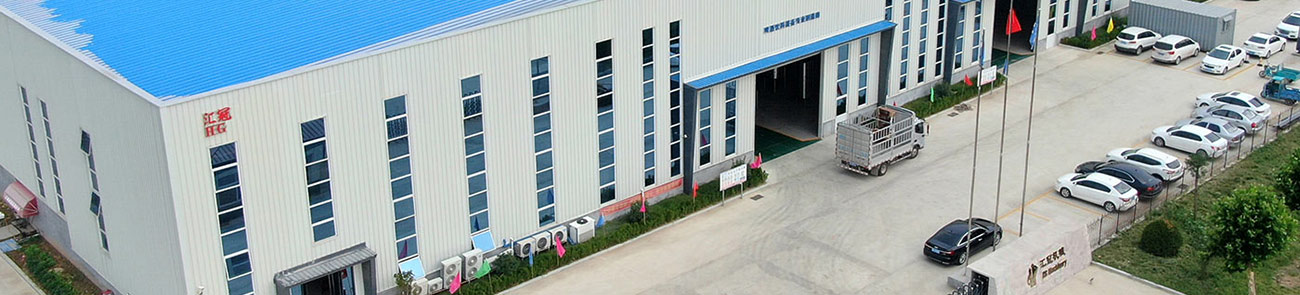
HGMC provides brewery equipment and turnkey brewery solutions covering brewing, fermentation, cooling, filling, and packaging.
The company's current product range includes brewery systems, fermentation tanks, bright beer tanks, filling machines, and auxiliary equipment. Brewery configurations can be selected by capacity, vessel configuration, brewery type, and application.
HGMC also provides project services covering equipment selection, process and layout design, manufacturing, installation, commissioning, and technical training. Its stated service model includes door-to-door service, installation support, and after-sales service.
For breweries planning different production scales, available configurations include smaller commercial systems as well as 500L, 1000L, 2000L and larger brewery systems. The company also provides fermentation tank options across a wider capacity range.
Explore HGMC Beer Brewing Equipment
Frequently Asked Questions
What equipment is needed for a beer manufacturing plant?
A commercial beer manufacturing plant typically needs a brewhouse, fermentation tanks, cooling system, CIP system, process pumps and pipelines, and packaging equipment. Depending on the project, it may also require bright beer tanks, filtration, yeast handling, utilities, automation, and CO₂ recovery.What is the difference between a brewhouse and a complete brewery system?
A brewhouse handles the main wort-production stages, including mashing, lautering, boiling, and whirlpool separation. A complete brewery system also includes fermentation, cooling, cleaning, storage, utilities, controls, and potentially filling and packaging.How many fermentation tanks does a brewery need?
The required number depends on brewhouse batch size, brewing frequency, fermentation and maturation time, beer styles, packaging schedule, and target production volume. Tank quantity should be calculated from the complete production schedule rather than brewhouse capacity alone.Should a brewery use 2-vessel or 3-vessel equipment?
Both configurations can be suitable. A 2-vessel system can provide a compact solution, while a 3-vessel system provides greater separation between brewing stages. The appropriate choice depends on production capacity, brewing frequency, space, labor, and process requirements.Does a commercial brewery need a CIP system?
For commercial production, a properly designed CIP system can help standardize cleaning of vessels and process lines. The required CIP configuration depends on the number and size of vessels, cleaning circuits, production schedule, and desired automation level.Can brewery equipment be expanded later?
Yes, if expansion is considered during the initial design. Space for additional fermentation or bright beer tanks, cooling capacity, utility connections, PLC capacity, and process piping can be reserved during the first project phase.Build a Beer Manufacturing Plant Around Your Production Plan
A successful beer manufacturing plant is not defined by one large brewhouse or a long equipment list. The brewing, fermentation, cooling, cleaning, storage, automation, and packaging systems need to work together around the brewery's actual production schedule.
Before purchasing equipment, define your target capacity, beer styles, batch size, fermentation cycle, packaging format, building conditions, utilities, and expansion plans. Then use these requirements to determine the right brewhouse, fermentation capacity, cooling system, CIP configuration, automation level, and packaging equipment.
For breweries planning a new facility or upgrading an existing operation, HGMC provides brewery equipment and turnkey project solutions designed around individual production requirements.
Discuss your brewery project with HGMC to develop a beer manufacturing equipment configuration suited to your capacity, process, and future growth.