Aug. 20, 2026
News
How to Lower Brewhouse Beer Factory Price Without Sacrificing Quality?
A lower brewhouse beer factory price should not mean accepting unreliable equipment, weak process control, or a system that cannot support future growth. The smarter approach is to reduce unnecessary capital expenditure while protecting the equipment features that determine beer consistency, sanitation, uptime, and operating efficiency.
For commercial breweries, the key question is not simply, “How much does brewery equipment cost?” It is: What capacity, configuration, and level of project support will enable reliable, profitable beer production?
A complete brewery equipment solution brings brewing, fermentation, filling, and packaging into one coordinated plan—helping investors avoid disconnected purchasing decisions, hidden costs, and costly changes later.
What Determines Brewhouse Beer Factory Price?
Brewhouse beer factory price varies because a brewhouse is not a single standardized machine. Its final cost depends on the process design, production target, vessel configuration, automation level, utility requirements, and scope of supply.The biggest cost drivers normally include:
- Brewhouse capacity and planned brewing frequency
- Two-vessel, three-vessel, or four-vessel configuration
- Heating method, such as steam, electric, or direct fire
- Tank material, thickness, insulation, and cooling design
- Pumps, valves, pipework, platforms, and heat exchangers
- Manual, semi-automatic, or PLC-based controls
- CIP capability and sanitation-focused design
- Fermentation, bright beer storage, filtration, and packaging requirements
- Installation, commissioning, technical training, logistics, and after-sales support

How Can You Choose the Right Brewhouse Size?
Oversizing is one of the most common reasons a brewery spends more than necessary. A large brewhouse may appear attractive because it offers higher theoretical output, but unused production capacity ties up capital, occupies valuable floor space, and can increase utility demand.Before selecting capacity, define:
- Your target annual beer output
- Expected weekly brewing schedule
- Beer styles and fermentation times
- Sales channels and packaging plan
- Available building area and utility capacity
- Expected expansion timeline
A brewery that plans limited weekly production may achieve better investment efficiency with a compact system and sufficient fermentation capacity. In contrast, a brewery that must brew several batches each day may benefit from a more advanced vessel configuration that reduces waiting time between mashing, lautering, boiling, and whirlpool stages.
The most cost-effective choice is not necessarily the smallest brewhouse. It is the system that matches actual demand without becoming a bottleneck or creating expensive idle capacity.
Is a Two-Vessel Brewhouse the Best Value?
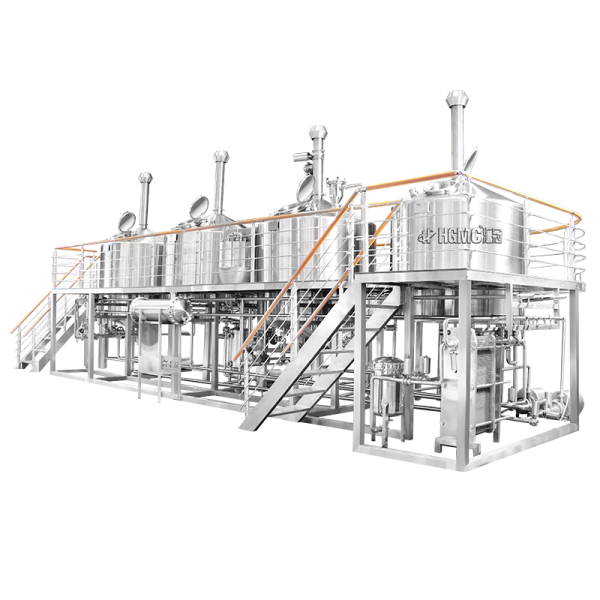
A two-vessel brewhouse is often a practical solution for commercial projects with moderate production targets, limited space, or a controlled startup budget. Because it uses fewer vessels and less associated pipework, it can reduce initial equipment cost, installation complexity, and floor-space requirements.
A two-vessel system may be suitable when:
- Brewing frequency is limited
- Production scheduling is flexible
- The facility has space constraints
- The brewery is launching in stages
- Capital must be prioritized for fermentation, cooling, or sales development
For higher brewing frequency or more complex production planning, a three-vessel or four-vessel arrangement can provide better throughput. The right choice depends on total operating needs, not on the number of vessels alone.
Where Can You Reduce Cost Safely?
Can Modular Design Reduce Upfront Brewery Equipment Cost?
A modular design allows a brewery to purchase what it needs now while preserving a logical path for expansion. Instead of investing in every possible feature on day one, the brewery can reserve space, utility connections, control interfaces, and pipework provisions for additional tanks or packaging equipment later.This approach may allow a project to begin with:
- A correctly sized brewhouse
- Essential fermentation capacity
- Cooling and CIP systems
- Core automation functions
- A packaging route aligned with current sales needs
Can Standardized Fabrication Lower Price Without Lowering Reliability?
Custom engineering is valuable when it solves a real production, building-layout, or regulatory issue. But cosmetic changes, unnecessary vessel variations, and non-standard accessories can increase brewhouse beer factory price without improving beer quality.
Using proven vessel designs, standard sanitary components, and established control logic can reduce design and manufacturing cost while maintaining reliable performance.
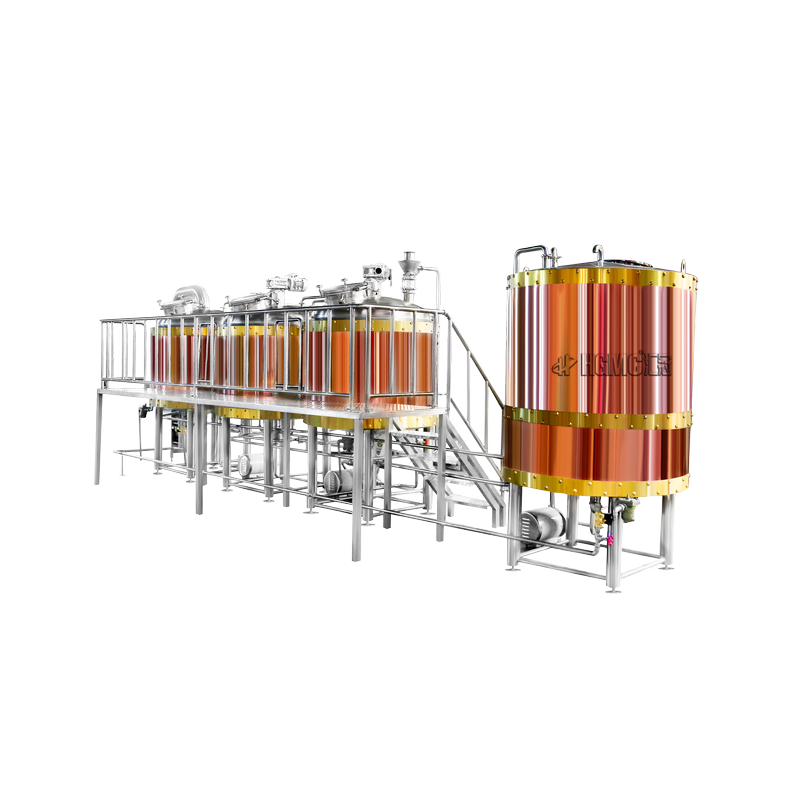
HG provides multiple mashing-system options for different commercial brewing needs, including standardized configurations designed for durability, operational flexibility, and cost performance. Its brewery equipment range covers options from compact commercial systems to larger production-oriented configurations.
How Should You Balance Brewhouse and Fermentation Capacity?
A brewhouse produces wort, but fermentation capacity determines how much beer can be processed and held through fermentation and conditioning. Investing heavily in a brewhouse while underinvesting in cellar capacity can create a production bottleneck.
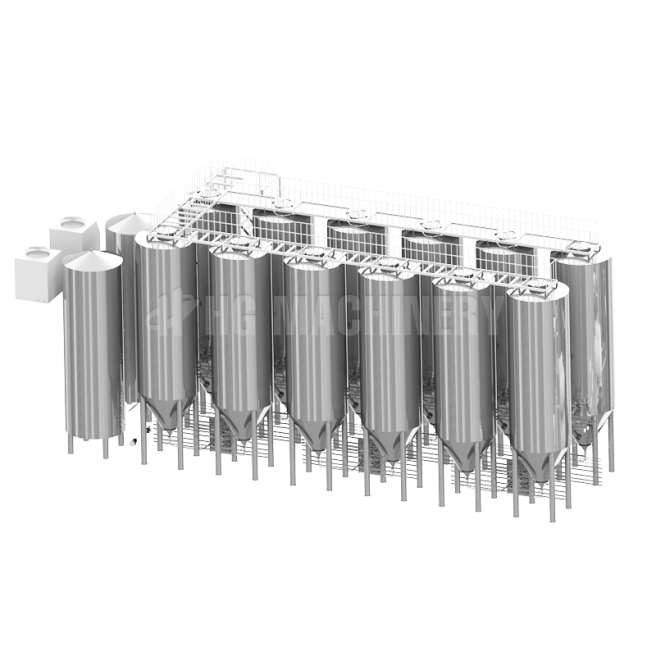
A well-planned fermentation tank strategy helps breweries match tank volume and quantity to their beer portfolio, fermentation cycles, and packaging schedule. HG’s fermentation solutions are designed for projects ranging from smaller commercial breweries to large-scale systems, with configurable process pipelines and supporting equipment.
The practical goal is balance:
- Do not buy a brewhouse that outpaces available fermentation space
- Do not install too few tanks for beer styles with longer maturation cycles
- Do not overlook bright beer storage if packaging demand is growing
- Do not add capacity without checking glycol, water, electrical, and floor-space requirements

What Should Never Be Sacrificed?
What Material, Welding, and Sanitary Standards Protect Beer Quality?
Commercial brewhouse equipment should use appropriate food-contact materials and a hygienic fabrication standard. Buyers should verify:- Stainless-steel specifications for product-contact surfaces
- Tank thickness and structural stability
- Weld quality and internal finishing
- Insulation construction and cladding
- Drainability and avoidance of unnecessary dead zones
- Sanitary pipework, valves, clamps, seals, and fittings
Why Are CIP, Cooling, and Process Control Non-Negotiable?
Cleaning-in-place design is not an optional luxury. A properly designed CIP system supports repeatable sanitation, reduces manual cleaning time, and helps protect beer quality between batches.
The system should enable effective cleaning of brewhouse vessels, pipelines, heat-exchange equipment, fermentation tanks, and other product-contact components. Poor drainage, inaccessible areas, or incomplete CIP coverage may lower the purchase price initially but can increase labor, water use, chemical use, and contamination risk over time.
Stable temperature control protects process consistency from mashing through fermentation. Cooling capacity, glycol circulation, heat exchange, temperature sensors, and control logic should be selected according to the brewery’s production plan rather than reduced simply to lower the quotation.
HG’s brewery project capabilities include automated control for brewing and fermentation processes, including centralized touchscreen operation and automatic temperature-control functions for mashing.
Why Should You Verify Support Before Choosing the Lowest Quote?
Manual operation may be suitable for some projects, but the brewery should not compromise on critical control functions. A properly selected control system can improve repeatability, reduce operator error, support cleaning procedures, and lower labor demand.
HG has developed an automated central control system for craft breweries that supports mechanical automation and can reduce labor requirements. Its control systems have been applied across a large number of brewery projects and support multiple languages.
How Can You Compare Supplier Quotes Correctly?
A professional quote comparison should focus on technical scope, not just total price. Ask every supplier to provide detailed specifications that allow a like-for-like comparison.What Should You Check in Every Quote?
Brewhouse configuration: Confirm vessel quantity, individual vessel function, batch volume, and realistic brewing frequency.Tank construction: Check material, thickness, insulation, cladding, manways, and support structure.
Heating system: Verify the heating method, control scope, energy requirement, and safety features.
Process equipment: Confirm pump quantity, heat-exchanger capacity, valves, pipework, sensors, and process flow.
Cleaning system: Review CIP tank quantity, pumps, spray devices, return paths, and chemical-handling requirements.
Automation: Define whether the system is manual, semi-automatic, or PLC controlled, including alarms and process monitoring.
Fermentation system: Compare tank quantity, volume, cooling zones, pressure control, and expansion capability.
Utilities: Confirm electrical load, water demand, heating supply, glycol requirement, and compressed-air demand.
Project support: Verify the scope for layout drawings, process flow, installation, commissioning, and training.
Warranty and service: Clarify warranty terms, technical support, spare-parts availability, and service response procedures.
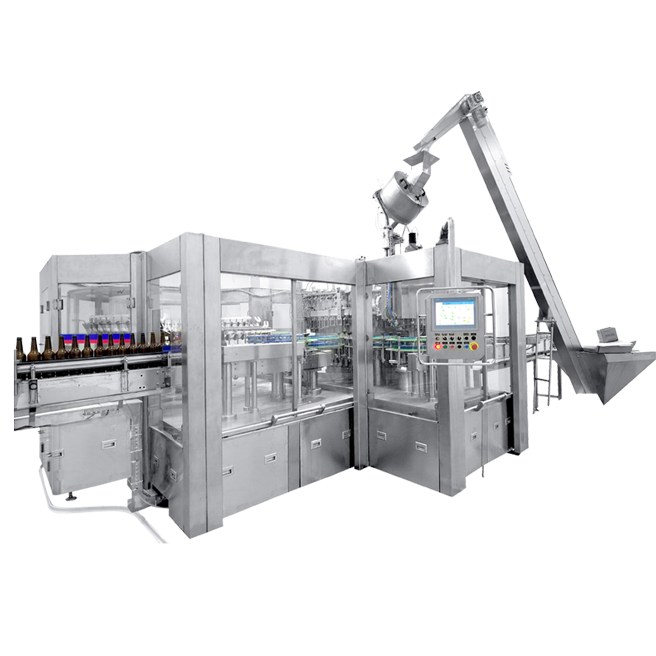
A complete brewery project should also consider the working relationship between brewing, fermentation, filling, packaging, and utility systems. HG’s integrated solutions cover equipment for beer brewing, fermentation, filling, packaging, and related auxiliary systems, enabling buyers to plan equipment interfaces more consistently.

Why Is Lifecycle Cost More Important Than Initial Price?
The lowest purchase price is not always the lowest-cost project. A lower-quality brewhouse can create recurring operating problems, including:- Higher energy consumption
- More manual labor
- Difficult cleaning procedures
- Greater beer loss and lower yield
- More frequent maintenance
- Longer downtime
- Limited production flexibility
- Expensive modification during expansion
Instead, calculate the likely lifecycle cost of each option. Consider energy use, labor requirements, maintenance access, process efficiency, spare parts, sanitation time, training, and expected service life.
Better insulation, efficient temperature control, and a properly designed process layout may increase initial investment slightly, but they can reduce operating cost over many production cycles. Similarly, automation should be evaluated based on whether it protects product consistency and reduces repetitive labor—not simply because it sounds advanced.
Should You Start Small and Expand Later?
Starting with a scalable commercial system is often a sensible strategy when demand is still developing. The key is to make expansion intentional rather than improvised.
A phased plan may include:
- Starting with a right-sized brewhouse and core cellar capacity
- Reserving floor space for additional fermentation tanks
- Planning utility capacity for future cooling and electrical loads
- Using a control architecture that can accept new equipment
- Preparing connections for future filtration, bright tanks, or packaging upgrades
- Selecting equipment layouts that maintain safe access and hygienic workflow
How Much Does Brewery Equipment Cost?
There is no single answer to how much does brewery equipment cost because commercial brewery budgets depend on capacity, configuration, automation, fermentation volume, packaging format, utilities, and project scope.
A useful budgeting process should separate:
- Brewhouse equipment cost
- Fermentation and bright tank cost
- Cooling, heating, CIP, and utility cost
- Filling and packaging cost
- Freight, installation, commissioning, and training cost
- Building modifications and compliance cost
- Initial operating capital
Build a Lower-Cost Brewery Without Building in Risk
The most effective way to lower brewhouse beer factory price is to select the right capacity, use a practical vessel configuration, standardize non-critical features, phase future investment, and compare complete quotations in detail.
At the same time, protect the specifications that preserve beer quality and long-term reliability:
- Hygienic material and fabrication quality
- CIP capability and drainage design
- Cooling and temperature control
- Reliable pumps, valves, and process components
- Appropriate automation for repeatable operation
- Professional commissioning, training, warranty, and support