Aug. 18, 2026
News
How Much Is the Brewery Startup Cost for a 1000L Brewing System?
A 1000L brewery startup cost is more than the purchase price of a brewhouse. To open a commercial brewery successfully, you need to budget for brewing equipment, fermentation capacity, cooling, utilities, installation, facility preparation, packaging, licensing, and working capital.
For many investors, the key question is not simply, “How much does brewery equipment cost?” It is, “What will it take to build a 1000L brewery that can produce, package, and sell beer efficiently?” The answer depends on your brewery model, production plan, automation level, available utilities, and future expansion goals.
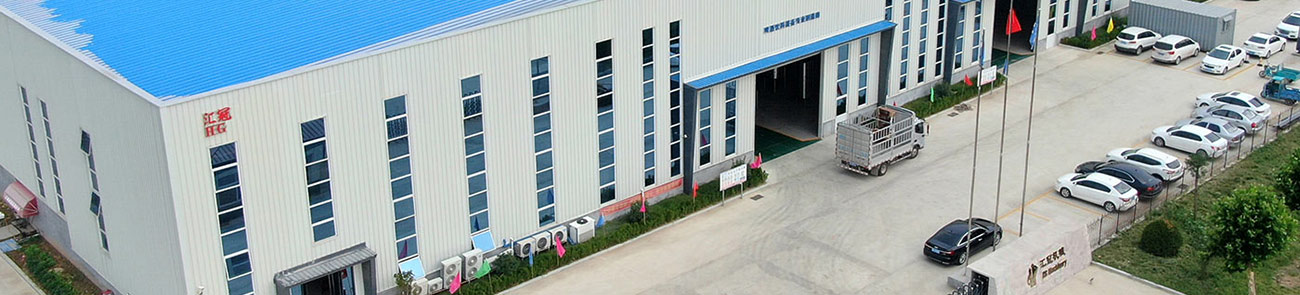
A well-planned project starts with a commercial brewery equipment solution that matches both current sales demand and long-term production targets. HGMC provides integrated brewery solutions covering brewing, fermentation, filling, packaging, and project support for commercial beer producers.
What Does a 1000L Brewery Startup Cost Include?
A 1000L brewing system can be the core of a brewpub, restaurant brewery, taproom-focused operation, or small distribution brewery. However, the brewhouse is only one part of the total investment.
Your total brewery startup budget should normally include:
- Brewhouse equipment
- Fermentation and bright tanks
- Glycol cooling equipment
- CIP cleaning system
- Malt milling and grain handling
- Water treatment and utility connections
- Heating equipment, such as electric heating or a steam system
- Pumps, pipelines, valves, and automation controls
- Kegging, canning, or bottling equipment
- Freight, installation, commissioning, and training
- Building renovation, drainage, electrical upgrades, and ventilation
- Licenses, inspections, insurance, opening inventory, and working capital
How Much Does the 1000L Brewhouse Cost?
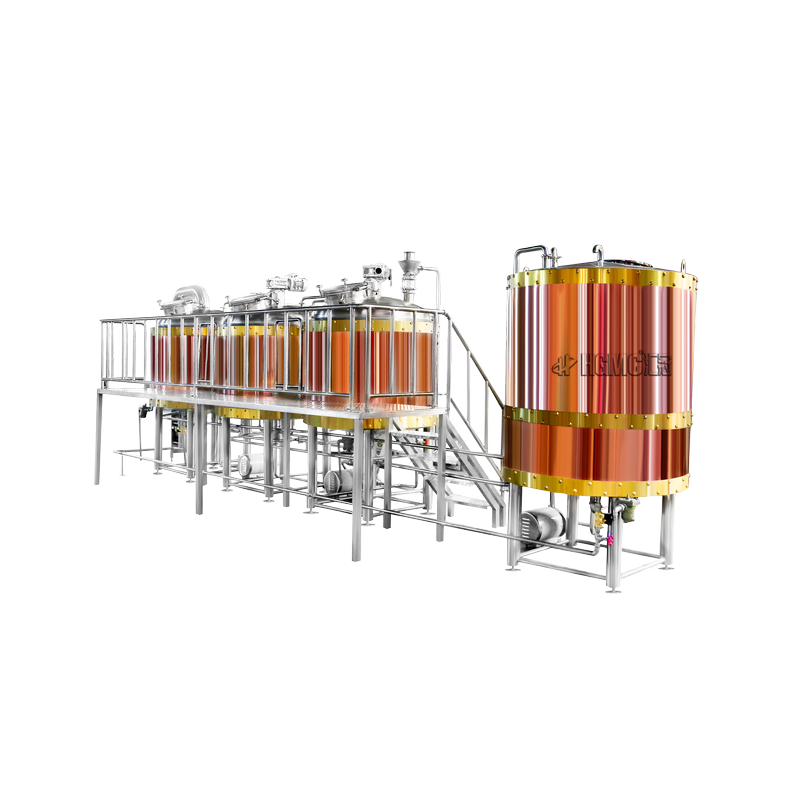
The cost of a 1000L brewhouse varies according to vessel configuration, heating method, automation, material specification, and customization requirements. A basic system may include the main brewhouse vessels, while a more complete package may add hot liquor tanks, pumps, heat exchangers, platforms, automation, and integrated piping.
For a commercial project, the equipment scope should be clearly defined before comparing quotations. Buyers should confirm whether the price includes the complete process package or only the main vessels.
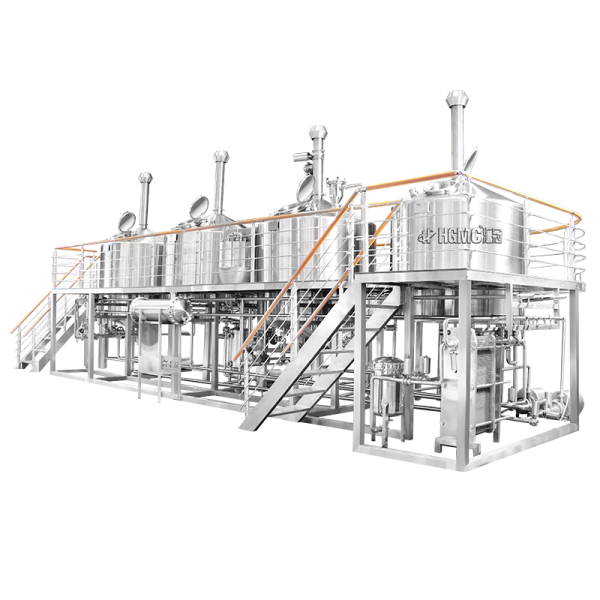
A commercial brewhouse system can be configured as a two-vessel, three-vessel, or four-vessel arrangement. The best choice depends on the desired brew schedule, beer styles, available floor space, labor plan, and production goals.
How Does Brewhouse Configuration Affect Cost?
A two-vessel brewhouse is generally suitable for brewpubs and smaller production projects that need straightforward operation and a lower initial equipment investment. A three-vessel brewhouse can provide greater process flexibility and workflow efficiency, making it a practical option for breweries with more demanding production schedules. A four-vessel brewhouse provides additional process separation for commercial breweries seeking higher operational capacity, but it also increases equipment and installation requirements.
Automation also affects the startup budget. Semi-automatic controls can help breweries balance labor requirements with initial investment. Fully automated control systems require a larger upfront investment, but can improve consistency and reduce manual workload in daily production.
HGMC offers brewery systems in configurations designed around the brewer’s production model. Its project materials describe brewery equipment options ranging from standard systems to higher-specification, automated configurations for commercial brewing operations.
Why Does Fermentation Capacity Change the Brewery Startup Cost?
A 1000L brewhouse produces approximately 1000 liters of wort per batch, but the brewery cannot produce continuously unless it has sufficient fermentation capacity. Fermenters hold beer during fermentation, maturation, carbonation, and tank turnaround.
That means the number and size of fermentation tanks often have a larger effect on practical production capacity than the brewhouse alone.
A basic 1000L brewery project may begin with several fermentation tanks, but the correct configuration depends on:
- Number of brews planned each week
- Fermentation time for the core beer portfolio
- Lagering or conditioning requirements
- Seasonal demand changes
- Number of beer styles produced at the same time
- Whether beer is sold fresh on draft or packaged for distribution
- Planned expansion over the next two to five years
A brewery producing several beer styles with longer tank occupancy will need more cellar volume than a brewpub focused on a smaller, fast-moving draft beer range.
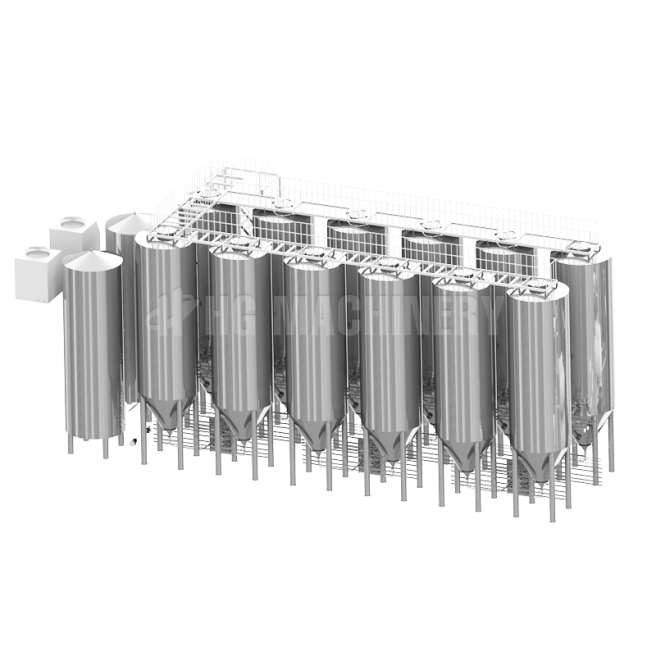
Commercial fermentation tanks are essential to this planning process. They help breweries control fermentation temperature, maintain product consistency, and create sufficient cellar capacity for stable production scheduling. HGMC’s fermentation solutions can be configured from micro-scale projects to larger commercial brewery systems.
What Are the Biggest Costs Beyond Brewery Equipment?
Many first-time brewery investors underestimate the costs outside the brewhouse and fermenters. These expenses can significantly affect the final brewery startup cost.How Does Facility Preparation Affect the Budget?
Facility preparation can include food-grade flooring, trench drains, wall finishes, ventilation, cold storage, door access, and loading areas. A building may look suitable at first, but it may not have the drainage, electrical supply, ceiling height, floor loading, or ventilation required for commercial brewery operations.Which Utilities Need to Be Budgeted?
Utilities may include electrical upgrades, water supply and water treatment, drainage, steam or electric heating, glycol cooling, compressed air, and CO₂. Reliable utility capacity is essential because brewing, fermentation, cleaning, and packaging equipment depend on stable water, power, cooling, and process connections.Why Are Installation and Logistics Often Underestimated?
Installation can involve rigging, onsite piping, electrical work, commissioning, testing, and operator training. For imported equipment, the landed cost may also include sea freight, insurance, customs clearance, inland delivery, and unloading. These costs can differ significantly from the original equipment quotation.How Does Packaging Affect Startup Investment?
Packaging may require keg washers, keg fillers, canning equipment, bottling equipment, labels, cartons, and storage space. A brewery focused on packaged beer generally needs a larger investment in equipment, inventory, quality control, and distribution than a brewery selling most of its production onsite or through kegs.Why Is Working Capital Essential?
Working capital covers ingredients, cleaning chemicals, packaging materials, payroll, rent, utilities, insurance, sales, and inventory. Breweries need sufficient cash to operate before sales volume and revenue become stable.HGMC’s brewery project scope includes not only brewing and fermentation equipment, but also filling equipment and utility equipment such as chillers, boilers, and air compressors. This integrated approach helps investors evaluate the full production process rather than purchasing isolated machines without confirming compatibility.
Which Brewery Model Fits a 1000L System?
Is a 1000L System Suitable for a Brewpub?
Yes. A 1000L system can be suitable for a brewpub, restaurant brewery, or hospitality-focused beer operation that sells much of its beer onsite.
This model often prioritizes:
- Attractive brewhouse design
- Flexible brewing capability
- Draft beer service
- Keg storage and keg filling
- Compact layout planning
- Sufficient fermentation capacity for multiple beer styles
Is a 1000L System Suitable for Keg Distribution?
It can be. A keg-focused local distribution brewery needs more than a brewhouse. It should also plan for:- Additional fermentation and bright tank capacity
- Keg washing and filling equipment
- Cold storage
- Keg inventory
- Delivery and distribution workflow
- Inventory and cash-flow management
Is a 1000L System Suitable for Cans or Bottles?
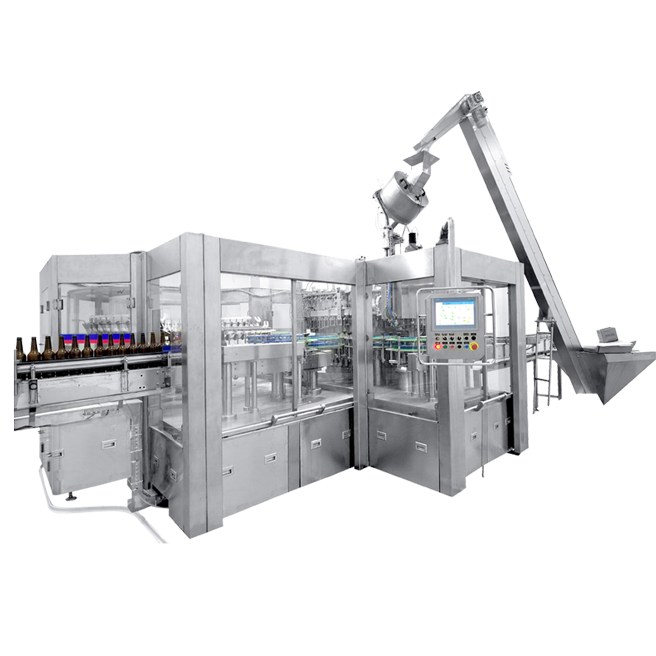
A 1000L system can support packaged beer, but investors should carefully assess packaging costs before choosing this path. Canning or bottling requires extra equipment, packaging materials, quality-control procedures, storage space, and distribution planning.
For a growing commercial brewery, packaging equipment may include rinsing, filling, seaming or capping, labeling, coding, packing, and palletizing functions. HGMC provides bottle, can, and keg filling solutions for brewery projects, with packaging configurations selected according to production requirements.
How Can You Reduce Brewery Startup Cost Without Limiting Growth?
The goal is not to buy the cheapest equipment. The goal is to invest in equipment that supports reliable production now and practical expansion later.- Choose a brewhouse size based on validated sales demand rather than optimistic forecasts.
- Start with a practical number of fermentation tanks, while reserving layout space for future tanks.
- Confirm utility capacity before finalizing the equipment configuration.
- Use modular equipment that can be expanded as production grows.
- Select a packaging route that matches your sales model.
- Compare quotations based on complete scope, not only the lowest equipment price.
- Ask suppliers to identify exclusions, installation requirements, utility requirements, and commissioning responsibilities.
- Budget separately for working capital, opening ingredients, packaging inventory, and initial operating expenses.
What Should You Request in a 1000L Brewery Equipment Quote?
A reliable quotation should make it easy to compare suppliers. Instead of asking only for a “1000L brewery price,” provide project details and request a complete equipment scope.
Include the following information in your inquiry:
- Target country and city
- Brewery type: brewpub, taproom, keg distribution, or packaged beer production
- Expected annual production volume
- Preferred brewhouse configuration
- Heating method and available utilities
- Number and size of fermentation tanks required
- Planned beer styles and fermentation cycle
- Kegging, canning, or bottling requirements
- Building dimensions, ceiling height, door size, and drainage condition
- Target launch date
- Budget range and future expansion plan
How Should You Plan Your 1000L Brewery Investment?
The most accurate way to estimate a brewery startup cost is to build the budget in layers:- Define the business model and realistic sales target.
- Select the brewhouse and fermentation capacity needed for that target.
- Confirm the required cooling, heating, water, drainage, and electrical infrastructure.
- Decide whether beer will be sold through draft, kegs, cans, bottles, or a combination.
- Add freight, installation, permits, renovation, opening inventory, and working capital.
- Design the brewery for phased expansion instead of overbuilding from day one.
A 1000L brewery can be an efficient foundation for a commercial beer business when the equipment configuration, facility readiness, and sales strategy are planned together. Rather than relying on a single equipment price, request a complete project proposal that defines the equipment scope, utilities, layout, installation requirements, and expansion options.
For a tailored 1000L brewery configuration, HGMC can help develop a practical solution covering brewing, fermentation, utilities, automation, and packaging. Explore commercial brewery equipment to begin planning a system that fits your production goals and startup budget.