Aug. 18, 2026
News
Turnkey Brewery Plant Equipment manufacturer Solutions
Starting a commercial brewery involves much more than buying a brewhouse and a few tanks. A reliable brewery plant brewery equipment manufacturer helps turn a production idea into an integrated brewery that can brew, ferment, package, and deliver beer efficiently.
The best approach is to plan the project as one connected system. Production capacity, beer styles, building space, utilities, automation, fermentation volume, packaging format, and future expansion should all be considered before equipment manufacturing begins. HGMC provides beer brewing equipment and brewery project support for customers who need individual equipment or a complete production solution, covering key stages from brewing and fermentation to filling and packaging.
What Does a Turnkey Brewery Solution Include?
A turnkey brewery solution is a coordinated package of equipment, engineering, and commissioning services designed to support commercial beer production. It should not be viewed as a simple list of tanks. The real value comes from making every system work together—from malt handling to the finished beer package.
A complete solution may include:
- Malt milling and grain handling equipment
- Brewhouse equipment for mashing, lautering, boiling, whirlpooling, and wort cooling
- Fermentation tanks and bright beer tanks
- Yeast propagation and management systems
- Glycol cooling and temperature-control equipment
- CIP systems for cleaning tanks and pipelines
- Pumps, valves, sanitary piping, and process controls
- Water, steam, compressed-air, and other utility interfaces
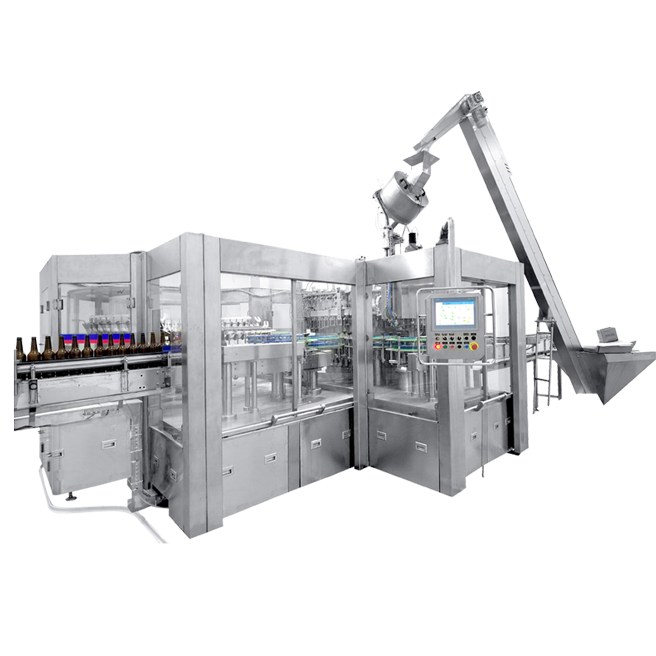
- Keg, can, or glass-bottle filling equipment
- Layout planning, installation, commissioning, and operator training
How Do You Define the Right Brewery Capacity?
The first step is not choosing a tank size. It is defining the business model.
A brewery supplying a taproom has different requirements from a brewery selling canned beer through regional distributors. Likewise, a brewpub with frequent small batches needs a different configuration from a production brewery focused on a limited number of high-volume brands.
Before a manufacturer designs the system, the brewery owner should confirm:
- Target annual beer output
- Expected production volume in the first one to three years
- Main sales channels, such as draft beer, kegs, cans, or glass bottles
- Number of beer styles and expected fermentation times
- Available building area, ceiling height, and loading access
- Local electricity, water, drainage, steam, and cooling conditions
- Required automation level
- Future tank additions or packaging expansion plans
Which Equipment Forms the Core of a Brewery Plant?
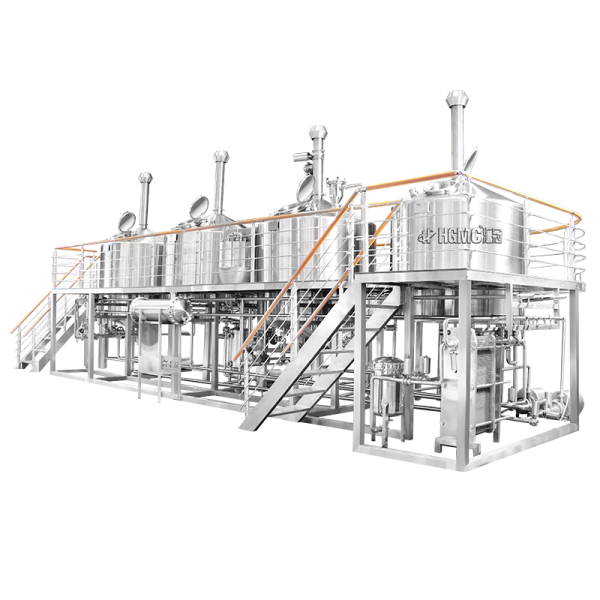
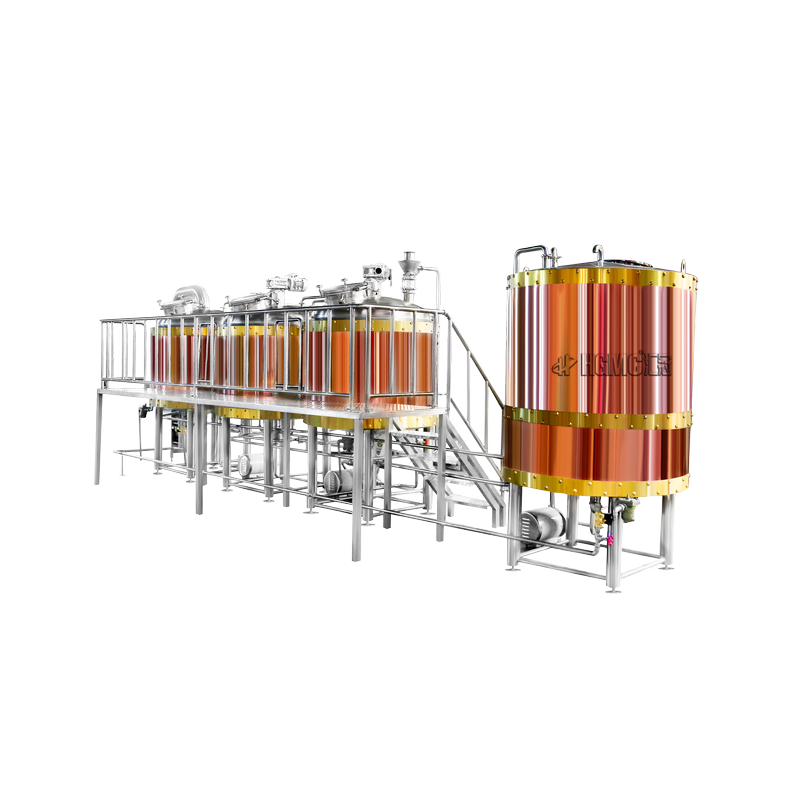
The brewhouse is the production center where malt is converted into wort. A commercial brewhouse system can be configured as a two-vessel, three-vessel, or four-vessel system based on brewing frequency, recipe flexibility, available space, and budget.
HGMC offers multiple brewhouse series for different project needs, including economical standard systems, modular systems for flexible recipe production, standardized craft brewery systems, and higher-end configurations focused on efficiency and automation.
However, a brewhouse alone cannot make a brewery operational. It must connect with properly sized fermentation, cooling, cleaning, and control systems.
Why Are Fermentation Tanks Central to Brewery Planning?
Fermentation capacity often determines the real output of a brewery. Even if the brewhouse can produce multiple batches each day, beer still needs time to ferment, mature, clarify, carbonate, and wait for packaging.
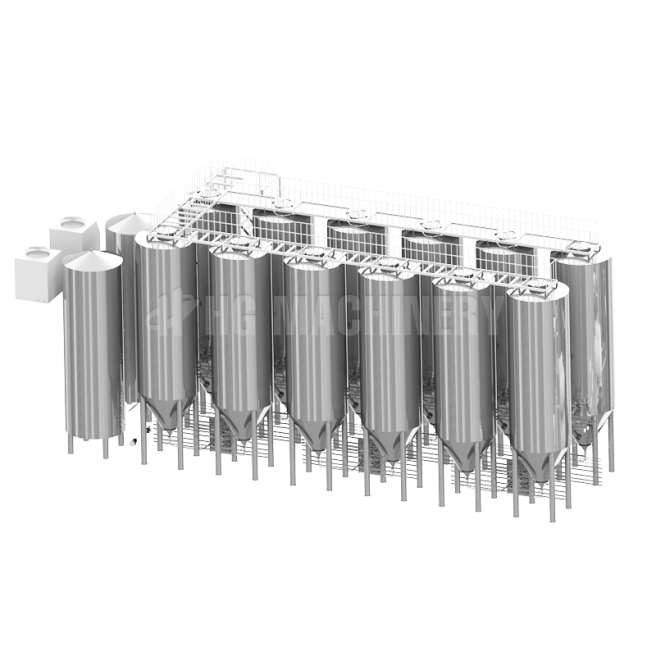
A commercial fermentation tank should be selected based on brew length, production schedule, beer styles, turnover time, and expansion plans. The tank system may also include bright beer tanks, yeast handling equipment, filtration units, and centrifuges depending on the process requirements.
HGMC provides customized fermentation solutions for breweries from smaller craft operations to larger production facilities. Its fermentation system range can be paired with tank-top and tank-bottom devices designed for pressure control, vacuum prevention, CO₂ recovery, tank maintenance, and discharge management.
When planning fermentation capacity, brewery owners should ask:
- How many batches will be brewed each week?
- How long will each beer stay in fermentation and maturation?
- Will the brewery produce lagers, high-gravity beers, seasonal products, or fast-turnaround ales?
- How much bright beer storage is needed before packaging?
- Is there space and cooling capacity for additional tanks later?
How Does Automation Improve a Turnkey Brewery?
Automation is not only for large breweries. The right automation level can help breweries improve repeatability, reduce manual work, manage production data, and make cleaning and temperature control more consistent.
An automatic brewery system may include PLC control, touchscreen operation, automated temperature control, pump and valve control, recipe management, fermentation monitoring, and CIP process control. HGMC has developed a centralized automatic control system for craft breweries, supporting mechanical automation and multilingual operation.
The right choice depends on the project:
- A smaller commercial brewery may require semi-automatic temperature and pump control.
- A growing regional brewery may benefit from automated mashing, hot-water management, CIP, and fermentation control.
- A larger brewery may need centralized control across brewing, fermentation, utilities, and packaging.
What Utilities Must Be Planned Before Installation?
A complete brewery plant solution must account for more than the visible stainless-steel equipment. Utility planning affects installation cost, operating stability, safety, and future expansion.Key utility requirements include:
- Brewing water and water treatment
- Electrical supply and control power
- Steam, electric heating, or another heating source
- Glycol cooling and chilled-water demand
- Compressed air
- Floor drainage and wastewater routing
- Ventilation and heat removal
- CIP water and chemical handling
- CO₂ supply or recovery arrangements
For larger projects, utility equipment may include chillers, boilers, and air compressors. These systems should be sized not only for the current brewery load but also for realistic expansion plans.
How Is Brewery Equipment Cost Calculated?
There is no single turnkey brewery price because every brewery plant has different production targets, equipment configurations, local requirements, and installation conditions.
A brewery plant brewery equipment manufacturer typically evaluates the following cost drivers:
- Brewhouse capacity and vessel configuration
- Heating method and energy source
- Number, size, and pressure rating of fermentation tanks
- Bright beer tanks, yeast systems, filters, and centrifuges
- Automation level, instrumentation, and control cabinets
- CIP system, glycol cooling, hot-water system, and utility equipment
- Packaging type: kegs, cans, bottles, or a combination
- Stainless-steel specifications, insulation, valves, pumps, and pipework
- Layout complexity, installation conditions, and project location
- Shipping, local engineering, commissioning, training, and spare parts
The total project budget should be considered as:
Total Brewery Investment = Brewing Equipment + Utilities + Installation + Packaging + Building Work + Startup Costs
Buyers should avoid comparing quotations only by the headline equipment price. A lower initial offer may exclude key equipment, controls, installation support, pipework, cooling, cleaning systems, or packaging integration.
How Does a Manufacturer Deliver the Project?
Confirm Production and Business Requirements
The manufacturer collects information about annual output, beer styles, batch size, packaging method, building dimensions, local utilities, budget, and future expansion.Develop the Process and Layout
The project team prepares an equipment list, process flow, tank arrangement, utility requirements, and a layout that supports safe operation, cleaning access, raw-material movement, and finished-product handling.Manufacture and Inspect the Equipment
The manufacturer produces the brewhouse, tanks, piping, control panels, and related equipment according to the confirmed technical specification. Before shipment, the buyer should request inspection records, equipment details, and control-system checks.Deliver, Install, and Connect Utilities
After delivery, the brewery equipment is positioned, connected to utilities, and integrated with piping, cooling, controls, and packaging systems. Responsibility boundaries between the equipment supplier and local contractors should be clearly defined before installation begins.Commission the System and Train Operators
Commissioning should include system testing, temperature-control checks, pump and valve operation, cleaning verification, and the first brewing runs. Operator training should cover brewing procedures, tank operation, sanitation, basic maintenance, and safety practices.Handover, Spare Parts, and Long-Term Support
Handover should include equipment documentation, a recommended spare-parts list, maintenance guidance, and clear after-sales support arrangements. HGMC provides on-site installation and commissioning, brewing and process-technology training, and a three-year tank warranty according to its service materials.How Can You Choose the Right Manufacturer?
A capable manufacturer should be able to explain not only what equipment it can produce, but also how the systems will work together after installation.
Before selecting a brewery plant brewery equipment manufacturer, ask for:
- Similar brewery project references
- A detailed equipment list and scope of supply
- Process flow and layout drawings
- Utility-load requirements
- Automation and control-system specifications
- Tank drawings, material details, and quality documentation
- Installation and commissioning scope
- Training plan and after-sales support
- Warranty and spare-parts recommendations
- A clear list of excluded work and buyer responsibilities
- Expansion options for additional fermentation tanks or packaging capacity
A well-planned turnkey solution reduces the risk of incompatible equipment, undersized utilities, delayed installation, and unclear service responsibility. The goal is not simply to purchase brewery equipment. It is to create a production system that supports consistent beer quality, practical daily operation, and sustainable growth.
For projects that require coordinated brewing, fermentation, automation, and packaging planning, explore HGMC’s brewery solutions to begin defining the capacity, equipment scope, and implementation requirements for your commercial brewery.