Sep. 01, 2026
News
What Determines Commercial Brewhouse Price in 2026?
When buyers compare brewhouse brewery equipment price, they often find large differences between systems that appear to have the same capacity. A 1,000 L brewhouse is not automatically equivalent to another 1,000 L brewhouse.
The price can change because of vessel design, usable working volume, heating method, steel specification, control level, pumps, valves, platforms, piping, instrumentation, electrical standards, and the components included in the supply boundary.
The most accurate way to compare commercial brewhouses is to compare the process capability and technical specification—not just the stated tank volume or the headline price.
Does the Same Brewhouse Capacity Mean the Same Output?
No. Nominal capacity is only one part of the quotation.A brewery may describe a brewhouse as 1,000 L, but buyers should confirm whether that figure refers to total vessel volume, effective working volume, or the intended wort volume per batch. Usable output also depends on process time, heating performance, transfer efficiency, cleaning time, operator workflow, and how many brews can be completed in a day.
A smaller system with a well-planned production schedule can be more practical than a larger system that is underused. At the same time, a high-output operation may need more vessel separation, stronger heating, more automation, and a larger platform and pipework scope to support repeated daily brewing.
Before requesting a quotation, define:
- Target batch size
- Planned brews per week or per day
- Annual beer-production target
- Main beer styles and recipe range
- Required shift pattern and staffing level
- Available floor area and ceiling height
- Available heating, water, electrical, and drainage infrastructure
- Expected future production target
How Do 2-, 3-, and 4-Vessel Designs Change Price?
The number of vessels changes the process layout, workflow, footprint, platform structure, valve arrangement, piping, automation requirements, and final brewhouse price.2-vessel brewhouse
A 2-vessel brewhouse combines process functions in fewer vessels. It can suit commercial breweries that need a compact layout, controlled batch production, and a practical equipment footprint. Its lower vessel count can reduce platform complexity and the number of process connections.3-vessel brewhouse
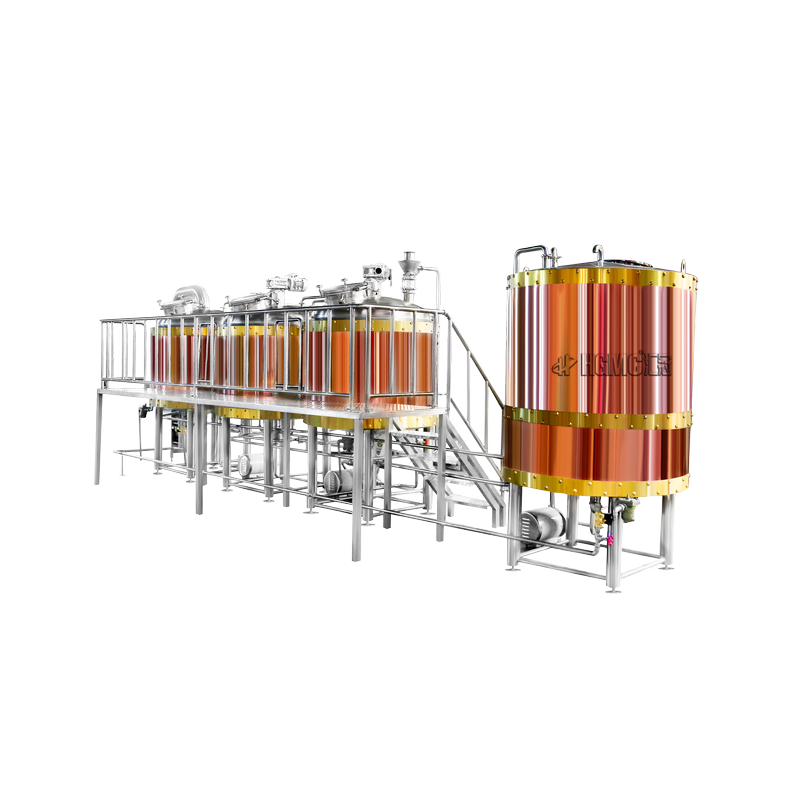
A 3-vessel design separates more brewing functions across dedicated vessels. This can provide greater workflow flexibility and more opportunity for overlapping process steps. The additional vessel, pipework, pumps, valves, platform structure, and controls can increase the quotation.4-vessel brewhouse
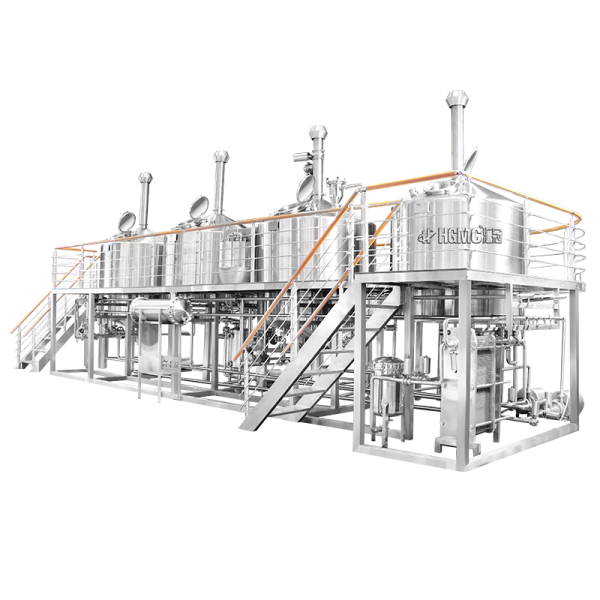
A 4-vessel configuration provides further separation of mashing, lautering, boiling, and whirlpool functions. It is generally considered where the brewery needs a higher brewing rhythm or faces more demanding production schedules. It normally requires a larger footprint and a broader equipment and installation scope.The right arrangement should be based on how the brewery will operate every week, not on the assumption that more vessels are always better. Explore HGMC commercial brewhouse configurations to compare options for different commercial production targets.
Which Heating Method Fits Your Facility and Budget?
Heating affects both the brewhouse quotation and the site work required to run the brewery. Common commercial options include electric heating, steam heating, direct-fire heating, and thermal-oil heating.Electric heating
Electric heating can affect electrical demand, panel capacity, installation requirements, and heating control. Confirm that the building can supply sufficient power at the required voltage and frequency.Steam heating
Steam heating can involve a boiler scope, steam piping, condensate handling, and associated heat-transfer requirements. Determine whether steam is already available or whether the project needs to include a boiler system.Direct-fire heating
Direct-fire heating can affect fuel supply, exhaust, ventilation, combustion air, and local safety requirements. The site must support the selected fuel source and exhaust arrangement.Thermal-oil heating
Thermal-oil heating can require a heater package, circulation system, and dedicated controls. Its suitability depends on the production target, project scope, and operating requirements.The correct heating method depends on local energy availability, operating cost, utility capacity, regulations, batch size, and production rhythm. A lower-cost brewhouse can become more expensive overall if the facility needs significant upgrades to support its heating method.
Which Vessel Specifications Change the Quotation?
Two brewhouses with similar vessel layouts can still differ substantially in price because the specification level is different.- Stainless-steel material grade
- Vessel thickness and structural design
- Insulation thickness and cladding finish
- Internal surface treatment and weld quality
- Heating jacket area and heating-zone design
- Agitator, rake, or mixing requirements where applicable
- Manways, spray balls, CIP connections, and sanitary fittings
- Temperature, pressure, level, flow, and conductivity instrumentation
- Pump quantity, pump type, and transfer arrangements
- Manual valves, pneumatic valves, and valve-manifold configuration
- Pipework scope, hard piping, flexible connections, and fittings
- Platforms, stairs, handrails, and access structure
- Custom diameter, height, or layout requirements for the facility
- Electrical standard, panel configuration, and certification requirements
How Much Do Controls and Process Components Add?
Controls, pumps, valves, and instruments determine how operators run the brewhouse from one batch to the next. They can change both the initial price and the day-to-day labor requirement.A manual system may use local controls and manual valves for key process steps. A semi-automatic system can automate selected heating, temperature, pump, or transfer functions. A PLC-controlled system can coordinate programmed steps, alarms, data display, pump and valve logic, and repeatable sequences.
The right level depends on production pressure. A brewery with occasional brew days and an experienced hands-on team may not need the same automation scope as a facility running repeated batches, multiple shifts, or tightly scheduled cellar operations.
The same principle applies to valves and instrumentation. More automated valves, transmitters, flow measurement, and interlocks can improve process control, but they also increase equipment and commissioning scope. See HGMC’s automatic brewery solution information for a broader discussion of commercial control options.
Which Items Are Often Excluded From Quotes?
A brewhouse quotation may cover only hot-side vessels and selected accessories. It may not include all equipment required to produce packaged beer commercially.- Malt handling, milling, storage, and weighing equipment
- Hot liquor and cold liquor tanks
- Wort pumps and plate heat exchangers
- Fermentation tanks and bright beer tanks
- Glycol chillers and cooling circuits
- CIP systems
- Process piping beyond the brewhouse package
- Electrical installation, field wiring, and utility connections
- Keg washing and filling equipment
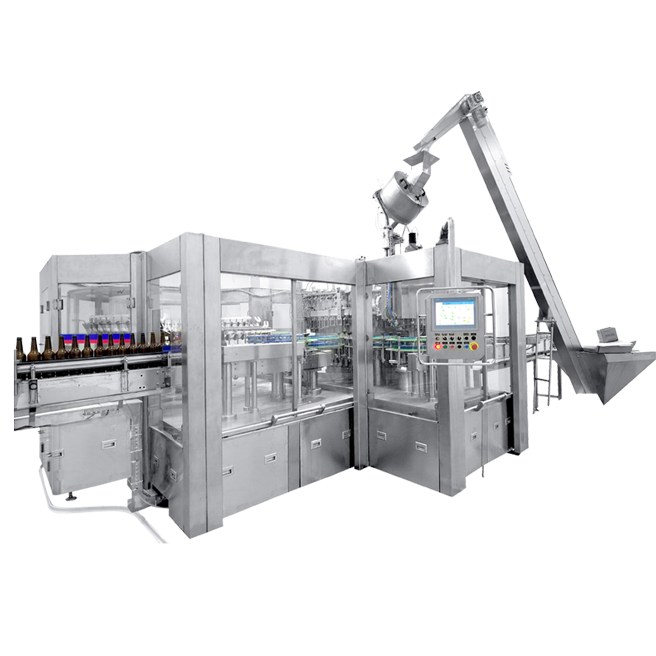
- Can filling or bottle filling equipment
- Labeling, coding, packing, and palletizing systems
- Freight, customs, local delivery, unloading, and rigging
- Site construction, drainage, flooring, and ventilation
- Installation labor, commissioning, and training
For a full-project view that includes equipment, facilities, startup costs, and working capital, read the turnkey brewery cost guide.
How Can You Compare Two Brewhouse Offers Fairly?
Use a side-by-side specification sheet rather than comparing only the final totals.- Confirm working volume, total volume, and intended wort output per batch.
- Confirm the number of vessels and the process function of each vessel.
- Confirm the heating method, included heating equipment, and assumed site utilities.
- Compare material, thickness, insulation, finish, and sanitary connections.
- Check pumps, valves, heat exchangers, instruments, pipework, and platforms.
- Review manual, semi-automatic, or PLC functions, including included sensors and valves.
- Request process-flow drawings, electrical drawings, manuals, and layout support.
- Confirm installation guidance, commissioning, training, warranty, and spare parts.
- Identify exclusions such as utilities, civil work, field piping, electrical work, freight, or local labor.