Sep. 01, 2026
News
PLC Automation vs Manual Operation: Which Brewery Solution Fits Your Plant?
An automatic brewery solution is not automatically the right answer for every commercial brewery. The best control system depends on your production schedule, team size, recipe range, tank quantity, operating discipline, and plans for growth.
Manual brewing gives experienced operators direct control over each process step. PLC automation makes repeated sequences easier to manage. Semi-automatic control sits between those two approaches, automating selected functions while keeping practical decisions in the hands of the brewing team.
A well-planned brewery equipment solution begins with the production process rather than a fixed automation label. The right choice is the one that improves consistency without making the brewery unnecessarily complex.
Three Ways to Run the Same Brewery
Manual operation is often suitable for smaller commercial operations with hands-on brewers and flexible schedules. It provides direct operator involvement and can reduce initial control complexity, but results depend heavily on staff consistency and manual recordkeeping.
Semi-automatic control is often appropriate for growing breweries. It automates selected tasks while leaving defined process decisions to the brewer. This can improve efficiency without requiring full automation across every process step.
PLC automation is generally better suited to plants with repeated batches, multiple tanks, and tighter production schedules. It can improve repeatability, centralized monitoring, and coordination across brewing and cellar operations, but requires a clearer process design and higher initial scope.
The decision should not be based on whether automation appears more advanced. It should be based on the real operating pressure inside the brewery.
Inside a PLC-Controlled Brewery
PLC stands for programmable logic controller. It is the hardware and software system that receives process information and activates programmed actions.
In a commercial brewery, a PLC can connect to temperature sensors, pumps, motors, valves, heating systems, cooling circuits, alarms, and operator touch screens.
Depending on the project design, PLC functions can include:
- Mash temperature control and programmed mash rests
- Automated heating sequences
- Hot-water dosing and mash-in control
- Pump and valve coordination
- Wort-transfer sequencing
- Kettle-boil timing
- Fermentation-temperature control by tank
- Glycol cooling activation
- Centralized tank monitoring
- CIP cleaning sequences
- Alarm notifications and process-status displays
The PLC does not replace brewing knowledge. Brewers still decide recipes, evaluate raw materials, check quality, and respond to process conditions. The control system helps the brewery repeat the steps that have already been defined.
When Hands-On Control Works Best
Manual operation can be suitable for commercial brewing when the process is manageable, production schedules are not highly compressed, and trained operators are consistently available.
It can work well when:
- The brewery has limited batch frequency
- The product range changes often
- A skilled brewer is actively involved in each brew day
- The team wants direct adjustment of certain process steps
- The operation does not need to manage many tanks at once
Manual operation is not inherently less professional. It simply places more responsibility on people rather than programmed sequences.
Semi-Automatic Control as a Growth Step
Many growing breweries do not need a fully automated plant on day one. Semi-automatic control can focus on the areas where repetitive work creates the largest burden.
Typical first-stage automation may include brewhouse heating control, mash-temperature regulation, fermentation-temperature control, pump start and stop control, tank monitoring, and selected CIP functions.
This approach allows the brewer to retain direct involvement while reducing routine work. It can also make it easier to train new operators because key process conditions are more visible and standardized.
Priority Areas for Automation
Mash Control
Mash temperature and timing influence wort composition and batch repeatability. If a brewery produces the same core beers repeatedly, automated heating and programmed rests can make results more consistent.
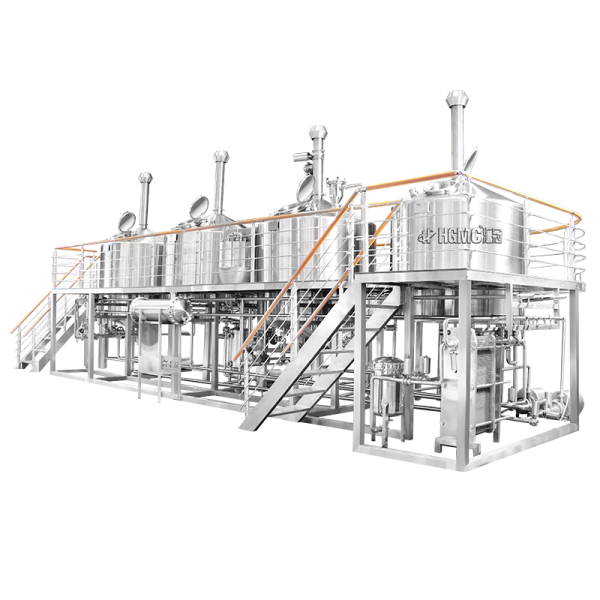
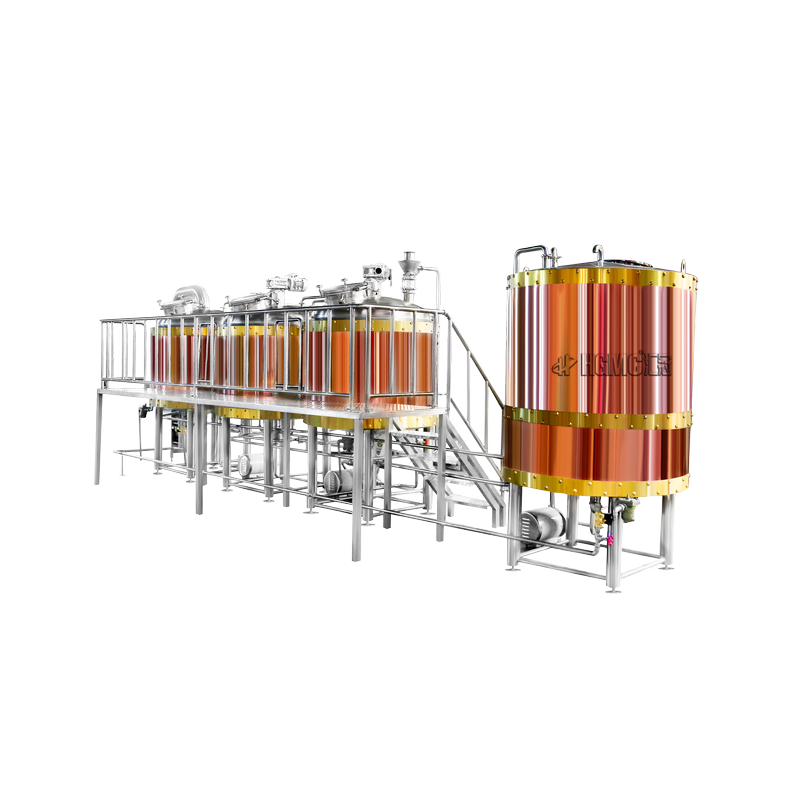
This is often the first area where automation creates a clear operational benefit. A commercial brewhouse can be configured as a 2-vessel, 3-vessel, or 4-vessel system and paired with a control level that fits process complexity and target output.
Cellar Control
A cellar becomes more difficult to manage as fermentation vessels are added. Each tank may have its own beer style, fermentation stage, cooling requirement, and cleaning schedule.
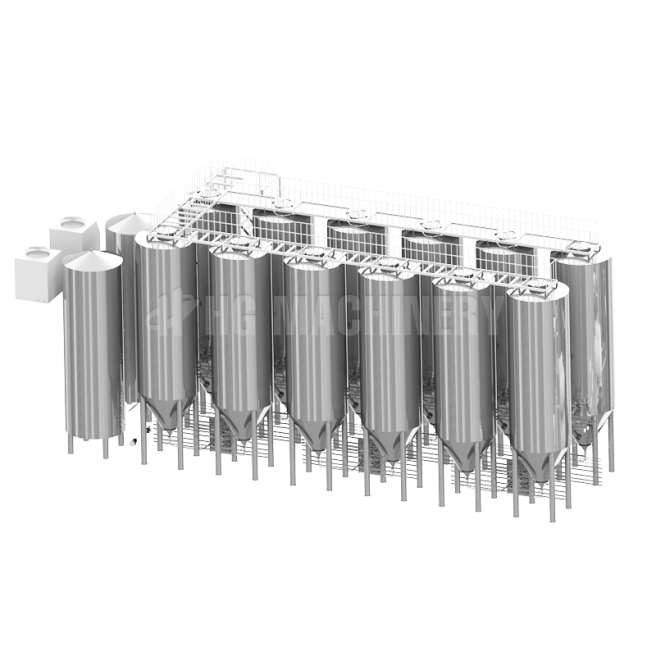
Centralized monitoring can help operators see tank temperatures and process status without treating every vessel as an isolated task. HGMC’s fermentation tank range supports brewery projects from micro-scale through larger commercial facilities.
CIP Sequences
Cleaning is essential, repetitive, and time-sensitive. CIP automation can help standardize cleaning sequences and reduce the need for repeated manual valve operation. The benefit is not simply labor reduction; a structured cleaning process can also make brewery scheduling easier.
Designing for the Next Expansion Phase
The most cost-effective automation plan is often one that can grow with the brewery. Instead of selecting a control panel only for current vessels, ask whether the system can later support additional fermentation tanks, glycol zones, bright beer tanks, CIP circuits, a larger brewhouse, packaging equipment, recipe storage, batch records, and monitoring functions.
Reserve electrical-panel capacity and PLC input/output capacity where possible. This can make future upgrades easier than replacing the entire control system.
Automation Beyond Brewing
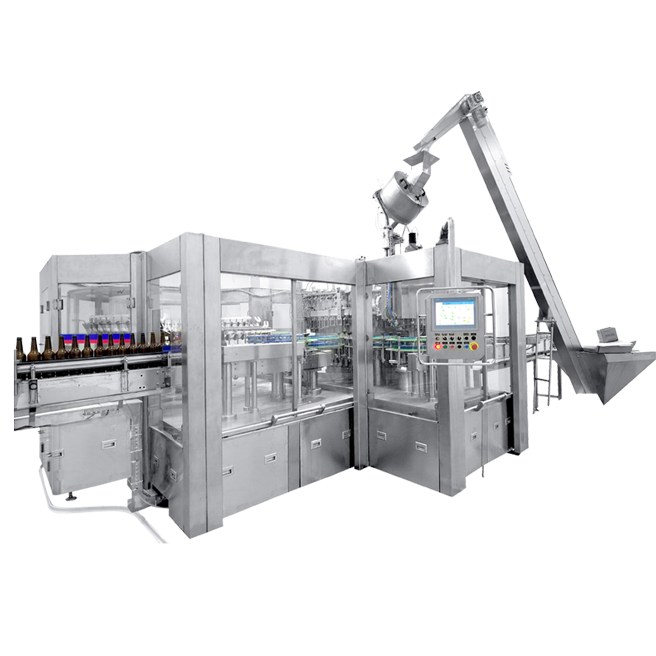
Automation can support packaging operations, especially where beer is packaged at a consistent commercial volume. Brewing capacity, fermentation capacity, bright-beer storage, and filling capacity should be coordinated.
For kegs, the project may require washing and filling equipment. For cans or bottles, it may require a more integrated packaging line. HGMC supplies keg cleaning and filling systems as well as bottle and can filling-line solutions for commercial projects.