Aug. 25, 2026
News
What Does a Complete Brewery System Solution Include?
A complete brewery system solution is more than a brewhouse and a few fermentation tanks. For a commercial brewery, every production stage must work as one coordinated process—from malt handling and wort production to fermentation, cleaning, packaging, and technical support.
At HGMC, we design brewery systems around your production target, beer styles, available space, packaging plan, and future expansion goals. This approach helps brewery investors, project managers, and professional brewers avoid a common problem: purchasing major equipment first, then discovering that cooling capacity, CIP coverage, piping, automation, or packaging equipment has been overlooked.
What Is Included in a Complete Brewery System?
A complete brewery system connects the equipment and support systems needed to turn raw materials into packaged beer consistently. The exact configuration varies by capacity and process requirements, but a commercial solution generally includes:- Malt milling and grain handling
- Brewhouse equipment for mashing, lautering, boiling, and whirlpool separation
- Hot and cold liquor tanks
- Wort cooling and heat exchange equipment
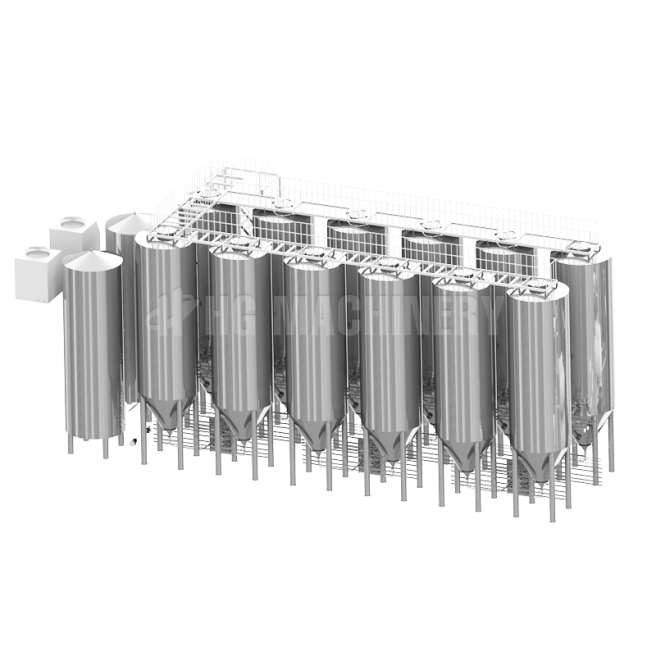
- Fermentation tanks and, where required, bright beer tanks
- Glycol cooling and temperature-control equipment
- CIP cleaning system
- Process pumps, valves, pipelines, fittings, and instrumentation
- Manual, semi-automatic, or PLC-based control systems
- Optional filtration, centrifugation, yeast propagation, and CO₂ recovery systems
- Keg, bottle, or can filling equipment
- Utilities such as water supply, steam or electric heating, refrigeration, compressed air, and drainage
- Process design, equipment layout, installation, commissioning, and operator training
How Does Malt Milling Support Efficient Brewing?
The brewing process begins with malt preparation. A milling system breaks malt into a suitable grist while protecting husk integrity and supporting efficient extraction during mashing and lautering.A complete solution may include a dry mill or wet mill, grain conveying, weighing, storage, and a grist delivery system. The right choice depends on brewhouse capacity, brewing frequency, recipe requirements, and available installation space.
Milling should not be treated as a separate purchase from the brewhouse. If the mill cannot supply enough grist for the planned batch schedule, or if the grind quality is unsuitable for the lauter process, it can limit brewhouse productivity and wort quality. HGMC milling systems are designed to support consistent crushing results, improve raw-material yield, and help downstream filtration perform more effectively.
What Does the Brewhouse System Include?
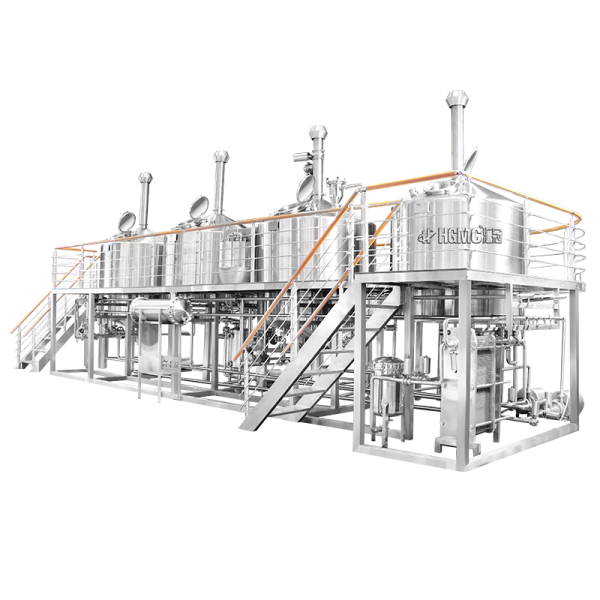
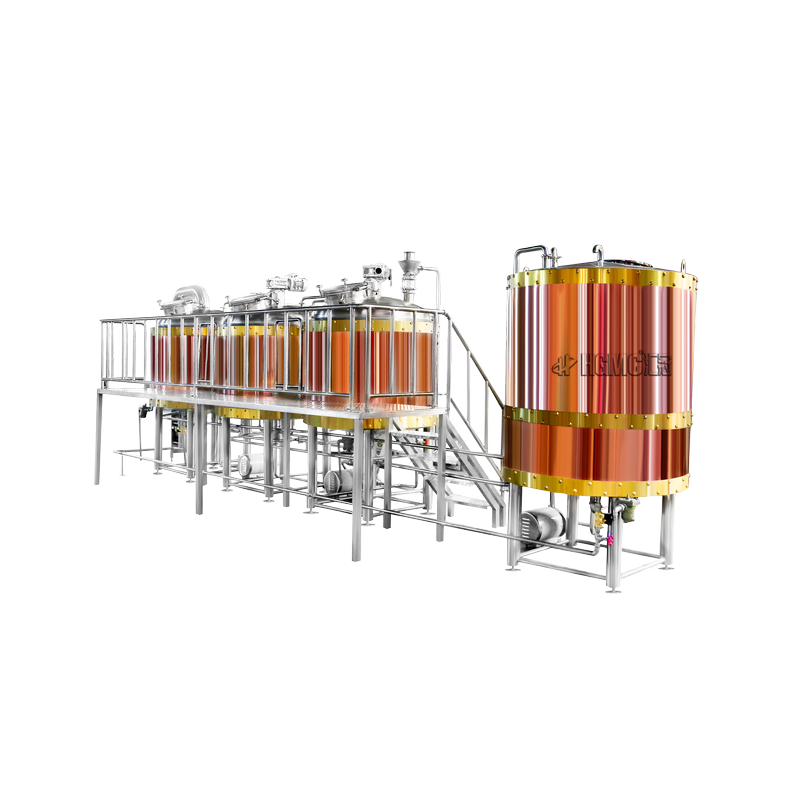
The brewhouse is the hot-side production center where malt and water are processed into wort. Depending on the production requirement, the system may use a two-vessel, three-vessel, or four-vessel arrangement.Typical brewhouse vessels include:
- Mash tun for converting malt starches into fermentable sugars
- Lauter tun for separating sweet wort from spent grain
- Kettle for wort boiling and hop additions
- Whirlpool for separating trub and hop solids after boiling
The correct vessel arrangement depends on your target output and daily brew schedule. A project producing multiple batches per day may require a different brewhouse workflow from a restaurant brewery focused on flexible small-batch production. HGMC offers commercial brewhouse systems engineered for craft breweries and turnkey beer production projects, with configurations designed around batch size, process requirements, and expansion plans.
Why Are Fermentation and Bright Beer Tanks Essential?
A brewhouse can produce wort in a matter of hours, but beer needs time to ferment, mature, clarify, carbonate, and prepare for packaging. For this reason, cellar capacity is often one of the most important factors in a brewery system solution.Fermentation tanks provide a controlled environment for yeast activity and temperature management. Their quantity and volume should be planned according to:
- Brewhouse batch size
- Number of brews per week
- Fermentation and maturation time for each beer style
- Product portfolio and seasonal demand
- Packaging schedule
- Future output targets
HGMC provides fermentation tanks in a range of capacities for microbreweries through large-scale brewery projects. The systems can also be combined with filtration units, centrifuges, and customized piping designs to support efficient, energy-conscious cellar operations.
Which Cooling, CIP, and Utility Systems Are Needed?
Many project delays and unexpected costs come from underestimating the systems around the tanks. A brewery cannot operate efficiently if its utilities are undersized, poorly integrated, or missing from the original design scope.Cooling and temperature control
A glycol chiller, glycol water tank, circulation pumps, insulated pipelines, and tank cooling zones are commonly required to control fermentation temperature. Cooling also supports wort chilling through the heat exchanger before yeast is introduced.Temperature stability directly affects fermentation consistency. Cooling capacity should be calculated against tank volume, fermentation schedule, ambient conditions, brewhouse cooling demand, and the number of tanks that may require simultaneous cooling.
CIP cleaning system
A CIP system is essential for commercial sanitation and repeatable production. It typically includes cleaning tanks, pumps, heating, return lines, spray devices, and chemical handling options based on the project design.CIP should be evaluated as a plant-wide system. The design should confirm which vessels and pipelines it cleans, whether it supports automated cycles, and whether it can serve the brewhouse, fermentation tanks, bright tanks, transfer lines, and packaging contact surfaces.
Utility equipment
Depending on the project, utility equipment may include a boiler, chiller, air compressor, water treatment equipment, drainage connections, and electrical distribution. HGMC works with auxiliary equipment partners to support brewery utility requirements, including chillers, boilers, and air compressors.How Does Automation Improve Brewery Operations?
Automation should match the brewery’s production needs rather than follow a one-size-fits-all approach. A small commercial project may prefer semi-automatic control with operator oversight, while a larger production facility may require PLC-based automation for repeatability, labor efficiency, and process tracking.A brewery control system can support:
- Automated mashing temperature and heating control
- Pump, valve, and transfer management
- Fermentation temperature monitoring
- CIP cycle control
- Alarm and process-status management
- Centralized touchscreen operation
- Remote monitoring options where configured
What Packaging Equipment Should Be Part of the Solution?
Packaging is not an afterthought. Your intended route to market—draft distribution, retail cans, glass bottles, or a mixed strategy—should influence system design from the beginning.A complete brewery system may include one or more of the following:
- Keg cleaning and filling equipment
- Can filling and seaming equipment
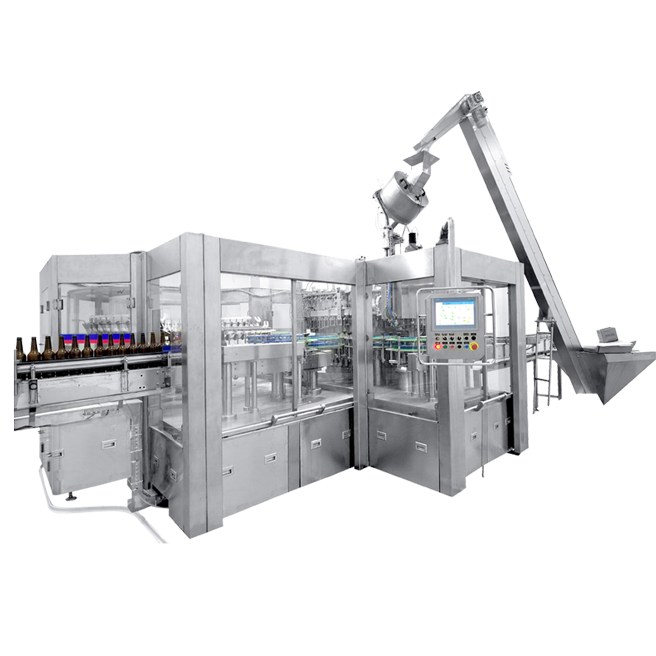
- Glass bottle rinsing, filling, and capping equipment
- Tunnel pasteurization where required
- Blow drying, labeling, coding, case packing, and palletizing
- Finished-product transfer and storage arrangements
HGMC can provide automated bottle and can filling lines that may be installed independently or as an integrated solution. Available configurations cover approximately 7,000 to 36,000 bottles or cans per hour, with equipment options including depalletizing, rinsing, filling, capping or seaming, pasteurization, labeling, coding, packing, and palletizing.
What Does a Turnkey Brewery Solution Include Beyond Equipment?
A complete equipment list is important, but it does not by itself guarantee that a brewery is ready to produce beer. A turnkey brewery system solution should also define how the equipment will be engineered, installed, and put into operation.For each project, HGMC can support:
- Equipment model selection based on production requirements
- Process flow design
- Brewery layout planning
- Cost and benefit analysis
- Customized equipment configuration
- Production progress tracking
- On-site installation and commissioning
- Brewing and process-technology training
- Ongoing technical support and tank warranty coverage
How Do You Choose the Right Brewery System Solution?
The best system is not necessarily the largest or most automated configuration. It is the one that matches your actual production plan and gives you room to grow without creating unnecessary capital cost or operational complexity.Before requesting a proposal, prepare the following information:
- Target annual production volume and expected peak demand
- Required brewhouse batch size and planned brews per day
- Beer styles and expected fermentation cycles
- Number and size of fermentation and bright beer tanks
- Primary packaging format: keg, can, bottle, or a combination
- Available floor area, ceiling height, loading access, drainage, and utilities
- Desired automation level
- Budget range and expansion timeline