Aug. 20, 2026
News
How to Choose an Industrial Beer Making Machine Manufacturer?
Choosing an industrial beer making machine manufacturer is a long-term production decision—not simply a purchase of brewhouse vessels and tanks. For a high-volume brewery, the right supplier should be able to match your target output with an integrated system for milling, brewing, fermentation, cleaning, cooling, filling, and packaging.
A dependable industrial brewery equipment partner should also help translate your annual production target into a practical equipment configuration, including production capacity, tank quantities, automation requirements, utility demand, installation planning, and future expansion space. HGMC provides turnkey brewery solutions covering brewing, filling, and packaging, supported by installation and after-sales service.
What Should You Define Before Contacting Manufacturers?
Before comparing manufacturers, define how much beer the brewery must produce each year and how production will be scheduled. “High volume” is not determined by brewhouse size alone. It depends on the combined output of the brewhouse, fermentation cellar, bright beer tanks, cooling system, CIP system, and packaging line.
Prepare the following information before requesting a proposal:
- Annual and peak-season production targets
- Planned brew days and shifts per week
- Beer styles and expected fermentation times
- Package mix, including cans, bottles, or kegs
- Available building space, ceiling height, and drainage layout
- Water, power, steam, cooling, and compressed-air conditions
- Automation requirements and labor plan
- Expansion targets for the next three to five years
How Do You Match Equipment Capacity to Production Goals?
A high-volume brewery should be designed as a balanced production system. Every stage must support the intended output; otherwise, the slowest stage becomes the operational bottleneck.Brewhouse Capacity and Daily Brew Cycles
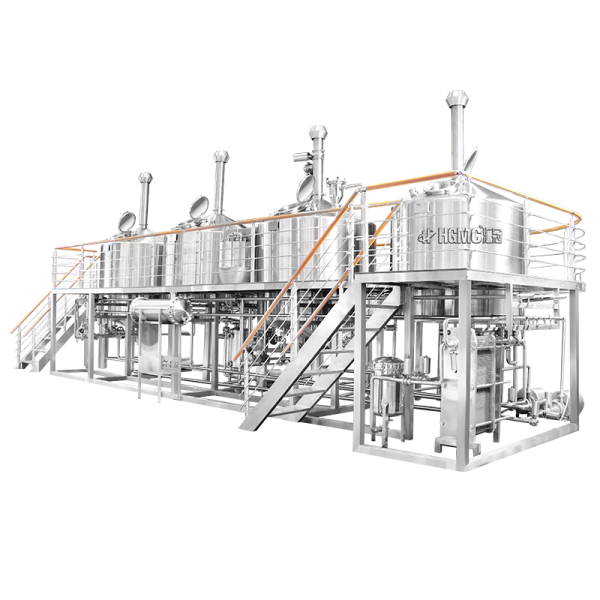
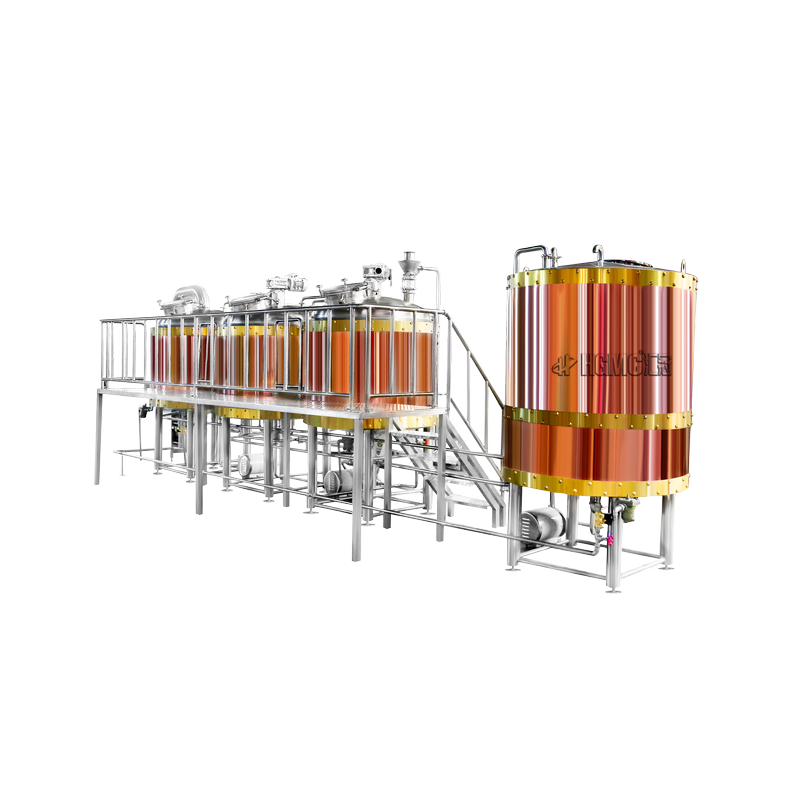
The brewhouse determines how much wort can be produced per batch and how many batches can be completed each day. Depending on the production objective, manufacturers may recommend a two-vessel, three-vessel, or four-vessel configuration.
A larger or more automated brewhouse can improve daily brewing throughput, but it should be selected with the cellar and packaging line in mind. The manufacturer should explain:
- Expected batch volume
- Expected brewing cycles per day
- Mash, lautering, boiling, whirlpool, and cleaning time
- Heating method and energy requirements
- Wort cooling capacity
- Process flexibility for different beer styles
Fermentation and Bright Tank Capacity
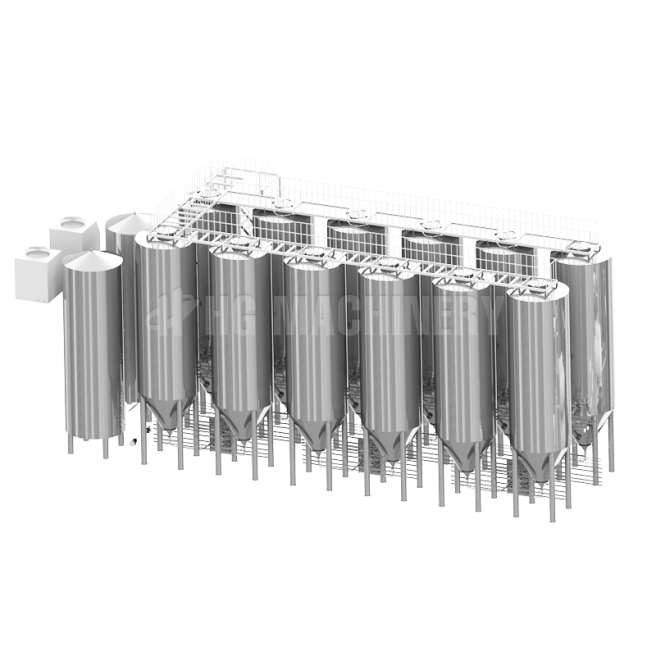
Fermentation tanks often determine whether a brewery can maintain continuous production. Beer can remain in fermentation, maturation, conditioning, or clarification for days or weeks, depending on the product and process. If cellar capacity is too limited, the brewhouse may sit idle even when demand is growing.
A qualified manufacturer should calculate the required quantity and volume of industrial fermentation tanks based on:
- Brewhouse batch size
- Annual output target
- Fermentation and maturation time
- Number of planned beer styles
- Required production buffer
- Bright beer storage time
- Cleaning and maintenance downtime
- Future expansion requirements
Can the Manufacturer Demonstrate Real Manufacturing Quality?
For high-volume production, equipment quality has a direct effect on beer consistency, cleaning efficiency, safety, maintenance workload, and operating life. A professional industrial beer making machine manufacturer should be able to show how its equipment is designed, fabricated, inspected, and tested.
Ask for clear technical documentation, including:
- Equipment layout drawings
- Process flow diagrams
- P&ID drawings where applicable
- Tank data sheets
- Material specifications
- Utility consumption estimates
- Control-system scope
- Installation requirements
- Factory acceptance testing procedures
You should also review the quality of stainless-steel fabrication, insulation, cooling jackets, valves, piping, tank internals, sanitary welding, access points, and drainage design. These details affect both beer quality and the ability to run consistent cleaning cycles.
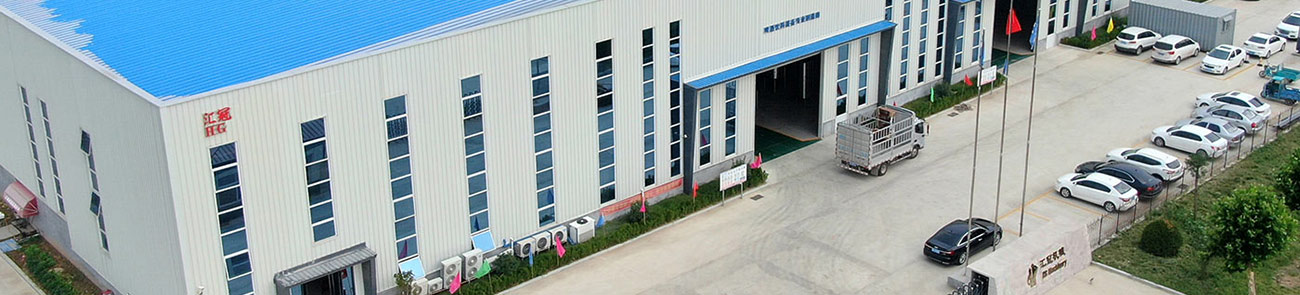
HGMC states that it operates more than 30,000 square meters of manufacturing space, has more than 50 sets of automated production equipment, and uses automated laser-welding technology in beer equipment manufacturing. Its company profile also identifies ISO, CE, PED, UL, EAC, and SGS among its listed certifications and qualifications.
Does the Automation System Support Consistent Brewing?
At high production volumes, automation is not only about reducing manual work. It helps breweries repeat process steps, control critical parameters, document production history, and reduce the risk of human error.
An industrial brewery manufacturer should explain exactly what is automated and what remains operator-controlled. Important areas include:
- Mash temperature and heating control
- Pump and valve sequencing
- Wort transfer and cooling
- Fermentation temperature control
- Tank pressure management
- CIP program control
- Alarm and fault handling
- Batch records and historical data
- Remote troubleshooting capability
- Future integration with production management systems
HGMC describes its brewery central control system as supporting automated mechanical operations, mashing control, fermentation control, and CIP functions. Its project materials also show PLC-based central touchscreen control, automatic mashing temperature control, and remote access capability in brewery projects.
For a growing brewery, ask whether the control system can be expanded when additional fermenters, utility equipment, or filling lines are added. The answer should include a clear plan for electrical capacity, control interfaces, software configuration, and operator training.
Can the Supplier Deliver a Complete Brewery Project?
High-volume breweries usually need more than a brewhouse and a few tanks. They need coordinated equipment that works together from raw-material handling through final packaging.
A capable industrial beer making machine manufacturer should be able to define the scope of a complete project, which may include:
- Malt milling and grain handling
- Brewhouse and wort cooling
- Fermentation and bright beer tanks
- Yeast propagation equipment
- CIP equipment
- Cooling and utility systems
- CO(2) recovery equipment
- Filtration or centrifugation
- Bottling, canning, or kegging equipment
- Labeling, packing, and palletizing integration
- Automation, installation, commissioning, and training
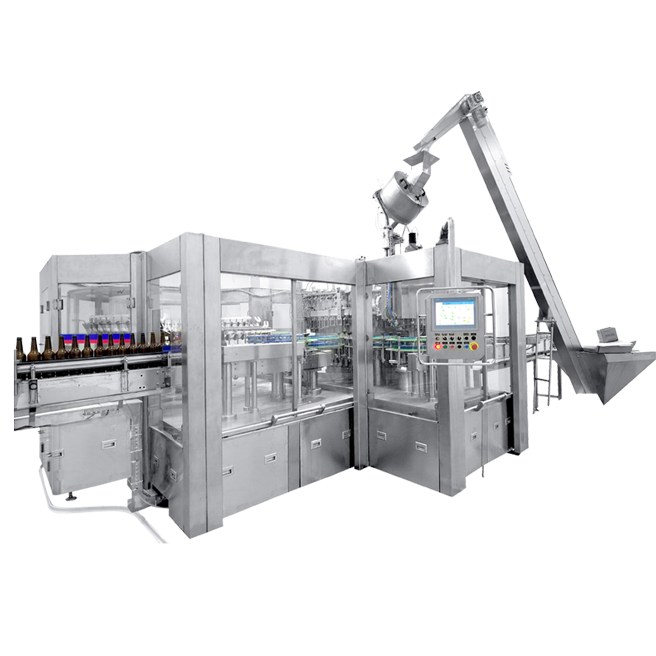
HGMC’s materials describe brewery project capabilities spanning milling, mashing, fermentation, yeast propagation, CO(2) recovery, automation, filling, and packaging. Its filling solutions are described as supporting fully automated glass-bottle and can lines with capacities from 7,000 to 36,000 bottles or cans per hour.
When comparing suppliers, confirm which equipment is manufactured directly, which parts are sourced from third parties, and who is responsible for the interfaces between systems. A turnkey proposal should clearly define the technical scope, delivery responsibilities, installation boundary, and commissioning plan.
How Should You Compare Manufacturer Quotations?
The lowest quotation is not always the lowest-cost solution over the life of the brewery. Two proposals may have similar vessel sizes while including very different automation levels, installation support, utility systems, documentation, and service commitments.
Compare quotations line by line.
| Evaluation Area | Questions to Ask |
| Equipment scope | Are milling, brewing, fermentation, CIP, cooling, filling, and packaging included? |
| Production output | What batch volume, brew cycles, fermentation capacity, and packaging speed are guaranteed? |
| Automation | Are sensors, valves, PLC controls, software, data records, and alarms included? |
| Quality documents | Are drawings, certificates, test records, manuals, and operating procedures supplied? |
| Installation | Does the quotation cover supervision, commissioning, and operator training? |
| Service | What warranty, spare-parts package, response time, and remote support are included? |
| Expansion | Can additional tanks, utilities, and controls be added without rebuilding the system? |
The total cost of ownership should include energy use, water consumption, cleaning chemicals, labor needs, spare parts, maintenance, production losses, and downtime risk. Industrial brewing solutions are commonly assessed on efficiency, reliability, and production consistency—not only on initial purchase cost.
What Service and References Should You Request?
A manufacturer should be willing to provide relevant project references at a similar production scale. Ask for operating examples that match your target annual output, equipment configuration, export market, and automation level.
When speaking with a reference customer, ask:
- Did the installed system achieve the intended output?
- Was the equipment delivered according to the agreed schedule?
- Did installation and commissioning proceed smoothly?
- How stable is the equipment during daily operation?
- How quickly does the supplier respond to technical issues?
- Are spare parts and technical support available when needed?
- Would the customer choose the same manufacturer again?
Choose a Manufacturer for Long-Term Production
The best industrial beer making machine manufacturer is one that can prove more than equipment-making capability. The supplier should understand your production target, calculate capacity across the complete process, manufacture reliable equipment, provide scalable automation, coordinate installation, and support the brewery after startup.
For a high-volume brewery, choose a partner that can help you build a balanced system—from brewhouse capacity and fermentation planning to packaging output and expansion readiness. A well-engineered brewery project reduces bottlenecks, improves batch consistency, and gives your operation a stronger foundation for long-term growth.