Jul. 23, 2026
News
Turnkey Beer Making Equipment for Brewery Projects
1.What turnkey really means in brewery equipment
When breweries search for turnkey beer making equipment, they are usually looking for more than a list of tanks or a single brewhouse. They want a complete system that arrives ready to install, connect, and brew with as little confusion as possible. In practice, “turnkey” means the major components are designed together from the beginning, so brewhouse, fermentation cellar, cooling, cleaning, and controls all fit into one coordinated project.
That matters because brewery projects often fail not from lack of equipment, but from mismatched equipment. If the tanks are the wrong size, the utility system is undersized, or the cleaning loops do not align with the cellar layout, the brewer ends up solving engineering problems after the purchase. Turnkey planning reduces those risks by treating the brewery as a complete operating environment rather than a collection of separate parts.
2.What a turnkey system normally includes
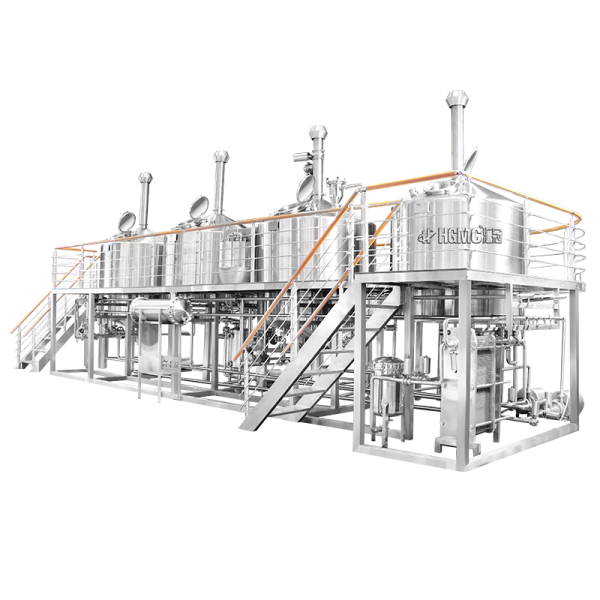
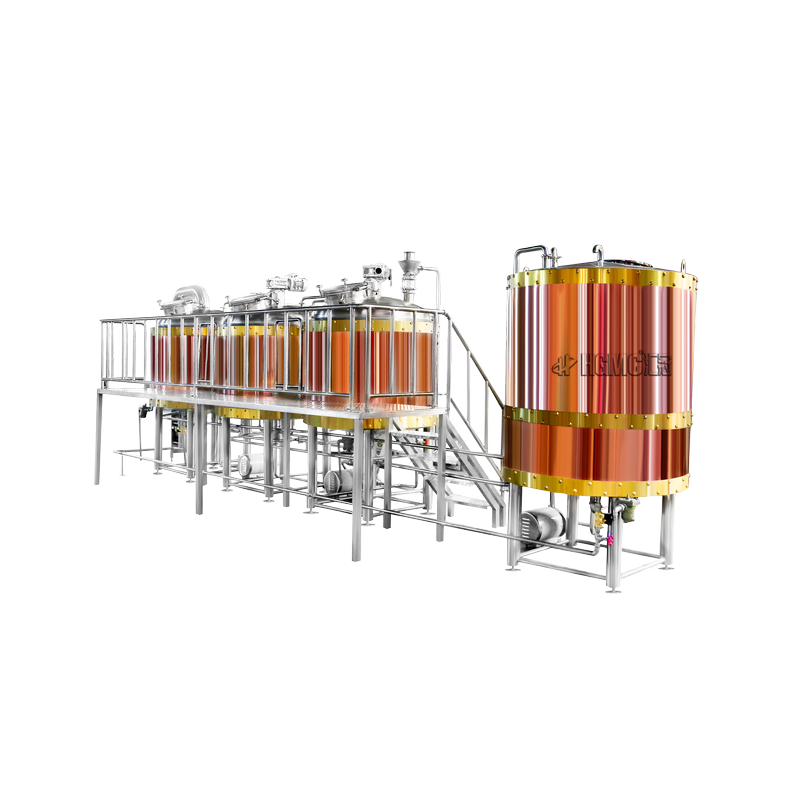
A proper turnkey beer making equipment package usually covers every main stage of production. The exact configuration changes with capacity, beer style, and building layout, but the overall scope tends to include:- Brewhouse equipment Mash tun, lauter tun, kettle, whirlpool, heat exchanger, pumps, and sanitary piping.
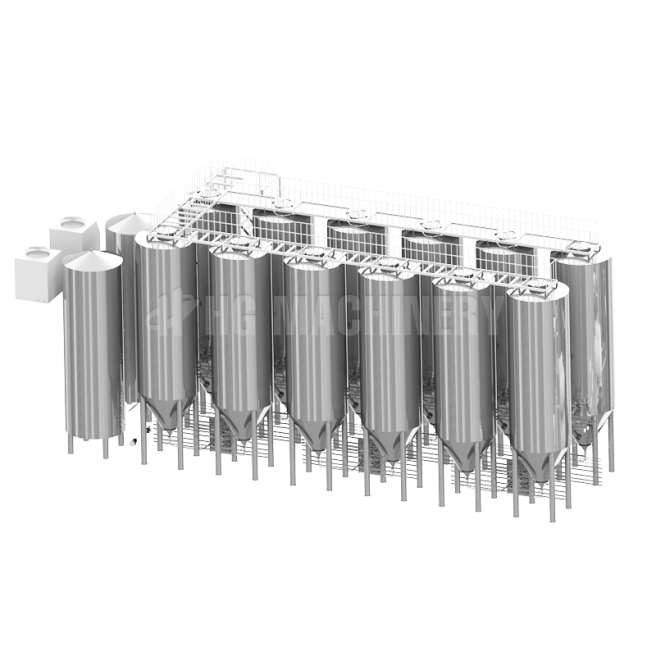
- Fermentation and conditioning equipment Cylindroconical fermenters, bright beer tanks, and sometimes lagering or yeast handling vessels.
- Cooling and utility systems Glycol chillers, distribution manifolds, and utility connections that keep fermentation stable.
- Cleaning systems CIP station, spray balls, chemical tanks, and cleaning circuits for vessels and lines.
- Controls and automation Panels, sensors, and process logic to help operators manage brewing steps consistently.
- Supporting structure Platforms, walkways, stairs, and access solutions that make the plant safe and practical to use.
3.Why turnkey is different from buying equipment piece by piece
Many breweries begin by shopping for tanks or a brewhouse first, then try to add the rest later. That can work in some cases, but it often creates hidden costs. With turnkey beer making equipment, the main advantage is system coherence from the start.
This approach helps in several ways:
- Better sizing decisions When the whole brewery is planned together, tank count, tank volume, and brewhouse capacity can be matched properly to output goals.
- Fewer compatibility issues Piping connections, valve standards, and control interfaces are more likely to fit correctly if one team designs the full package.
- Lower project risk There is less chance of discovering late in the project that the cooling system is too small or the cellar layout is awkward.
- Faster startup When equipment is designed to work as a set, installation and commissioning tend to move more smoothly.
- More predictable operations Brewers benefit from a plant where cleaning, transfers, and temperature control follow one logical flow.
4.The planning questions that shape a turnkey project
Before a brewery can specify turnkey beer making equipment, it should answer a few practical questions. These decisions shape the entire design.
1.Production target
How much beer do you want to produce in the first year, and how much do you expect to grow? The answer affects brewhouse capacity, tank numbers, and utility sizing.
2.Beer portfolio
Will you focus on a few flagship beers, or do you plan to produce many styles? A narrow portfolio may support a simpler turnkey system, while a diverse range may require more tank flexibility.
3.Brew frequency
How many brews per day or week will the brewery run? This influences whether a 2‑, 3‑, or 4‑vessel brewhouse is the better fit.
4.Building and site conditions
How much floor space, ceiling height, power, drainage, and cooling capacity do you have? A turnkey project must respect the real site, not just a catalog specification.
5.Staffing and skill level
Will the brewery operate with a small hands‑on team, or a larger staff with more automation experience? This helps define how much control and automation is appropriate.
These questions are important because turnkey planning is not simply about buying everything at once. It is about building a brewery that matches actual operation.
5.The real value of a turnkey brewery solution
The phrase turnkey beer making equipment can sound like a sales label, but the real value is very practical. For a brewery owner or operator, the biggest benefits are often time, clarity, and reduced risk.
1.Time savings
Instead of coordinating multiple vendors and guessing how equipment will connect, a turnkey approach gives you one integrated plan. That speeds up decisions and shortens the path from concept to brewing.
2.Budget control
A full project view makes it easier to understand where the money goes. You can see which parts are essential, which are optional, and what trade‑offs affect the final price.
3.Easier communication
Working with one equipment partner keeps the technical conversation simpler. You are discussing one brewery concept, not trying to translate between several independent suppliers.
4.Better expansion planning
If you know that future tanks or upgrades may be needed, a turnkey design can leave room for growth. That prevents expensive rework later.
For breweries that want to focus on beer rather than construction problems, those advantages are often worth more than the equipment itself.
6.How HGMC approaches turnkey beer making equipment
HGMC’s role in a turnkey beer making equipment project is to help turn the brewery idea into a functioning system. The process usually begins with a discussion of your target output, beer styles, and building conditions. From there, HGMC can propose a brewhouse configuration, fermentation cellar layout, cleaning system, and utility plan that work together.A typical HGMC turnkey workflow may include:
- Project discovery Understanding your capacity goals, budget range, building layout, and product mix.
- System concept Suggesting a brewhouse and cellar structure that fits your production model.
- Specification refinement Confirming tank sizes, materials, fittings, cleaning circuits, and control options.
- Manufacturing and quality control Building the equipment as one coherent package and checking key details before delivery.
- Installation support Providing guidance to help your local team place and connect the equipment correctly.
- Start‑up assistance Supporting commissioning and early production so the system operates as intended.
- Ongoing support Remaining available for spare parts, process optimization, and future expansion planning.
7.What to check before you accept a turnkey proposal
Not every package labeled turnkey beer making equipment offers the same value. Before moving forward, it is worth checking the following points:- Does the proposal include all essential process blocks, or only the main tanks?
- Are brewhouse, cellar, cleaning, and controls designed together, or just listed separately?
- Does the layout make sense for your building and workflow?
- Is the equipment sized for your real production plan, not only your starting budget?
- Does the supplier explain how the system can grow later if demand increases?
- Are documentation, support, and commissioning assistance clearly defined?