Jul. 16, 2026
News
Complete Beer Making Equipment for Modern Breweries
1.What does “complete beer making equipment” really mean?
When brewers search for complete beer making equipment, they are not just looking for one brewhouse or a couple of tanks. They are thinking about the entire brewing environment: every vessel, pump, valve, hose, cleaning tool, and control element needed to turn malt, hops, water, and yeast into packaged beer consistently and safely.For a modern brewery, “complete” means three things:
- All process steps are covered, from mash‑in to packaging.
- Equipment is sized and arranged so production can run smoothly.
- Hygiene, safety, and future expansion are built into the design.

2.The four core blocks of a complete brewing system
A practical way to understand complete beer making equipment is to divide it into four core blocks. Each block serves a specific role, but they must work together as one process.Block A: Brewhouse – where wort is born
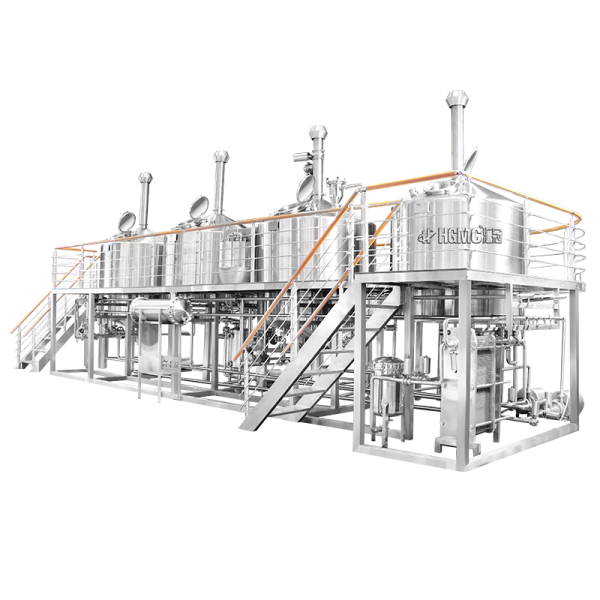
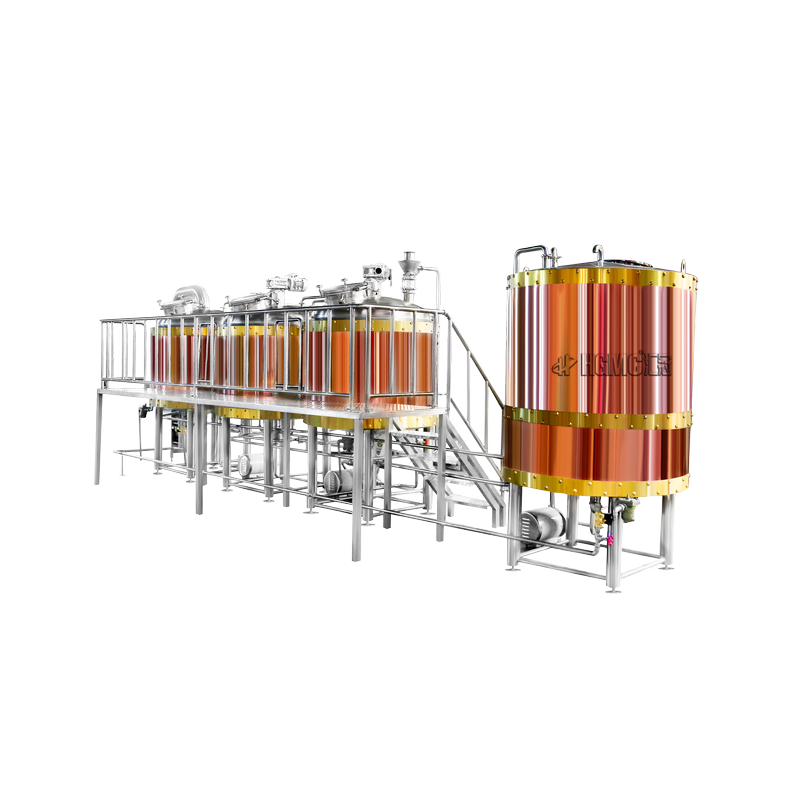
The brewhouse transforms malt and water into hot wort.Typical components:
- Mash tun and lauter tun (or mash/lauter combined).
- Kettle and whirlpool (sometimes in one vessel, sometimes separate).
- Heat exchanger for cooling hot wort to fermentation temperature.
- Pumps, sanitary valves, and brewhouse piping.
- Platforms, stairs, and access points.
- Mash performance and lauter efficiency.
- Stable boil control and reliable trub separation.
- Smooth, hygienic transfers between vessels.
Block B: Fermentation and conditioning – where beer develops
This block turns wort into beer, then stabilizes it for packaging.Typical components:
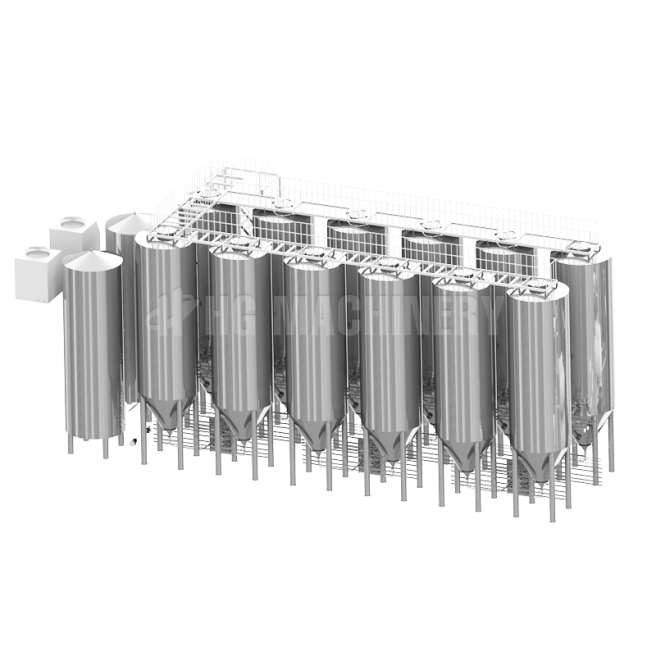
- Cylindroconical fermentation tanks sized for your batch volume.
- Bright beer tanks for maturation and carbonation.
- Cooling jackets, insulation, and temperature measurement points.
- Sample valves, manways, and appropriate pressure fittings.
- Control fermentation temperature precisely.
- Handle multiple beers at different stages concurrently.
- Prepare beer consistently for packaging in kegs, bottles, or cans.
Block C: Cleaning and hygiene – protecting every batch
No brewery is complete without a robust cleaning setup.Key components:
- CIP (clean‑in‑place) station with chemical tanks and pumps.
- CIP spray devices in brewhouse vessels and tanks.
- CIP manifolds and lines reaching critical parts of the brewery.
- Seals, gaskets, clamps, and hoses suited to cleaning chemicals and temperatures.
- Thorough, so hygiene is reliable.
- Repeatable, so staff can follow clear procedures.
- Efficient, so tanks turn faster without wasting water and chemicals.
Block D: Controls and utilities – the invisible backbone
Behind the visible stainless steel, controls and utilities keep the brewery running.Typical components:
- Temperature controllers and panels.
- Basic or advanced automation for brewhouse steps.
- Glycol cooling systems and distribution manifolds.
- Steam or equivalent heating arrangements (depending on scale and design).
- Electrical connections, safety devices, and instrumentation.
- Provide enough cooling and heating capacity for peak demand.
- Give brewers clear visibility of what is happening.
- Allow safe operation and straightforward troubleshooting.
3.Matching equipment size to your brewing model
“Complete” is not one fixed list; it depends on how you brew. Planning complete beer making equipment starts with your brewing model.Brewpub or taproom‑focused breweries
- Smaller batches, frequent recipe changes.
- Emphasis on variety and direct customer experience.
- Equipment should support flexible brewing and frequent cleaning.
- A brewhouse that can handle different grain bills and styles reliably.
- Enough fermentation and bright tank capacity for your core and seasonal beers.
- CIP and controls that keep small teams efficient.

Regional craft breweries
- Medium batch sizes, mix of core and rotating beers.
- Supply taprooms, local bars, and retail.
- Balance between throughput and recipe diversity.
- Brewhouse capacity aligned with weekly brew plans.
- Tank farms arranged to handle flagship and seasonal beers without scheduling chaos.
- Efficient cleaning and cooling systems that keep labor and energy manageable.
Industrial or large‑scale breweries
- Large batches, high output, strict quality repetition.
- Focus on continuous or near‑continuous production.
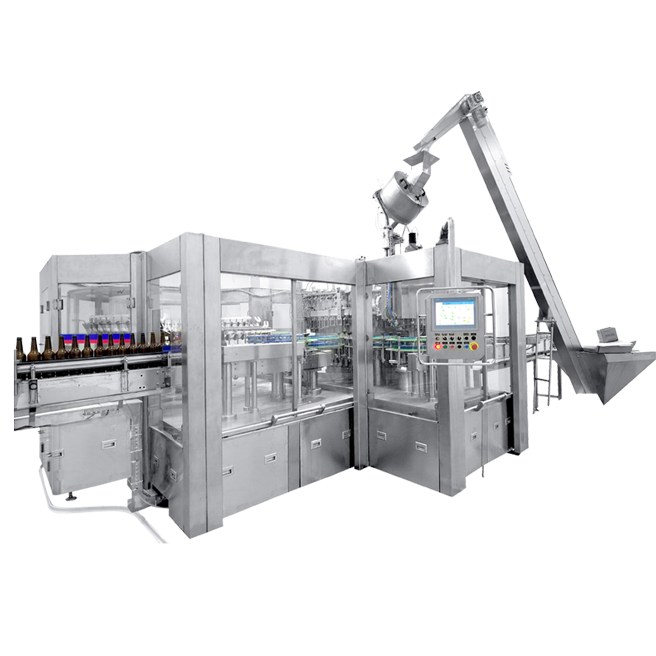
- Integration with packaging lines and broader plant infrastructure.
- Multi‑vessel brewhouses with high daily brew counts.
- Extensive fermentation and bright tank capacity.
- Centralized CIP, automation, and robust utility networks.
HGMC supports larger projects with more sophisticated engineering and layout planning, connecting brewing equipment to the wider plant environment.

4.Cost structure of complete equipment: what drives budget
Planning complete beer making equipment inevitably raises the question of cost. Understanding the main budget drivers helps you make informed decisions.Key factors include:
- Brewhouse configuration More vessels and higher automation levels increase cost, but also increase throughput and consistency.
- Total tank volume and count Each tank adds material and fabrication requirements. Tank counts should match realistic demand and fermentation times.
- Material and finishing decisions Wall thickness, internal polishing, and external cladding influence both durability and cleanability.
- CIP and utility systems Cooling, cleaning, and certain platforms can be a substantial share of the total budget.
- Degree of customization Site‑specific layouts and special accessories require extra engineering and manufacturing effort.
5.Step‑by‑step roadmap to designing a complete brewery system
To turn the idea of complete beer making equipment into an actionable plan, you can follow a structured roadmap.Step 1: Define your production and product profile
- Annual volume target over the next 3–5 years.
- Expected brew frequency (brews per week).
- Core beers and approximate fermentation times.
- Range and frequency of seasonal or specialty beers.
Step 2: Map the building and utilities
- Floor area and ceiling height.
- Load‑bearing capacity and access paths.
- Existing power and cooling infrastructure.
- Drainage, ventilation, and other environmental factors.
Step 3: Sketch the process flow
- From malt entry to wort production in the brewhouse.
- Wort transfer to fermentation and through conditioning.
- Cleaning circuits that reset equipment between batches.
- Packaging interfaces if applicable.
Step 4: Prioritize must‑have functions vs optional features
- Must‑have: safe, hygienic vessels; reliable transfers; adequate cooling and cleaning; basic controls.
- Optional: advanced automation, elaborate finishes, extra vessels for peak capacity.
Step 5: Work with an equipment partner on concept design
At this stage, many breweries turn to a specialist supplier. HGMC’s role in complete beer making equipment typically involves:- Translating your brief into one or more configuration concepts.
- Proposing brewhouse size and vessel counts.
- Suggesting tank mixes and CIP layouts.
- Indicating core utility demands.
Step 6: Refine specifications and layout
- Adjust vessel sizes and numbers.
- Confirm material thickness, finishes, and fittings.
- Finalize CIP and utility routing.
- Decide on automation level and control philosophy.
6.How HGMC fits naturally into a complete equipment project
For breweries seeking complete beer making equipment, HGMC acts as an equipment partner that understands both process and construction realities. The brand becomes part of the project in a natural way, not as a forced promotional element.HGMC’s contribution typically includes:
- Process‑driven design Brewhouse and tank systems are built around your recipes, schedules, and quality targets.
- Coherent system integration CIP, cooling, piping, and controls are designed to work together, not as separate add‑ons.
- Scalable configurations Systems are planned with options to add tanks or upgrade controls as demand grows.
- Clear documentation and communication Drawings, equipment lists, and operating guidelines help you and your contractors understand the system easily.
- Ongoing support As your brewery evolves, HGMC remains available to discuss adjustments, expansion, or optimization.
7.Making “complete” equipment work for your Google and your brewery
From an online perspective, brewers searching for complete beer making equipment are typically:- Planning new breweries or major upgrades.
- Comparing different scales and system philosophies.
- Trying to understand what “complete” really includes in terms of hardware and cost.
- Explain the full system in plain, practical language.
- Show how brewers can think through capacity, layout, and budget.
- Introduce a brand like HGMC as a solution partner in a natural, informative way.