Jul. 15, 2026
News
Choosing an Industrial Beer Brewing Supplies Manufacturer
Why the industrial beer brewing supplies manufacturer matters
When a brewery moves into larger‑scale production, choosing an industrial beer brewing supplies manufacturer becomes one of the most important early decisions. At industrial level, you are no longer buying a few standalone tanks or hoses; you are selecting a long‑term partner who will shape your brewhouse, fermentation cellar, cleaning systems, and even parts of your utility layout. That partner influences not only your equipment quality, but also how smoothly your project runs and how easily you can expand later.
A strong manufacturer understands both engineering and brewing practice. They help you translate target capacity, beer styles, and building constraints into a coherent, workable equipment plan, rather than leaving you to piece the project together on your own.
What an industrial supplies manufacturer actually does
An industrial beer brewing supplies manufacturer plays several distinct roles across the life of a brewery project:- Process understanding They learn about your planned annual output, batch size, product mix, and fermentation schedules to design appropriate equipment.
- System design and specification They define brewhouse vessels, tank volumes, CIP systems, and piping concepts that fit your goals.
- Fabrication and quality control They build tanks, brewhouse modules, and accessory packages, checking materials, welds, and pressure performance before delivery.
- Logistics and coordination They organize packing, shipping, and documentation so equipment reaches your site in a usable, traceable condition.
- Technical support and after‑sales They remain available to help with installation questions, early operation, maintenance, and any later upgrades or changes.
The industrial supplies they typically provide
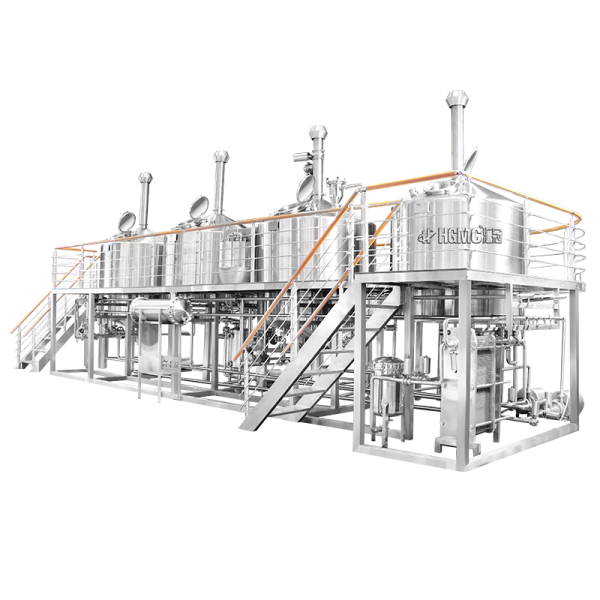
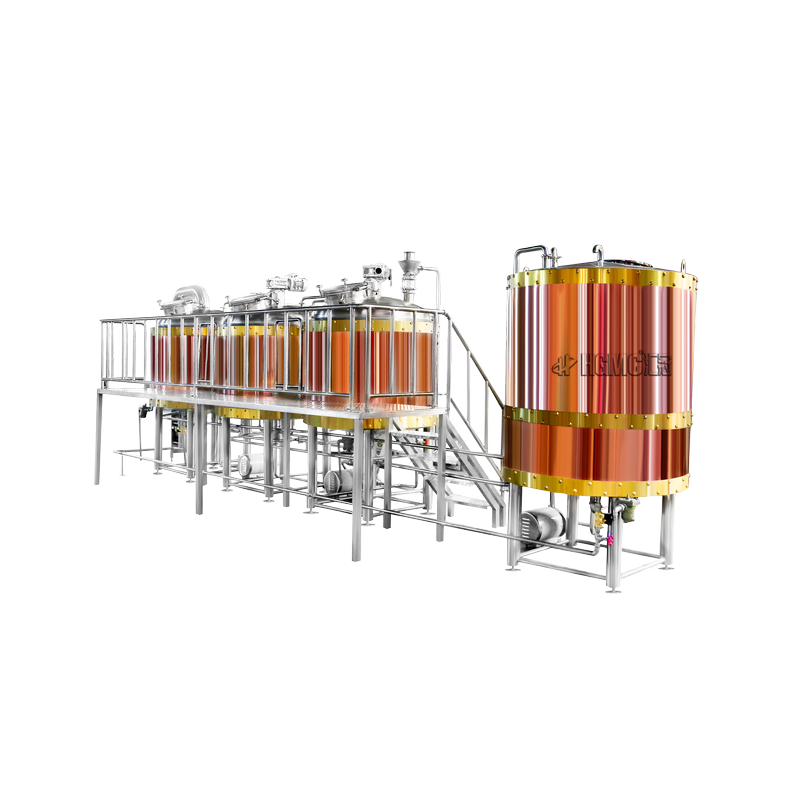
A credible industrial beer brewing supplies manufacturer usually offers a full line of equipment and accessories needed for large‑scale brewing, such as:- Brewhouse equipment Mash tuns, lauter tuns, kettles, and whirlpools in multi‑vessel configurations suitable for repeated daily brews, plus heat exchangers, pumps, and brewhouse piping.
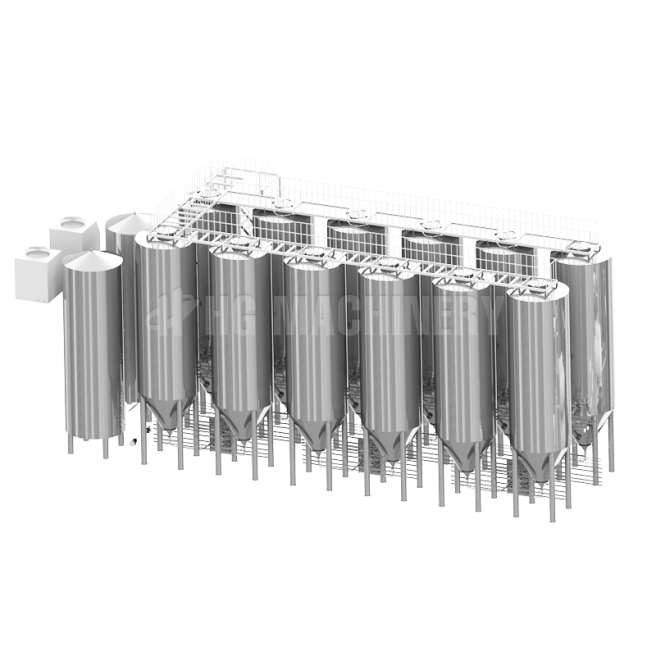
- Fermentation and bright beer tanks Large cylindroconical fermenters and bright beer tanks with proper cooling jackets, insulation, fittings, and CIP integration.
- Cleaning systems (CIP) Central cleaning stations, pumps, and manifolds that deliver cleaning solutions to brewhouse vessels, tanks, and lines.
- Utility modules Cooling systems, distribution manifolds, and certain platforms or structural elements around vessels.
- Accessories and spare parts Valves, clamps, hoses, sampling tools, and other components that keep daily operations running and enable maintenance.
How to evaluate an industrial supplies manufacturer
When choosing an industrial beer brewing supplies manufacturer, price is only one factor—and often not the most revealing one. You can use several practical criteria to evaluate candidates:- Project experience Have they completed similar‑scale brewery projects? Experience with your approximate capacity range reduces learning curves and surprises.
- Engineering capability Do they have in‑house technical staff who can discuss process details, layouts, and specifications with you, not just sales numbers?
- Documentation quality Are equipment drawings, material lists, and manuals clear and complete? Good documentation makes installation, inspection, and maintenance easier.
- Customization flexibility Can they adapt standard designs to your building, local regulations, and process preferences without losing coherence in the system?
- Communication and responsiveness Do they answer questions promptly and clearly during planning? Good communication early often indicates reliable support later.
- After‑sales support Are spare parts and technical advice realistically available for the lifetime of the equipment?
Manufacturer’s role in total project cost and risk
An industrial beer brewing supplies manufacturer influences both the cost and risk profile of your project in ways that go beyond equipment price:- Design quality and cost stability Well‑designed systems tend to have fewer unexpected changes or add‑ons during installation, preventing budget drift.
- Installation and commissioning risk Equipment that fits the intended layout and process reduces problems when you start up the plant, avoiding delays and extra expenses.
- Long‑term operating costs Thoughtful design of brewhouse, tank farm, and cleaning systems helps control energy, water, and labor costs over the years.
- Expansion flexibility Equipment built with future additions in mind makes capacity increases easier and cheaper compared with systems that need major rework.
Steps to choose your industrial supplies manufacturer
You can follow a simple step‑by‑step process to select an industrial beer brewing supplies manufacturer:- Define your project brief Clarify capacity targets, beer range, site constraints, and rough timelines. This makes your needs understandable to any manufacturer.
- Create a shortlist Identify several manufacturers with proven industrial brewery references, ideally at similar scales or in comparable markets.
- Request concept proposals Ask each candidate for a basic concept: brewhouse configuration, tank counts, CIP ideas, and an indicative layout.
- Compare design thinking, not just prices Evaluate how each manufacturer approaches process flow, cleaning, and expansion—these aspects often matter more than small price differences.
- Check references when possible If you can, visit or talk to breweries that use equipment from each candidate. Real‑world feedback is valuable.
- Align expectations and choose Select the manufacturer whose design approach, communication style, and support offering align best with your team and long‑term plans.
Why consistency across supplies matters at industrial scale
One of the less obvious advantages of working with a single industrial beer brewing supplies manufacturer is consistency. Using equipment and accessories from one design family offers benefits such as:- Unified standards The same valve types, gaskets, and clamps across the plant simplify inventory and training.
- Simpler maintenance Technicians learn one set of parts and procedures instead of multiple conflicting ones.
- Cleaner documentation Drawings and manuals share the same style and reference logic, making them easier to use under time pressure.
- Reduced compatibility issues When brewhouse, tanks, CIP, and utilities are designed together, you avoid awkward mismatches at connection points.
Making the most of your relationship with the manufacturer
Once you choose an industrial beer brewing supplies manufacturer, you can get more value from the relationship by:- Sharing realistic production data and constraints early, rather than only high‑level ambitions.
- Being open about budget ranges and priorities, so the manufacturer can match design features to your real needs.
- Engaging with their engineering suggestions, asking why certain choices are recommended.
- Planning regular communication during design, fabrication, and installation, to keep expectations aligned.