Jul. 14, 2026
News
Industrial Brewery Equipment Machine Solutions
Industrial brewery equipment machine: what it means for a beer factory
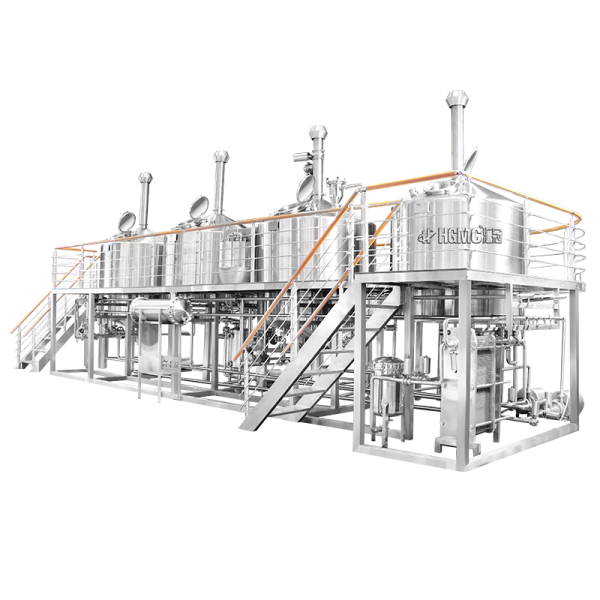
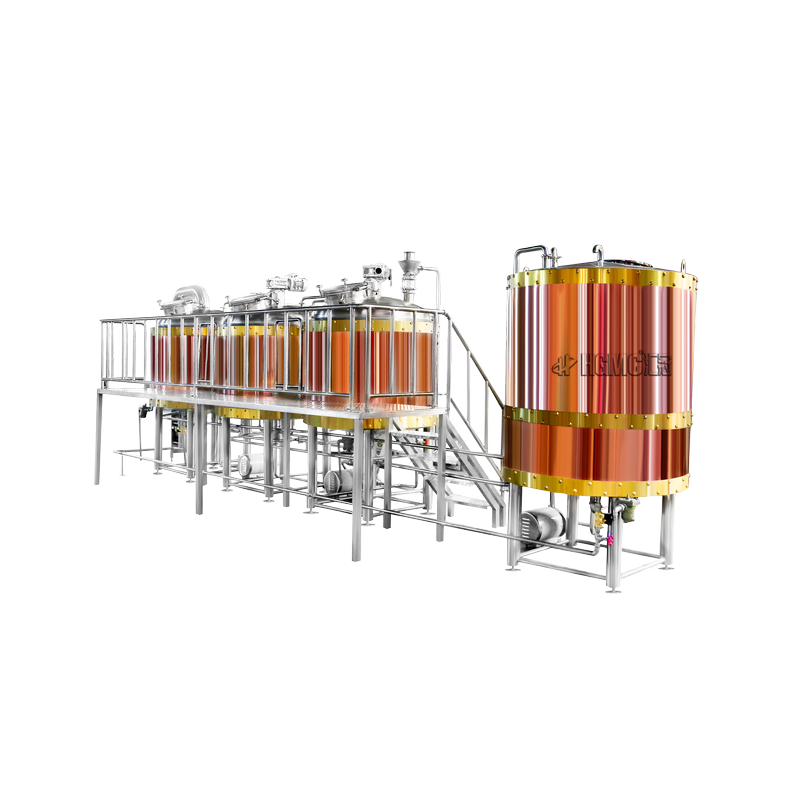
When a brewery starts planning industrial‑scale production, the term industrial brewery equipment machine usually refers to the entire set of core mechanical systems that turn raw materials into packaged beer. At this level, you are no longer talking about a single brewhouse or a few fermenters. Instead, you are planning how mash vessels, lauter tuns, kettles, whirlpools, pumps, tanks, CIP units, and controls will work together as one continuous line inside a beer factory.HGMC focuses on designing industrial equipment machines as integrated solutions. Rather than supplying scattered components, HGMC builds coordinated systems that reflect the real production rhythm of an industrial brewery: repeated brews per day, overlapping fermentation cycles, and regular packaging schedules.
Main equipment machines in an industrial brewery
A typical industrial brewery contains several categories of equipment machines, each playing a specific role:- Brewhouse machines
- Mash tun and lauter tun for mixing and separating wort.
- Kettle and whirlpool for boiling and hot trub separation.
- Wort cooling systems, including heat exchangers and pumps.
- Fermentation and bright beer machines
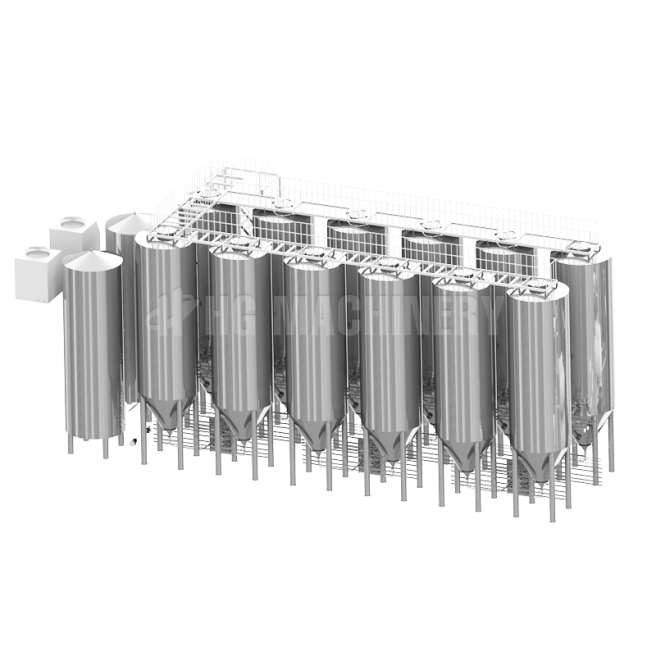
- Large cylindroconical fermenters equipped with cooling jackets and fittings.
- Bright beer tanks used for maturation and carbonation.
- Cleaning and CIP machines
- CIP stations with pumps and chemical tanks.
- Integrated spray devices in vessels and lines.
- Utility and control machines
- Cooling units and distribution manifolds.
- Control panels, automation hardware, and instrumentation.
Cost drivers for industrial brewery equipment machines
Planning the budget for industrial‑scale equipment means understanding which elements influence total investment. Typical cost drivers include:- Brewhouse configuration and size
- A 3‑ or 4‑vessel brewhouse with larger volumes and more complex piping naturally costs more than a simpler, smaller configuration. The chosen design must match your planned daily brew count and batch size.
- Tank volume and quantity
- The number and size of fermenters and bright beer tanks directly impact material, fabrication, and installation costs. Industrial breweries require enough tank capacity to keep core beers flowing while supporting seasonal products.
- Material specifications and finishing
- Decisions about wall thickness, steel grades, internal polish, and external cladding affect price as well as durability and cleanability.
- Automation and control
- Basic controls cost less; advanced automation with recipe management, data logging, and extensive sensors adds investment but improves consistency and labor efficiency.
- Utility and CIP systems
- Cooling units, CIP stations, pumps, and comprehensive piping networks form a substantial part of the industrial brewery equipment machine budget.
Industrial beer factory solution design: from layout to process
A key part of working with HGMC is transforming the idea of an industrial brewery equipment machine into a complete beer factory solution. This process usually covers:1.Process definition
Clarifying target annual volume, batch size, product mix, and brewing schedule.
2.Layout planningMapping how brewhouse, tank farms, CIP areas, and utilities will fit into the building. Good layout reduces product movement and makes cleaning routes clear.
3.Line integrationEnsuring that mechanical machines—such as pumps, valves, and CIP units—are sized and connected to support the planned process without bottlenecks.
4.Control logicDeveloping basic or advanced control structures so operators can manage brew days, fermentation, and cleaning in an organized way.
HGMC’s industrial solutions treat equipment machines as parts of one process line, not standalone items. This integrated view is essential when designing reliable, scalable beer factories.
Industrial equipment machines and operating costs
Choosing an industrial brewery equipment machine package affects not only the purchase price but also ongoing operating costs. Well‑planned equipment machines help breweries:- Reduce energy use through efficient heating, cooling, and insulation.
- Minimize cleaning time and chemical consumption via integrated CIP design.
- Lower product loss with smooth internal surfaces and correctly positioned outlets.
- Cut labor waste by arranging equipment for clear workflows and manageable manual tasks.
Selecting an industrial brewery equipment machine partner
Because industrial installations are complex, choosing a reliable partner for your industrial brewery equipment machine is as important as choosing the hardware itself. When evaluating manufacturers, breweries often look for:- Experience in industrial‑scale brewery projects.
- Strong engineering capabilities and clear documentation.
- Ability to customize layouts and specifications for specific buildings and markets.
- Long‑term support for maintenance, spare parts, and upgrades.
How HGMC supports industrial brewery projects
When a brewery works with HGMC on an industrial brewery equipment machine solution, the cooperation typically follows a practical sequence:
1.Initial discussion
Sharing capacity goals, product mix, and building plans to give HGMC a clear picture of the project.
2.Concept proposal
HGMC outlines possible brewhouse sizes, tank counts, CIP and cooling concepts, and basic layout sketches.
3.Specification refinement
Together, you refine vessel dimensions, materials, fittings, and control options to match operational and regulatory needs.
4.Manufacturing and delivery planning
HGMC fabricates the equipment according to the agreed specifications and organizes transport to site.
5.Installation guidance and commissioning support
While local teams install the equipment, HGMC provides instructions and technical assistance to support initial start‑up and early brew days.
6.Ongoing technical support
As the brewery begins regular production, HGMC remains available for fine‑tuning, troubleshooting, and expansion discussions.
This approach turns the concept of industrial brewery equipment machine into a real, operational beer factory, backed by a partner who understands both the mechanical side and the brewer’s perspective.