Jul. 28, 2026
News
Industrial Brewing Supplies Manufacturer Guide
1.Why the manufacturer matters
When a brewery looks for an industrial brewing supplies manufacturer, the choice is about much more than price. At industrial scale, the manufacturer affects the whole project: brewhouse design, cellar layout, cleaning systems, utility planning, and long‑term reliability. A brewery is not just buying tanks or pipes; it is choosing a partner that helps turn production goals into a working plant.
That is why industrial buyers should think in terms of process, not just product. A capable manufacturer understands how the equipment must fit the building, how transfers should move, how cleaning should work, and how the system should grow later. If those details are not considered together, even well‑made equipment can become difficult to operate.
2.What the manufacturer provides
A serious industrial brewing supplies manufacturer usually provides more than stainless steel vessels. The work normally includes several parts of the brewery project.
First is process planning. The manufacturer needs to understand target output, batch size, beer styles, packaging plans, and expected growth. These basics determine whether the brewery needs a simple setup or a more complex system.
Second is equipment design. The brewhouse, fermentation tanks, bright beer tanks, CIP station, cooling system, and supporting structures should all be designed as one connected system. Each part needs to match the others in size, flow, and function.
Third is fabrication and support. At industrial scale, weld quality, surface finish, pressure handling, and connection details all matter. A reliable manufacturer also supports shipping, installation guidance, and commissioning. That support often makes the difference between a smooth startup and a difficult one.
3.How to judge manufacturer capability
Not every industrial brewing supplies manufacturer offers the same value. A buyer can learn a lot by asking practical questions and looking for clear answers.- Engineering depth. Can the supplier discuss process flow, tank arrangement, and cleaning routes in detail?
- Project experience. Have they handled breweries of similar size and complexity?
- Documentation. Are the drawings, specifications, and manuals clear and complete?
- Customization. Can they adapt the system to the building and local conditions?
- After‑sales support. Will they provide spare parts, technical help, and future expansion support?
4.Equipment in a complete supply package
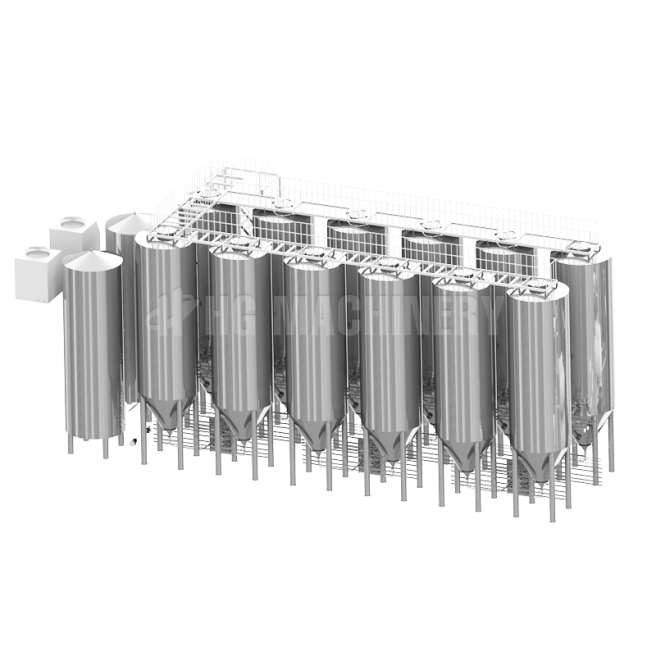
A complete industrial brewing supplies manufacturer often supplies the full range of equipment needed to build a brewery around one standard. This may include brewhouse vessels, fermentation tanks, bright beer tanks, CIP equipment, cooling systems, control panels, and utility structures.
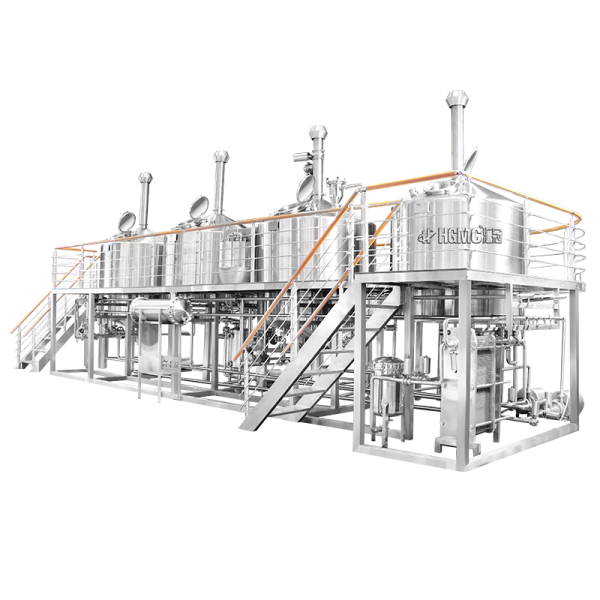
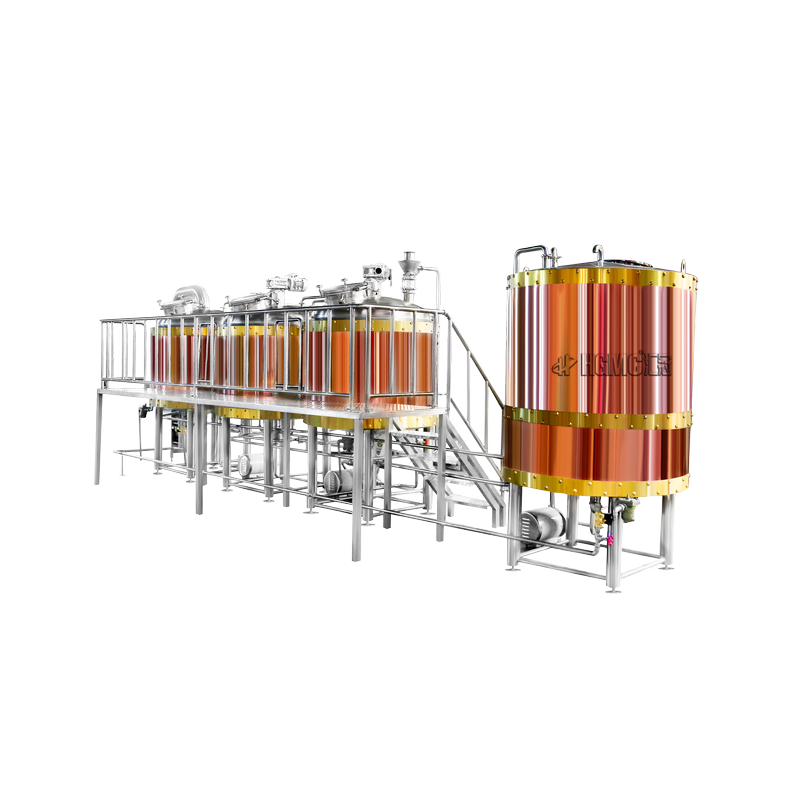
Brewhouse equipment typically includes a mash tun, lauter tun, kettle, whirlpool, heat exchanger, pumps, and sanitary piping. Fermentation and bright beer systems need cooling jackets, pressure fittings, and hygienic access points.
Cleaning systems must be sized so that all vessels and lines can be cleaned properly without extra manual work.
When these items come from one source, the brewery is easier to manage. Fittings are more likely to match, documentation is simpler, and the installation team has fewer compatibility issues to solve.
5.Why complete system thinking saves money
Many buyers focus only on the first quotation, but a good industrial brewing supplies manufacturer should help reduce total project cost over time. A complete system is often more efficient because it avoids hidden problems later.
For example, a brewhouse and cellar designed together usually clean faster and operate more smoothly. Proper tank sizing reduces idle capacity and bottlenecks. Correct utility planning helps avoid wasted energy and rework. A layout built with future growth in mind can also save money when the brewery expands.
In other words, the lowest quote is not always the lowest cost. Equipment that is cheaper at the beginning can become expensive if it causes poor flow, slow cleaning, or early replacement.
6.How the project usually starts
A project with an industrial brewing supplies manufacturer usually begins with a brief but detailed discussion. The brewery should be ready to share annual output targets, batch size, beer range, building conditions, and expansion plans.
From there, the manufacturer can propose a brewhouse size, tank count, CIP concept, and general layout. This early stage is important because it sets the tone for the whole project. A supplier that asks good questions and thinks in systems is usually better than one that only sends a quick price list.
Once the concept is clear, the project can move into specifications, fabrication, delivery, and installation support. Each step should stay connected to the original brewing goals.
7.Where HGMC fits naturally
For breweries comparing an industrial brewing supplies manufacturer, HGMC fits naturally as a partner that focuses on complete brewery solutions. The brand’s value is strongest when the project needs coordinated equipment that works together from brewhouse to cellar to cleaning.
HGMC’s approach is built around practical system design, site‑based planning, and long‑term operability. That means the brewery is not just buying equipment, but building a working production environment. For industrial buyers, that kind of support matters as much as the steel itself.
8.What to ask before choosing
Before selecting an industrial brewing supplies manufacturer, ask a few direct questions:- Can the system be designed around my building and utilities?
- How do you decide brewhouse and tank sizes?
- What cleaning support is included?
- How do you handle installation guidance and commissioning?
- Can the system expand later without major redesign?
- What after‑sales support and spare parts are available?
9.Why this keyword deserves a full page
People searching for industrial brewing supplies manufacturer are usually comparing suppliers for a real project. They want more than product names. They want to know who can design a brewery properly, support installation, and help the plant perform well for years.
That is why this keyword works best when the page explains supplier capability, equipment scope, long‑term value, and practical buying questions. When those topics are covered clearly, the page becomes useful for readers and strong for search visibility at the same time.