Jun. 25, 2026
News
Industrial Beer Brewing Supplies Guide
Understanding industrial beer brewing supplies
When breweries scale up from regional production to high‑volume operations, the industrial beer brewing supplies is a complete ecosystem of professional equipment, not just a few stainless steel tanks. It includes the brewhouse, fermentation and bright beer cellars, utilities, controls, and the sanitary accessories that link them together. At industrial level, every component must withstand long production hours, repeated cleaning cycles, and strict quality requirements, while still allowing the plant to grow in capacity over time.Industrial beer brewing supplies are also expected to work in harmony. Pumps must be sized to the vessels, cooling systems must match tank volumes, and control panels must reflect the real‑life workflow of the brewery. That is why experienced manufacturers like HG Beer Equipment design complete systems that combine robust hardware with practical engineering, rather than offering isolated parts.
Core brewhouse supplies for industrial production
The brewhouse is the starting point for every batch of beer. In industrial environments, it must deliver consistent wort quality at high throughput. Key supplies here are large vessels, reliable heating systems, and properly matched fluid handling components.
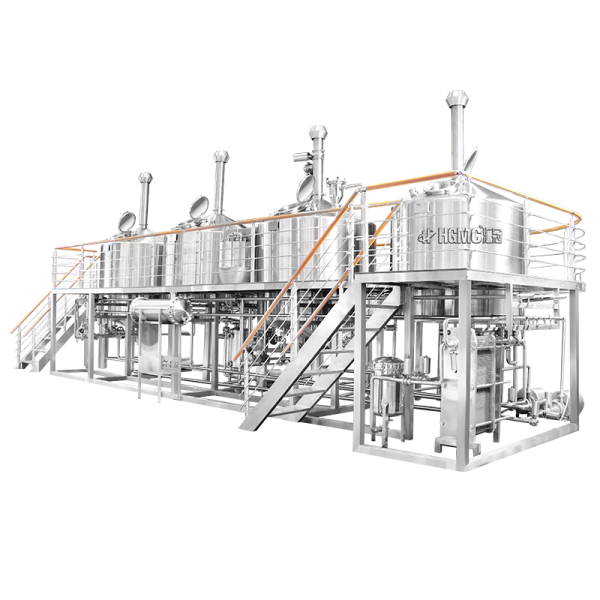
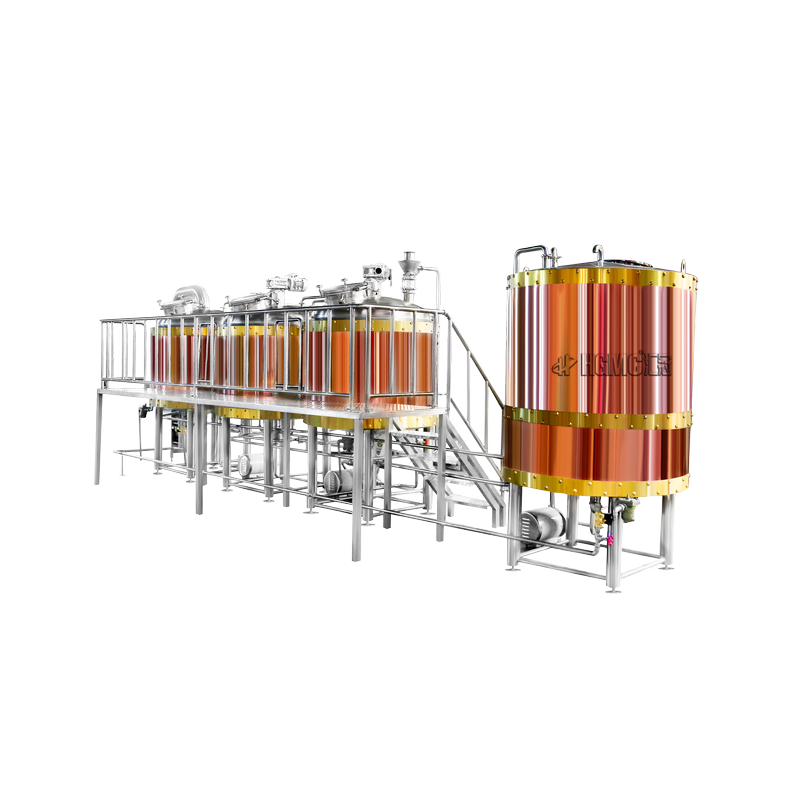
Typical brewhouse supplies include:
- Mash and lauter tuns designed for high grain loads and efficient extract.
- Kettle and whirlpool vessels built to handle large volumes and repeated boil cycles.
- High‑capacity heat exchangers for fast and precise wort cooling.
- Food‑grade pumps and valves configured for the flow rates and pressures of industrial brewing.
- Stainless steel platforms and stairs that keep operators safe while working at height.
Fermentation and bright beer supplies at scale
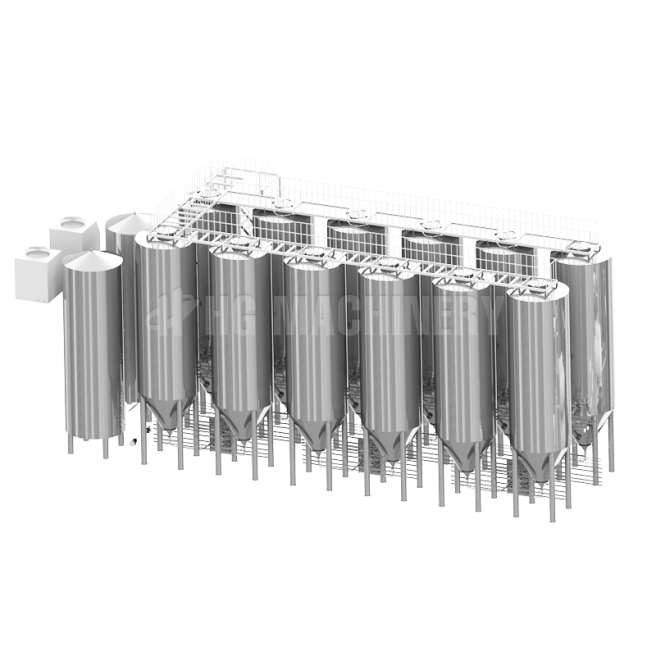
Fermentation and maturation are where industrial beer brewing supplies have a direct impact on flavor stability and product consistency. Large batches need precise temperature control, homogenous mixing, and safe handling under pressure.
Key supplies in the fermentation and bright beer area include:
- Large cylindroconical tanks with multi‑zone cooling jackets.
- Bright beer tanks sized to match packaging runs and conditioning strategies.
- Sampling valves, manways, and ports that allow routine checks without compromising hygiene.
- CIP spray devices and manifolds that ensure thorough internal cleaning.
- Pressure management devices and safety valves that protect both beer and staff.
Hygiene and cleaning supplies for industrial breweries
At industrial scale, hygiene is non‑negotiable. Cleaning systems are central among industrial beer brewing supplies, because they support regular sanitation without interrupting production more than necessary.
Essential hygiene‑related supplies include:
- CIP stations with dosing and circulation capability for cleaning solutions.
- Dedicated CIP lines connecting to brewhouse vessels, fermenters, and bright tanks.
- Properly rated hoses, seals, and gaskets that withstand cleaning chemicals and temperature swings.
- Drainage and floor design that prevent standing water and contamination risks.
Price drivers for industrial beer brewing supplies
Industrial beer brewing supplies represent a substantial investment. While exact prices vary, several common factors influence the overall budget:
- Capacity and vessel count: Larger brewhouses and more tanks increase material and manufacturing costs.
- Material specifications: Higher steel thickness, special alloys, and polished surfaces raise value and price.
- Automation level: Advanced control systems and instrumentation add cost but improve efficiency.
- Customization: Tailored layouts, special fittings, and site‑specific modifications require extra engineering.
- Utility integration: Designing steam, glycol, and electrical systems for industrial output adds complexity.
Buying guide: how to select industrial supplies
Choosing industrial beer brewing supplies is easier when you break the process into clear steps:
- Define production goals Estimate annual output, batch sizes, and the number of brew days per week. These figures guide brewhouse size and tank counts.
- Map your space and utilities Measure available floor area and height, and note locations of power, cooling, and other services. Physical limitations affect vessel dimensions and layout.
- Choose your brewhouse configuration Decide whether you need a 3‑vessel or 4‑vessel brewhouse to hit your desired daily brew numbers.
- Plan the tank farm Determine how many fermenters and bright beer tanks you need to support both core and seasonal beers.
- Set automation and data priorities Decide how much process automation and data logging you need for quality management and staff workload.
- Request a complete proposal Provide this information to an experienced manufacturer such as HG Beer Equipment. A detailed equipment list, layout, and technical specification will help you compare options confidently.
Working with HG Beer Equipment as your industrial partner
Industrial beer brewing supplies should be supported by a reliable partner who understands the full life cycle of a brewery. HG Beer Equipment provides brewhouses, tank farms, control systems, and CIP solutions under one brand, with coordinated engineering. That means fewer compatibility issues, streamlined spare‑parts management, and clear communication before, during, and after installation.If you are planning or upgrading an industrial plant, you can explore our range of brewery equipment and discuss capacity, layout, and automation preferences with our technical team. A tailored supply package allows your brewery to operate efficiently today while staying flexible enough for tomorrow’s growth.