
Jun. 17, 2026
News
Commercial Beer Brewing Supplies | Complete Buyer’s Guide 2026
Launching or expanding a commercial brewery is a precision-driven venture. Beyond brewing recipes and flavor creativity, the quality, consistency, and profitability of your beer hinge entirely on choosing the right commercial beer brewing supplies. Unlike hobbyist homebrew gear, professional-grade brewing supplies are engineered for high-volume production, strict sanitary standards, batch-to-batch consistency, and long-term operational efficiency.
Whether you’re opening a small craft microbrewery, upgrading your existing brewhouse, or scaling to industrial-level beer production, understanding how to source, select, and maintain premium commercial brewing supplies is critical to avoiding costly downtime, inconsistent beer flavor, and compliance issues. In this guide, we break down all essential commercial beer brewing supplies, key selection criteria, and industry best practices to help you build a reliable, high-performance brewing system in 2026.
What Are Commercial Beer Brewing Supplies?
Commercial beer brewing supplies refer to the full spectrum of professional equipment, auxiliary tools, sanitation systems, and supporting accessories designed exclusively for commercial-scale beer production. These supplies differ drastically from homebrewing kits in terms of durability, automation level, production capacity, and sanitary design. Every component is built to meet food-grade industry standards, support repeated large-batch brewing, and maintain precise control over every brewing variable.Complete commercial beer brewing supplies cover the entire brewing workflow, from raw material processing and wort production to fermentation, conditioning, packaging, and post-batch cleaning. They can be categorized into core brewing equipment, auxiliary operational supplies, sanitation systems, and packaging solutions — all indispensable for running a compliant, profitable commercial brewery.
What Commercial Brewing Supplies Do You Need for Production?
The backbone of any successful brewery lies in its core brewhouse and fermentation equipment. Investing in high-quality core commercial beer brewing supplies directly determines your beer’s flavor stability, production output, and overall operational efficiency.1. What Brewhouse Supplies Do You Need?
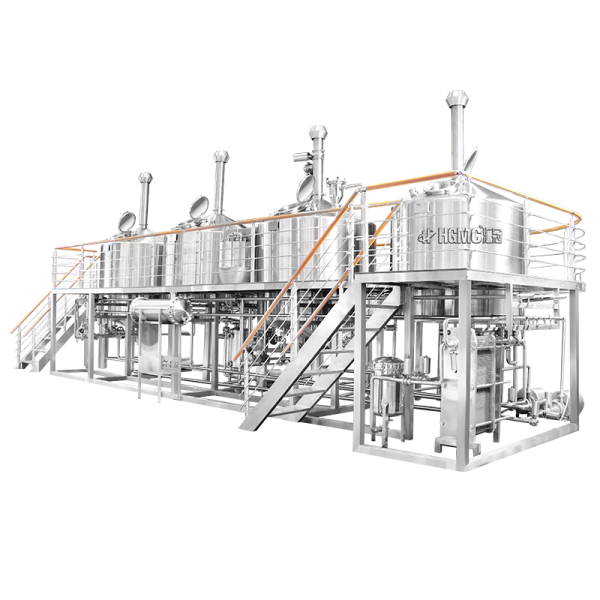
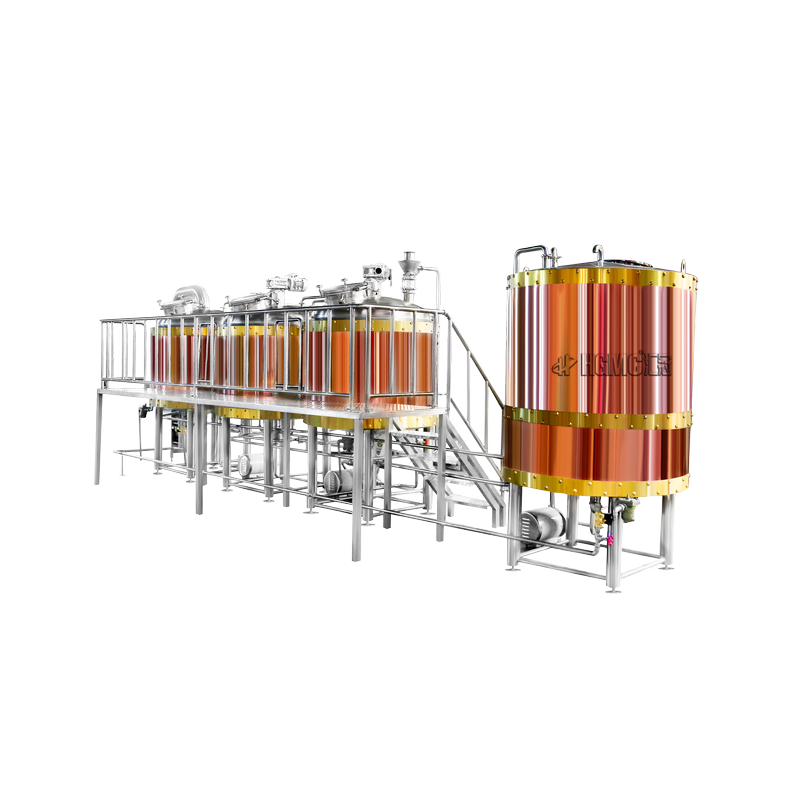
The hot side is where wort creation takes place, and precise equipment performance is non-negotiable. Standard commercial brewhouse supplies include integrated multi-vessel systems (2-vessel, 3-vessel, and 4-vessel configurations) tailored for different production scales. Key units consist of mash tuns for grain mashing and sugar extraction, lauter tuns for wort filtration, brewing kettles for wort boiling and hop addition, and whirlpool tanks for trub separation.Modern commercial brewhouse supplies feature automated temperature control, adjustable stirring speeds, and high-efficiency heating systems, enabling brewers to replicate exact recipe parameters across hundreds of batches. For small to mid-sized craft breweries, 7BBL to 15BBL modular brewhouse setups are the most popular choices, while large industrial breweries rely on 50BBL+ fully automated systems for mass production.
2. What Fermentation Supplies Are Essential?
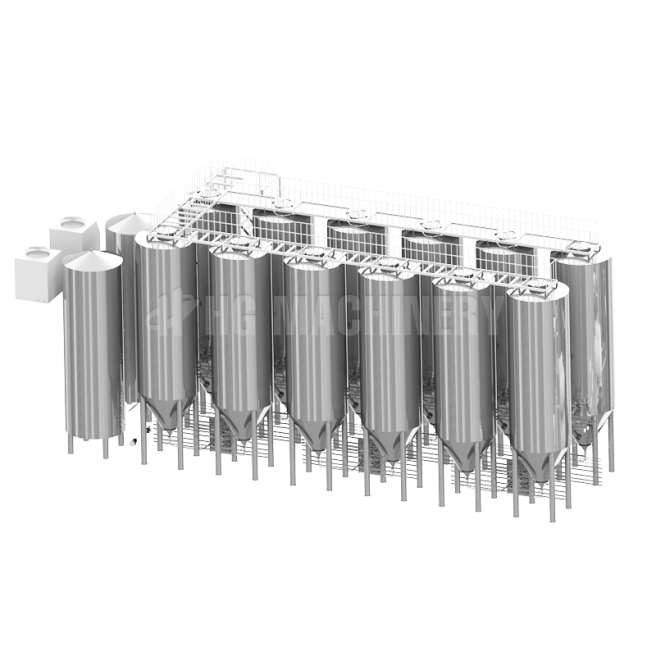
Once wort is cooled and transferred, cold-side commercial beer brewing supplies take over to shape beer flavor, aroma, and clarity. Primary supplies include stainless steel fermentation tanks, brite tanks for beer conditioning and carbonation, lagering tanks for cold aging, and dedicated yeast propagation tanks.All professional fermentation tanks are constructed with food-grade 304 stainless steel, featuring double-layer insulation and precise glycol temperature control systems. This critical design maintains stable fermentation temperatures, prevents bacterial contamination, and ensures consistent yeast activity — eliminating off-flavors and batch inconsistencies common with low-grade equipment. Many upgraded models also include pressure control valves and sampling ports for real-time fermentation monitoring.
3. What Cooling & Utility Supplies Do You Need?
Stable temperature control is the foundation of quality commercial brewing, making cooling system supplies essential auxiliary gear. Core items include glycol cooling systems, cold liquor tanks, heat exchangers for rapid wort cooling, and circulating pump sets. These supplies work in tandem to regulate temperatures during mashing, boiling, fermentation, and conditioning, ensuring every brewing stage adheres to strict technical standards.Why Are Sanitation Supplies Essential?
In commercial brewing, sanitation is just as important as brewing craftsmanship. Poor sanitation leads to bacterial infection, spoiled batches, and shortened equipment lifespan — costly issues that can sink a brewery’s reputation. That’s why professional commercial beer brewing supplies always include dedicated sanitation and maintenance tools tailored for commercial brewery environments.The most widely used sanitation supply is the CIP (Clean-in-Place) system, an automated cleaning solution that thoroughly cleans and sanitizes tank interiors, pipelines, and brewing vessels without disassembly. Complementary supplies include food-grade brewing sanitizers, alkaline and acidic cleaning agents, sanitary pipe fittings, gaskets, and filter elements.
Routine maintenance supplies such as pressure gauges, temperature sensors, replacement valves, and seal kits also fall under essential commercial beer brewing supplies. Regular replacement and calibration of these small components prevent equipment leakage, parameter deviation, and unexpected shutdowns, ensuring continuous stable production.
What Brewing Packaging Supplies Do You Need?
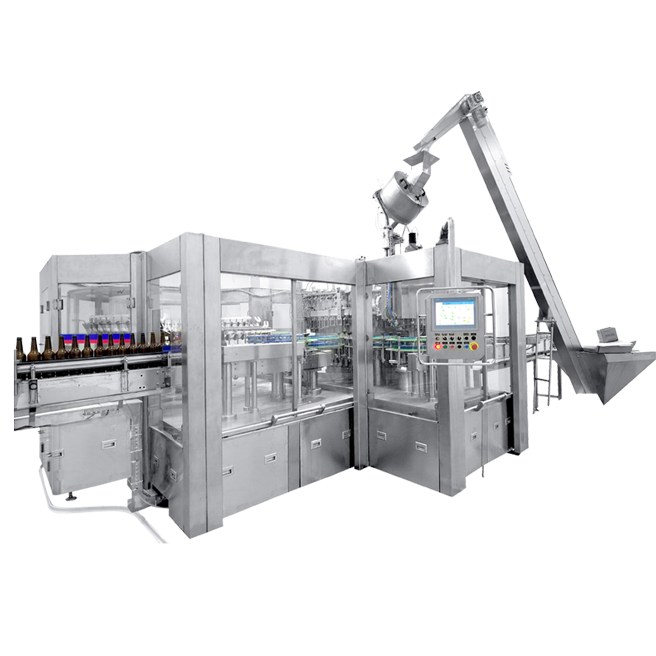
To deliver finished, market-ready beer, breweries need complete packaging-line commercial beer brewing supplies. These supplies bridge the gap between conditioned beer and final products for retail, taprooms, or distribution, covering all common packaging formats.Key packaging supplies include automatic and semi-automatic keg washers and fillers, bottle rinsing, filling, and capping machines, canning lines for craft beer, and label applicators. Supporting accessories include food-grade beer hoses, sanitary filters, carbonation stones, and keg couplers. All packaging equipment is designed to maintain beer freshness, avoid oxygen exposure, and meet commercial food safety regulations for shelf-stable products.
How to Choose Quality Brewing Supplies?
With countless suppliers offering commercial beer brewing supplies on the market, selecting the right gear for your brewery requires strategic evaluation. Here are the most critical factors to guide your purchasing decision:1. Why Food-Grade Certification Matters?
Always prioritize supplies made with certified food-grade materials, especially 304 or 316 stainless steel for tanks and pipelines. These materials offer excellent corrosion resistance, high-temperature tolerance, and easy sanitization, complying with international food safety standards and avoiding chemical leaching that affects beer quality.2. Why Scalability & Compatibility Matter?
Choose modular commercial beer brewing supplies that support future expansion. Many new breweries start with small-capacity setups but plan to scale production within 2–3 years. Modular brewhouse systems and compatible auxiliary equipment allow you to upgrade components gradually without full system replacement, saving long-term investment costs.3. How Automation Improves Brewing Efficiency?
Modern commercial brewing relies on precision automation. Opt for supplies with digital temperature and pressure control systems, automated cleaning programs, and real-time data monitoring functions. Automated equipment reduces human error, improves batch consistency, and cuts labor costs significantly.4. How to Assess Durability & After-Sales Support?
Commercial beer brewing supplies are long-term investments. Reliable suppliers provide professional installation guidance, operational training, spare part support, and timely after-sales maintenance. Durable, well-built equipment minimizes downtime and delivers stable ROI for years.What Sourcing Mistakes to Avoid?
Many new brewery owners make costly mistakes when purchasing brewing supplies, hindering early-stage operation and growth. The most prevalent error is prioritizing low prices over quality, opting for non-sanitary, low-precision equipment that leads to inconsistent beer flavor and frequent breakdowns.Another common mistake is mismatching equipment capacity. Overbuying oversized supplies wastes capital and space, while underinvesting in core equipment limits production potential and restricts business growth. Additionally, neglecting sanitation and maintenance supplies is a risky oversight — these low-cost items are critical to preventing batch contamination and equipment failure.
Why Quality Brewing Supplies Drive Brewery Success?
Premiumcommercial beer brewing supplies are the foundation of every successful commercial brewery, whether you’re a startup craft brewery or an established industrial brewing brand. From core brewhouse and fermentation systems to sanitation, maintenance, and packaging solutions, every piece of commercial brewing supply plays a vital role in ensuring beer quality, operational efficiency, and regulatory compliance.By focusing on food-grade quality, scalable design, precise automation, and reliable after-sales support, you can build a stable, efficient brewing system that delivers consistent, high-quality beer and maximizes your business profitability in the competitive craft beer industry.