Sep. 21, 2026
News
How Do You Choose Fermentation Tanks for Brewery Expansion and New Projects?
Expanding a brewery involves should increasing brewing capacity. As production grows, fermentation tanks need to keep pace with batch volume, brewing frequency, fermentation time, and available cellar space. Choosing the wrong tank size or quantity can create unnecessary delays and limit future production.
You should consider tank capacity, production schedules, cellar layout, cooling, cleaning, and future expansion together, so the selected fermentation tanks fit the brewery.
The Right Fermentation Tank Size Depends on Your Brewing Schedule
Tank capacity should follow the way your brewery operates, not simply the size of the brewhouse. Batch volume, brewing frequency, and the time each batch spends in fermentation all affect the capacity you need.Match the Tank to Your Batch Volume
A fermentation tank needs enough useful capacity for the wort entering the vessel while leaving appropriate operating space.
Our 300L fermentation tank has a 375L gross capacity and 300L useful capacity. Our 10BBL model has a 1,250L gross capacity and 1,000L useful capacity.
When we help with tank selection, we focus on useful capacity because it gives a clearer picture of how much beer the tank can accommodate during normal production.
Think Beyond the Current Batch
If production is expected to increase, we recommend considering future output when choosing the initial configuration.
HGMC offers fermentation tanks from 300L to 100,000L, giving us flexibility to work with different brewery production targets. The goal is to choose a practical capacity for today's production while keeping future expansion in mind.
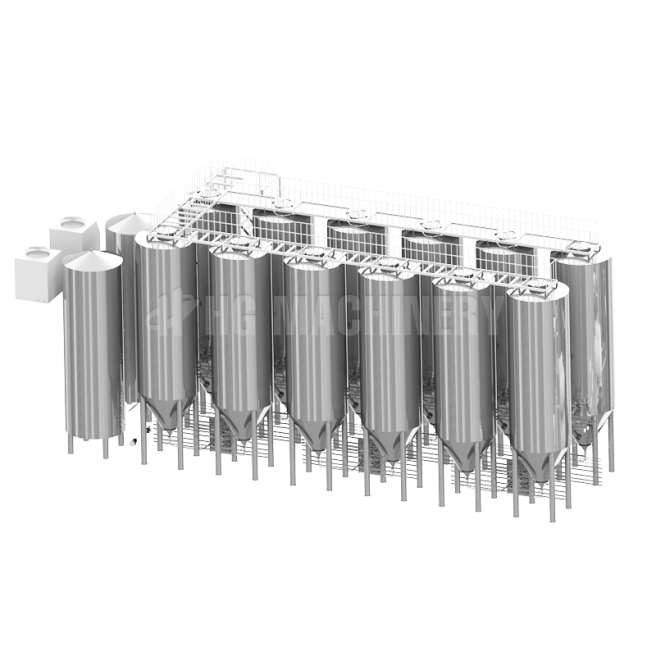
You can compare different fermentation tanks to see how capacity and configurations can vary for different brewery requirements.
How Many Fermentation Tanks Does Your Brewery Expansion Need?
After determining tank capacity, the next consideration is quantity. The number of fermenters affects how often you can brew and how easily different batches can move through production.Keep Different Batches Moving
Multiple fermentation tanks allow batches to remain at different stages of production at the same time. This gives a brewery more flexibility when brewing frequently or producing different beer styles.
For expansion projects, we normally consider the relationship between batch size, fermentation time, and brewing frequency instead of choosing the number of tanks from capacity alone.
Leave Room for Additional Fermenters
Future growth also needs to be considered in the tank layout.
If you plan to increase production later, reserving suitable space for additional fermenters can make the next expansion much easier. The same applies to cooling connections, piping, and operator access.
Make Room for the Fermentation Tanks
Tank capacity is only useful if the equipment fits the building and can be operated comfortably. This becomes increasingly important when moving from smaller tanks to larger commercial fermentation systems.Check Tank Dimensions Early
Our tank dimensions show how quickly the physical requirements can change with capacity. The 1000L model is approximately 1360mm in diameter and 2500mm high, while the 5000L model is approximately 1960mm in diameter and 4400mm high.
For an existing brewery, we recommend checking ceiling height, floor space, delivery routes, and surrounding equipment before confirming larger tanks.
Plan Around Daily Operation
A good cellar layout should leave enough room for routine work. Operators need to inspect valves, connect hoses, clean tanks, and move between vessels safely.
At HGMC, we take these practical requirements into account when discussing tank dimensions and installation arrangements, particularly for expansion projects where existing space may already be limited.
Choose the Fermentation Tank Features That Fit Your Process
Once size and layout are clear, the tank configuration can be tailored to the brewery's actual production needs. Not every project requires the same combination of cooling, cleaning, and operating accessories.Stainless Steel and Insulation
Our referenced fermentation tank models use SUS304 stainless steel. The 10BBL model has a 3.0mm SUS304 inner tank, a 2.0mm SUS304 external jacket, and 80mm polyurethane insulation.
These specifications provide a suitable structure for sanitary beer production while supporting temperature management during fermentation.
Cooling and Temperature Control
The fermentation tanks use a dimple jacket plate for cooling. The 500L configuration supports water or glycol cooling through the cooling jacket.
When adding several fermenters, we also consider the supporting cooling system. Fermentation capacity and cooling capacity need to be planned together to avoid creating a bottleneck elsewhere in production.
CIP and Operating Accessories
Cleaning is another important part of tank selection. The 10BBL model uses in-situ CIP cleaning with a rotary spray cleaning ball.
Depending on the configuration, components can include a sample valve, pressure gauge, breath valve, temperature gauge, top manhole, butterfly valves, CIP arm, hop port, and discharge arm.
We can adjust the configuration according to the brewery's process rather than adding equipment that does not serve a practical purpose.
Connect Fermentation Capacity With the Brewhouse
A fermentation cellar cannot be planned independently from the brewing system. The brewhouse determines batch output, while the fermentation system determines how that output moves through the next production stage.Build a Balanced Production Flow
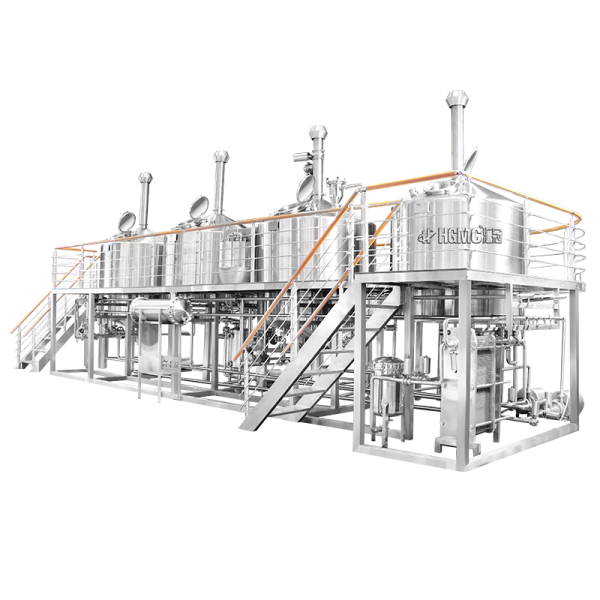
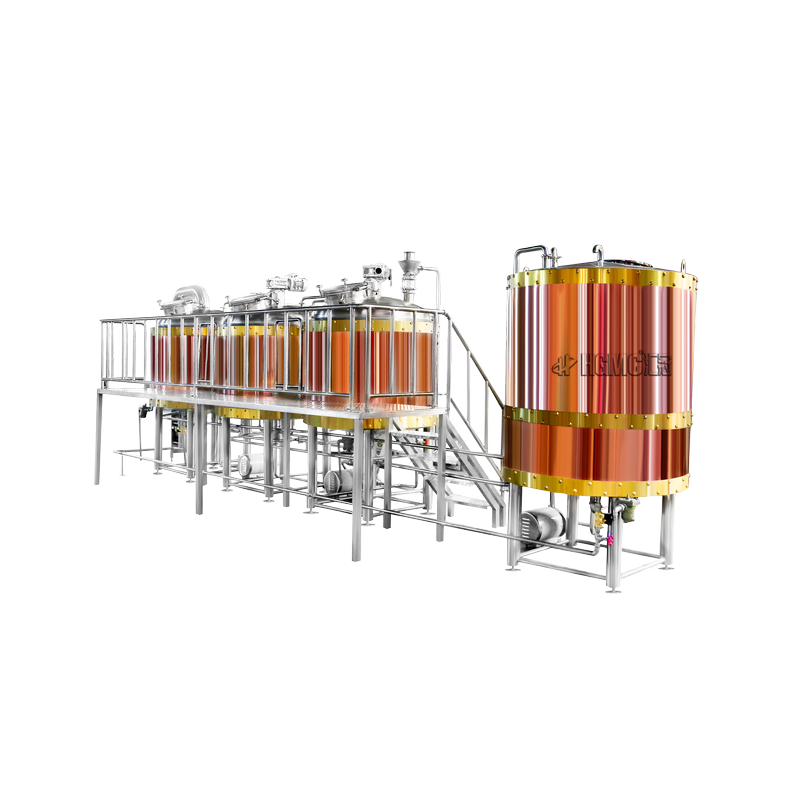
Our brewing equipment includes 500L 3-vessel systems as well as 1000L 2-vessel, 1000L 3-vessel, and 1000L 4-vessel configurations.
When we plan a brewery project, we look at the relationship between brewhouse capacity and fermentation capacity so that the two stages can operate smoothly together.
For more information about different brewing configurations, you can review our brewery brewhouse systems and compare the available production setups.
Plan the Supporting Equipment Too
Increasing fermentation capacity also affects the supporting equipment.
Cooling, CIP, piping, pumps, and connections should all be considered when the tank arrangement is designed. For larger projects, HGMC can coordinate these requirements as part of a complete brewery solution, rather than treating the fermentation cellar as an isolated installation.
Build the Fermentation System Around Future Growth
A new brewery and an existing brewery may have different starting points, but both benefit from planning the fermentation system around the next stage of production.For New Brewery Projects
For a new brewery, we can consider the brewhouse, fermentation tanks, production target, building layout, and future additions at the same time.
This gives the initial system enough structure to support current production while leaving a clear path for later expansion.
For Existing Brewery Expansion
For an operating brewery, the starting point is different. We first look at existing fermentation capacity, available space, production bottlenecks, and the additional volume required.
This helps us determine whether the brewery needs larger tanks, additional fermenters, or a combination of both.
Get Fermentation Tanks That Fit Your Brewery
Choosing fermentation tanks for brewery expansion is ultimately about balance. Tank size, tank quantity, brewing frequency, cellar space, cooling, cleaning, and future production all need to work together.
At HGMC, we use these factors to develop fermentation configurations around the brewery's actual requirements. Our experience with different brewery equipment configurations also allows us to consider how individual tanks fit into the wider production process.
If you are planning a new commercial brewery or expanding an existing operation, contact HGMC to discuss suitable fermentation tank sizes, configurations, and project requirements.