May. 18, 2026
News
From Dream to Dock – The Smart Buyer’s Blueprint for a Brewhouse That Grows With You
Not every brewery starts with a gleaming 50-hectoliter hall. Many begin as a nano brewery in a converted garage, a 3-bbl system in a shared commercial kitchen, or a pilot line inside a restaurant basement. The owners ask the same honest question: “How do I buy equipment that doesn’t limit my future?”
The answer is a scalable brewhouse ecosystem—a system designed not just for today’s batch count, but for next year’s distribution deals and the year after’s taproom expansion.
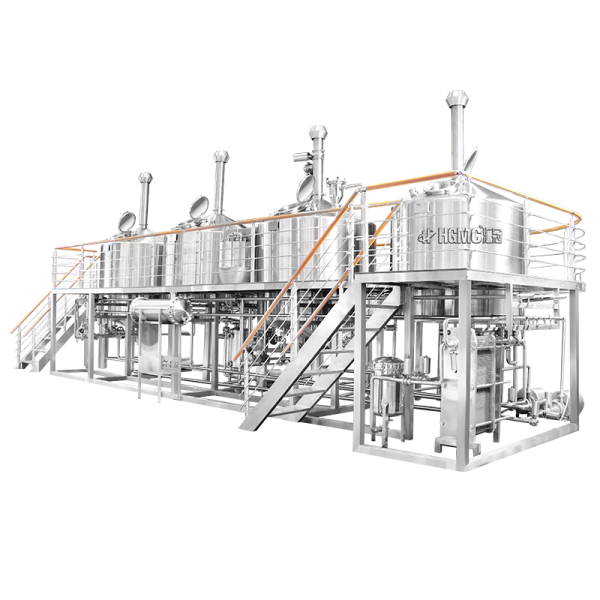
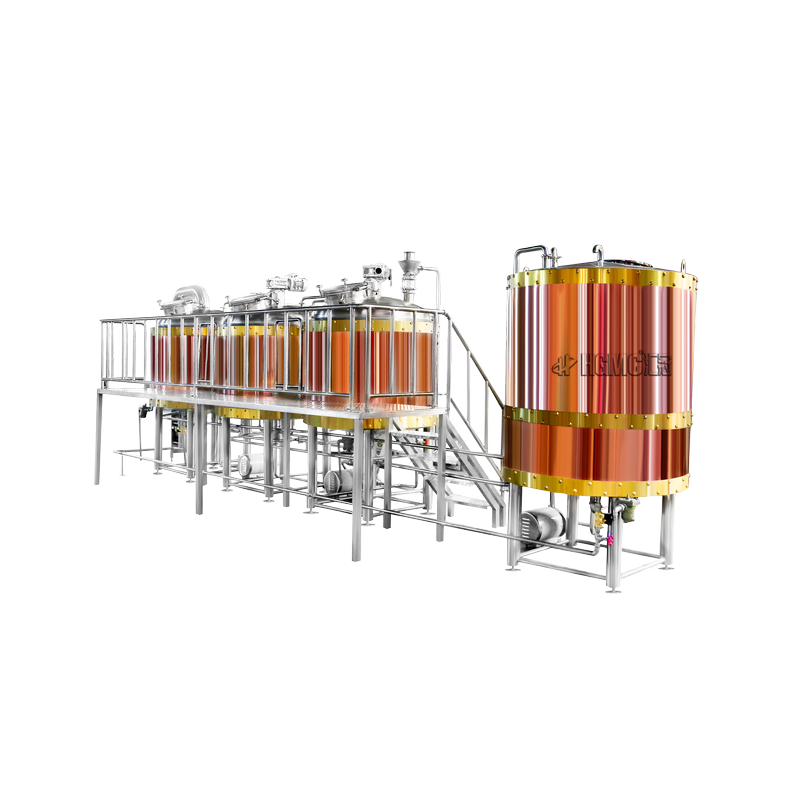
For the solo entrepreneur or brewpub chef-owner, scalability starts with the brewhouse frame and utility interface. A modular hot side with standardized vessel connections allows you to upgrade from 5 hectoliters to 10 by simply swapping the mash kettle and lauter tun while keeping the same frame, piping, and control panel. Your glycol chiller and boiler remain sized for the larger capacity if you choose them with a 30–40% overhead margin from day one.
Procurement managers love this model because it separates capital expenditure from production growth. You invest in a base system that covers your first two years, then add fermentation tanks as your distributor network expands. There is no “scrap and rebuild” moment—only graceful scaling.

Engineers will appreciate commonality across parts. A scalable line uses identical manway gaskets, butterfly valves, and temperature sensors on every tank. Spare parts inventory shrinks, and maintenance training becomes trivial. When a tank needs servicing, you rotate production to another identical vessel without recipe reconfiguration.
But the real innovation is digital scalability. Choose a control platform that supports additional I/O modules. Start with manual temperature readings; next year add automated fermentation logging; in year three integrate a full SCADA system. The same PLC chassis stays in place—you just plug in new sensors and update the interface.
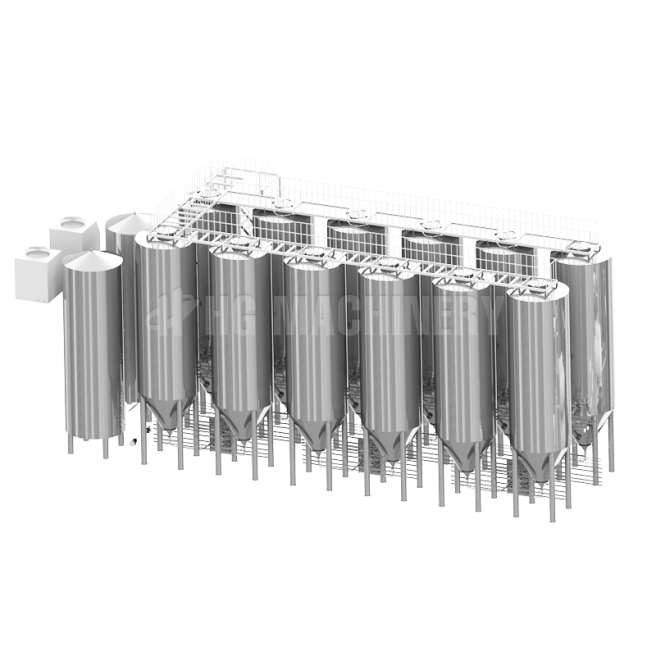
For the individual opening a small brewpub, scalability also means footprint flexibility. A compact 5-hl brewhouse can fit into 120 square feet. Two years later, you add a rack of 10-hl unitanks in an adjacent room. The original brewhouse continues as a pilot system for experimental batches. No wasted equipment. No lost investment.
Smart buyers know that the cheapest system is rarely the least expensive over ten years. The brewhouse that grows with you—vessel by vessel, sensor by sensor—is the one that turns a dream into a lasting brand.