Apr. 13, 2026
News
Scaling Up Without Compromising Craft – Choosing Brewhouse Systems for Micro to Industrial Breweries
Every successful craft brewer remembers the first small system: the hands-on intimacy of mashing in a 5-barrel rig, watching the vorlauf clear, smelling the first hop addition. But growth changes everything. When demand outpaces capacity, the instinct to “just buy bigger tanks” often leads to a sobering realization — industrial-scale equipment can feel alien to the craft mindset.
The solution lies in modular, craft-conscious brewhouse design.
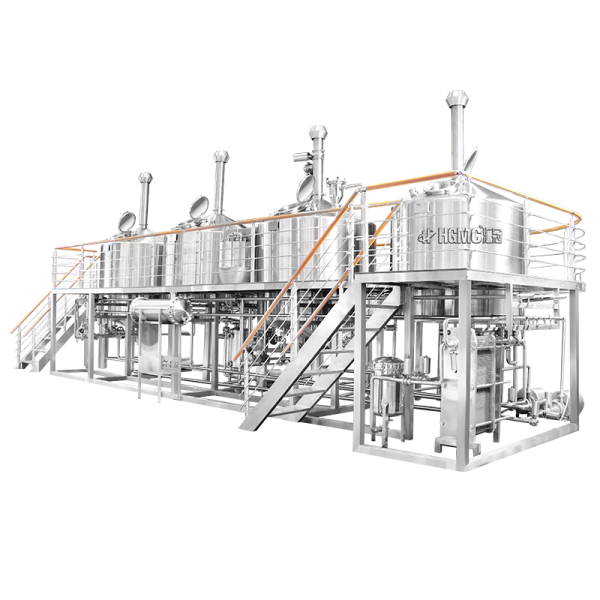
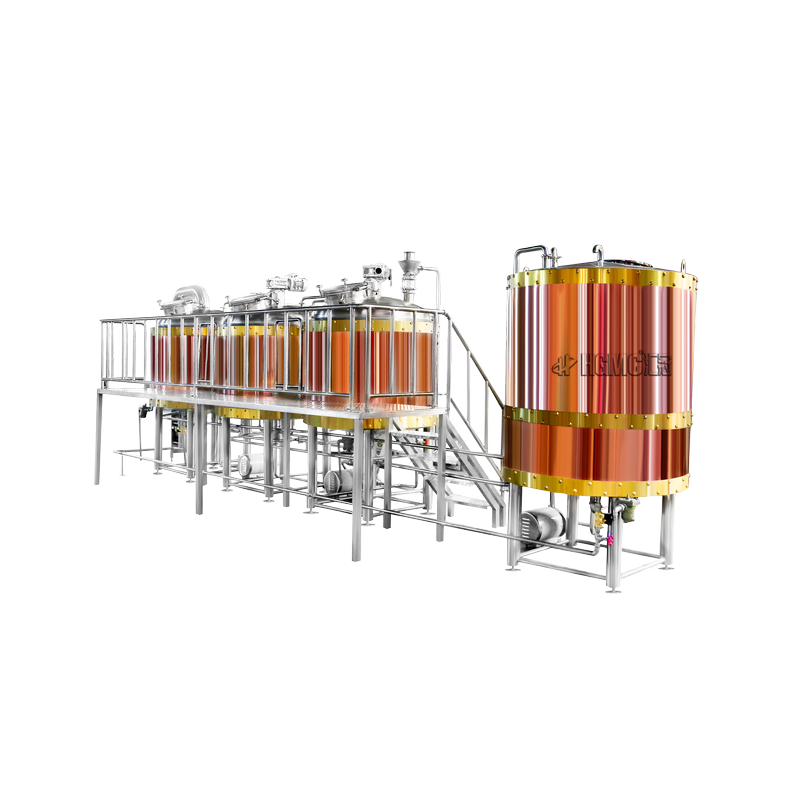
Scaling up doesn’t have to mean sacrificing flexibility or recipe artistry. A well-designed system for the 30–150 hectoliter range preserves the brewer’s ability to experiment with specialty grains, whirlpool hopping techniques, and step mashes, while automating the heavy lifting. For the production manager or brewery owner, this balance is the key to protecting margins and brand identity.
Let’s break down what matters when moving from a nano to a regional brewhouse.
First, mash filtration versus lauter tun configuration. Many mid-scale breweries still prefer a classic lauter tun with rakes and grain bed control, because it allows for grist variability — essential when brewing both hazy NEIPAs and high-adjunct stouts. Automated plowing systems reduce manual labor but retain the ability to adjust raking speed and depth. The best systems offer programmable profiles for each beer style.
Second, wort boiling efficiency. Low-pressure, internal-calendar boilers with forced vapor extraction reduce steam consumption by up to 30% while achieving the same hot break and DMS removal as traditional kettles. This matters for both operating cost and environmental footprint — a growing concern for B2B customers and investors.

Third, and perhaps most critical: process automation that adapts. The ideal control platform for a growing brewery is not a rigid industrial PLC with locked recipes, but a semi-automated system that allows brewers to override parameters, log deviations, and refine recipes batch by batch. It should produce traceability reports for quality assurance without turning the brewhouse into a push-button factory.
We’ve worked with breweries that expanded from 15 to 80 hectoliters in three years. The ones that thrived chose equipment designed for hybrid workflows — manual intervention when creativity calls, automation when repetition rules. They installed separate mash mixers, versatile kettle geometries, and side-mounted whirlpools that handle both whole-cone and pellet hops.
Your brewhouse is not just machinery. It’s the physical manifestation of your brewing philosophy. Whether you run a farm brewery, a brewpub chain, or a contract production facility, your scale-up path must preserve what made your beer distinctive in the first place.
Our engineers specialize in transitional systems — bridges between the craft mindset and industrial reliability. Let’s map your growth curve together.
→ Request a free brewhouse layout consultation. Tell us your current batch size and target volume. We’ll propose a system that scales with your reputation.